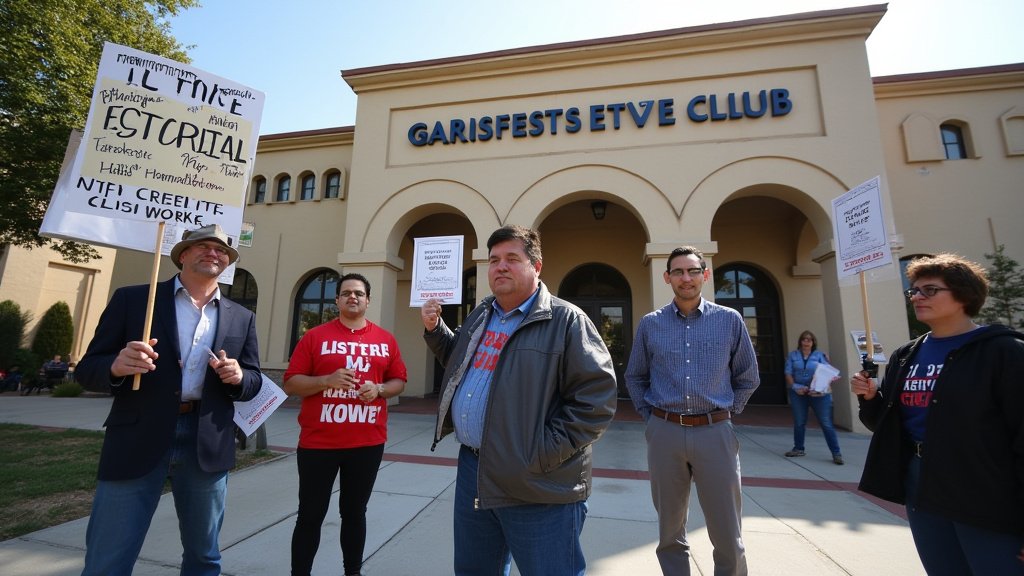

Fast-food workers at a Carl’s Jr. location on Lankershim Boulevard in North Hollywood staged a walkout on Tuesday, highlighting a growing, urgent crisis of workplace violence in the service sector. The employees, supported by the California Fast Food Workers Union, are demanding immediate intervention from management to address persistent harassment, physical assaults from customers, and what they describe as a culture of intimidation regarding injury recovery. This strike serves as a flashpoint in a broader struggle for labor protections, placing pressure on the Los Angeles City Council to pass comprehensive safety ordinances for the fast-food industry.
Key Highlights
- Workplace Danger: Workers report daily exposure to aggressive behavior, including food-throwing, verbal harassment, and physical assaults by customers.
- Specific Grievances: The strike was prompted by a lack of safety training and the alleged coercion of injured employees to return to work before recovering.
- Legislative Push: Protesters are calling for the immediate passage of the Fast Food Fair Work ordinance, which aims to mandate safety standards, paid sick leave, and scheduling predictability.
- Regulatory Filings: Official complaints have been filed with Cal/OSHA and the California Labor Commissioner’s Office, detailing instances of physical trauma, including a 2025 incident involving a worker being punched in the face while on duty.
The Frontline Crisis: Safety in the Service Sector
For the employees at the 6601 Lankershim Blvd. Carl’s Jr., the drive-thru window has become a zone of anxiety rather than just a place of employment. The recent strike underscores a harrowing reality for many in the fast-food industry: the front line of customer service is increasingly becoming a front line of physical danger. Employees describe an environment where the threat of violence is not an occasional outlier but a daily expectation.
Escalating Violence and Worker Trauma
The testimonies provided by the striking workers paint a stark picture. Many employees describe a recurring pattern of verbal abuse—customers yelling and throwing items—escalating rapidly into physical altercations. One of the most severe instances cited in recent filings involved a worker being punched in the face by a customer. Perhaps more distressing than the incident itself was the reported institutional response. Following the assault, medical professionals had advised the victim to take time off to heal. However, workers allege that management demanded a return to the shift under the threat of retaliation, forcing the employee to work with visible facial swelling and lingering trauma. This dynamic of “management by intimidation” is a core focus of the current protest.
The Institutional Failure to Protect
Labor advocates argue that corporate entities often view such violence as a “cost of doing business” rather than a systemic failure that requires mitigation. According to advocates, the lack of dedicated safety training programs means that when tensions rise, workers are left without de-escalation skills or security protocols to ensure their physical safety. The absence of adequate paid sick leave is another critical failure point; when workers cannot afford to take time off to recover from physical or psychological trauma, they are forced to return to potentially hostile environments while still vulnerable, which only exacerbates the risk of future incidents.
The Path to Legislative Reform: The Fast Food Fair Work Ordinance
The protest is not merely a localized grievance; it is part of a calculated, city-wide pressure campaign aimed at the Los Angeles City Council. The goal is the adoption of a “Fast Food Fair Work” ordinance. This proposed legislation is designed to extend the city’s existing Fair Work Week protections to fast-food chains—a sector that has historically operated with lower levels of oversight regarding worker safety and scheduling standards.
What the Ordinance Changes
The proposed policy would mandate three specific pillars of reform: paid rights-and-safety training, access to paid sick leave, and the establishment of stable, predictable scheduling. Supporters argue that these measures would not only provide a safety net for workers but also professionalize the industry, forcing employers to take responsibility for the security of their staff. By requiring employers to provide clear training on how to handle violent interactions and providing the financial stability to allow for recovery time, the ordinance aims to create a more resilient, safer workforce.
The Economic and Community Impact
Critics of such mandates often cite the thin profit margins of franchise operations. However, labor organizations, including the California Fast Food Workers Union and affiliated chapters of the SEIU (Service Employees International Union), contend that human dignity cannot be balanced against operational costs. The economic ripple effect of workplace violence is significant—high turnover rates, lower morale, and potential legal liabilities stemming from negligence. Furthermore, the community impact is tangible. When the people serving the public are fearful and unsupported, the quality of service degrades, and the workplace becomes a site of tension rather than a community asset.
Looking Toward the Future
As the strike enters its second day, the eyes of the city’s labor movement are on the North Hollywood location. Whether this specific action leads to immediate changes in company policy at the Carl’s Jr. franchise remains to be seen. However, the momentum behind the broader movement for fast-food safety is undeniable. With the backing of state and local labor regulators, and the continued advocacy of workers on the ground, the narrative around fast-food employment is shifting. The demand is clear: for an industry that relies on the labor of hundreds of thousands of Californians, basic physical security and the right to heal are not luxuries—they are fundamental rights.
FAQ: People Also Ask
Why are fast-food workers specifically targeting the Los Angeles City Council?
Workers are urging the Council to pass the Fast Food Fair Work ordinance, which would provide mandatory safety training, paid sick leave, and scheduling protections. These workers believe that local legislative action is the only way to hold large franchise operators accountable.
What is the significance of the Cal/OSHA complaint?
Filing a complaint with Cal/OSHA (California Division of Occupational Safety and Health) is a formal step to document unsafe working conditions. It alerts state regulators to violations, potentially triggering inspections and legal consequences for employers who fail to provide a safe workplace.
How common is violence in the fast-food industry?
While statistics vary, fast-food workers report higher rates of verbal harassment and physical assault compared to many other retail sectors. Protests in cities across the U.S. have increasingly highlighted this, as workers in California, New York, and Washington demand better security measures and training.
What can customers do to support workers?
Labor advocates suggest that customers can support workers by being mindful of the pressure employees face, reporting abusive behavior from other customers to management, and supporting legislative efforts that promote worker safety and fair treatment in the service industry.