
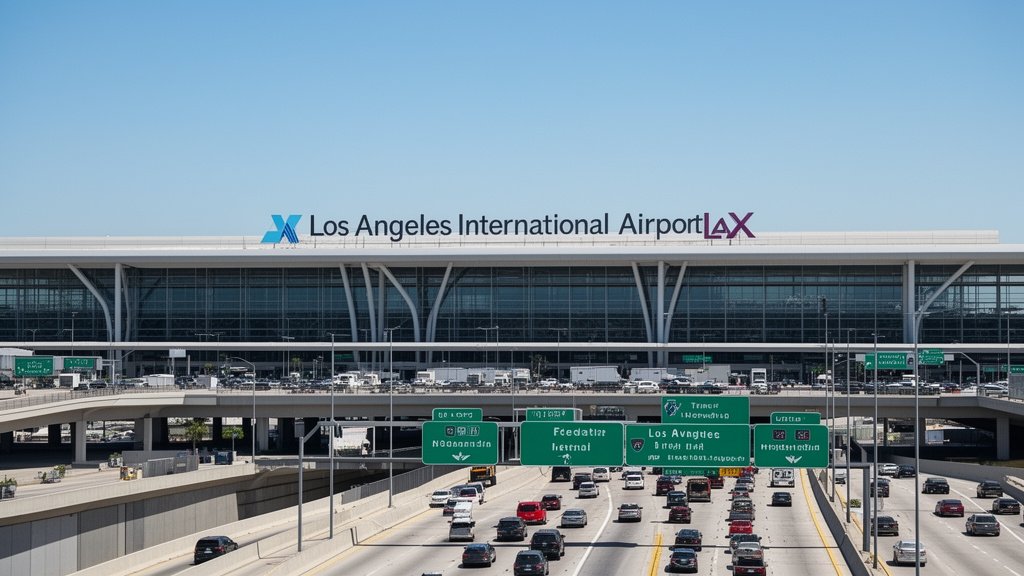
Wanying Zhang, a 36-year-old realtor based in Irvine, California, was apprehended by federal authorities at Los Angeles International Airport (LAX) this week, marking a significant escalation in the ongoing crackdown against foreign espionage operations within the United States. Zhang, who also operates under the name ‘Heather,’ is accused of acting as an illegal agent for the People’s Republic of China (PRC). According to the Department of Justice, her primary objective involved conducting surveillance and gathering sensitive information on a prominent individual residing in the U.S. who is a close relative of Taiwan’s current president, Lai Ching-te. The arrest highlights the growing concern among national security experts regarding the PRC’s use of non-traditional assets to engage in ‘transnational repression’ on American soil.
Key Highlights
- Arrest Details: Wanying Zhang (36) was taken into custody at Los Angeles International Airport (LAX) by FBI agents.
- The Charges: She faces federal charges for acting as an illegal agent of a foreign government without providing the mandatory notification to the U.S. Attorney General.
- The Target: The investigation revealed that Zhang allegedly sought to collect intelligence on a specific relative of Taiwanese President Lai Ching-te.
- Espionage Methods: Prosecutors allege Zhang utilized her position as a real estate professional to gain access to information and facilitate intelligence gathering on behalf of Chinese handlers.
- Legal Implications: If convicted, Zhang could face significant prison time, underscoring the severity of foreign influence operations involving U.S. citizens and residents.
The Anatomy of an Espionage Investigation
The Arrest at LAX
The arrest of Wanying Zhang at Los Angeles International Airport represents the culmination of a targeted counter-intelligence investigation. Federal authorities had reportedly been monitoring Zhang’s activities for an extended period, tracking communications and behavioral patterns that indicated unauthorized cooperation with foreign state actors. When Zhang attempted to traverse through one of the busiest international transit hubs in the United States, federal agents moved in to execute the warrant. This calculated approach serves as a reminder that U.S. intelligence agencies maintain heightened scrutiny at ports of entry for individuals suspected of compromising national security interests.
While the arrest itself occurred at LAX, the scope of the alleged operation spans the broader Los Angeles metropolitan area, where Zhang maintained her professional life. The transition from private realtor to alleged foreign asset is a pattern the Department of Justice has increasingly flagged in recent years. The agency has noted that individuals with professional access—such as real estate brokers, consultants, and business intermediaries—are often targeted by foreign intelligence services because their daily work naturally involves vetting individuals, accessing financial data, and interacting with high-net-worth foreign nationals.
The Charges: 18 U.S.C. § 951
Zhang is charged with acting as an illegal agent of a foreign government, a violation of Title 18, U.S. Code, Section 951. This statute, often referred to as ‘notification of acting as an agent of a foreign government,’ is the primary tool federal prosecutors use to combat espionage that does not meet the higher bar of classic classified document theft. Under this law, any individual who acts as an agent of a foreign power within the United States must notify the Attorney General. Failure to do so, combined with active intelligence gathering, constitutes a serious felony. The DOJ’s decision to charge Zhang under this specific statute signals that they possess sufficient evidence to prove she was not acting independently, but was instead executing directives received from the PRC government or its intelligence apparatus.
Transnational Repression and the Taiwan Connection
The core of the accusation is particularly sensitive given the current geopolitical climate surrounding Taiwan. By allegedly targeting a relative of President Lai Ching-te, the operation falls squarely into the category of ‘transnational repression.’ This term describes actions taken by foreign governments to harass, intimidate, or track their perceived enemies, political dissidents, or their families living abroad.
For the PRC, the Taiwanese leadership represents a primary geopolitical rival. However, the use of assets to monitor relatives of high-ranking Taiwanese officials living in the U.S. serves a dual purpose: it creates a psychological chilling effect on the targets and provides the PRC with ‘leverage’ or intelligence that could be used in future diplomatic or strategic negotiations. This incident is not isolated; the FBI has repeatedly warned that the PRC is aggressively expanding its capabilities to influence and intimidate individuals within U.S. borders.
The Vulnerability of Professional Networks
Zhang’s role as a realtor is not incidental to the charges. The real estate sector, particularly in high-demand markets like Southern California, often serves as a focal point for international capital and networking. Foreign intelligence services frequently seek out individuals who can provide them with a ‘soft’ entry into local communities or access to private information about target individuals’ assets, movements, and associations. By utilizing someone with legitimate community standing, foreign handlers can often operate in the shadows for years without raising the suspicion of neighbors or professional colleagues. The DOJ’s recent aggressive posture suggests a push to tighten oversight on professional services sectors to prevent them from becoming conduits for foreign influence.
Secondary Angles: Future Implications
1. The ‘China Initiative’ Legacy: While the Department of Justice has officially ended its controversial ‘China Initiative’ program, the underlying mission of countering PRC influence remains a top priority. This arrest suggests that the strategy has shifted from broadly monitoring academic collaboration to a highly targeted, intelligence-led approach focusing on individual human assets.
2. Real Estate as a Security Front: This case will likely prompt calls for stricter ‘Know Your Customer’ (KYC) and anti-money laundering (AML) regulations within the real estate industry, specifically aimed at identifying foreign agents who hide behind professional licenses.
3. Diplomatic Friction: The incident adds another layer of tension to U.S.-China-Taiwan relations. As the U.S. intensifies its ‘One China’ policy management, any incident of PRC repression on U.S. soil significantly complicates bilateral diplomatic efforts.
FAQ: People Also Ask
1. What does it mean to be an ‘illegal agent’ for a foreign government?
In the U.S., acting as an agent of a foreign government requires registration with the Attorney General. Being an ‘illegal agent’ means an individual is performing tasks on behalf of a foreign power—such as spying or gathering intelligence—without notifying the U.S. government, thereby hiding their allegiance and intent.
2. Is this part of a larger trend of spying in California?
Yes. Federal authorities have repeatedly warned that the Los Angeles and San Francisco regions are key targets for foreign economic and political espionage due to their high concentration of technology, aerospace, entertainment, and international business sectors.
3. What happens to the relative of the Taiwanese president?
While the specific individual’s identity is protected for security reasons, the FBI typically provides warnings to targets of foreign intelligence operations, ensuring they are aware of the threat and providing guidance on how to secure their communications and daily routines.
4. Will this case lead to more arrests?
Historically, investigations into foreign agent operations involve complex networks. Prosecutors often use evidence gathered from one individual to map out broader intelligence cells, which can lead to additional investigations and arrests as the case progresses.