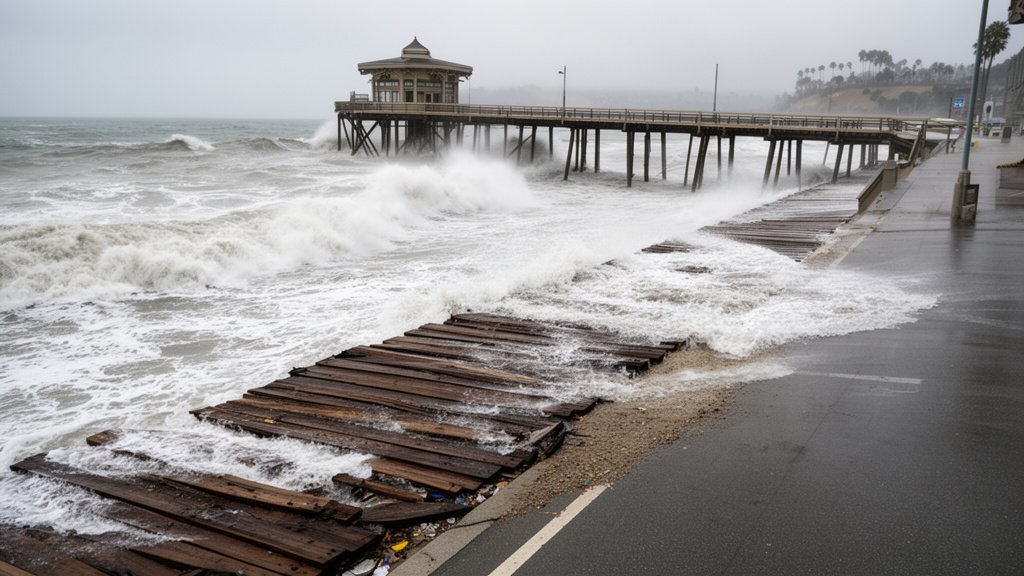
Coastal California is currently facing a formidable adversary as record-breaking high tides, exacerbated by a robust El Niño weather pattern, have unleashed widespread flooding across the Pacific seaboard. From the pristine beaches of Santa Barbara to the commercial corridors of Los Angeles, the convergence of astronomical tides—known colloquially as “King Tides”—and anomalous seasonal sea-level surges has overwhelmed local infrastructure, breached business frontages, and prompted urgent calls for disaster mitigation. As local authorities and the National Oceanic and Atmospheric Administration (NOAA) continue to assess the fallout, the event serves as a stark reminder of the escalating vulnerability of the state’s multi-billion dollar coastal economy to oceanic volatility.
Key Highlights
- Unprecedented Surge: Record-breaking tide levels, reaching peaks seen only a few times in the last century, have inundated low-lying beach communities, particularly in Ventura, Santa Barbara, and Los Angeles counties.
- Economic Disruption: Small businesses, particularly in hospitality and retail, are reporting significant property damage, with insurance assessments currently underway as losses mount into the millions.
- Infrastructure Under Siege: Major coastal thoroughfares have faced temporary closures due to water encroachment, debris deposition, and compromised structural integrity, challenging local municipal departments.
- El Niño’s Role: Meteorologists confirm that the current El Niño event has increased regional sea levels by several inches above historical norms, creating a “compounding effect” when combined with extreme lunar tides.
The Anatomy of the Coastal Surge
The current crisis is not a singular phenomenon but the result of a “perfect storm” of environmental variables. At the core of the issue is the interaction between lunar gravity and oceanic temperatures. Under typical conditions, perigean spring tides—the highest tides of the year—would cause periodic flooding. However, the influence of the current El Niño Southern Oscillation (ENSO) has fundamentally altered the baseline. As trade winds weaken, warmer water piles up along the western coast of the Americas, effectively raising the local sea level.
Meteorological Compounding Factors
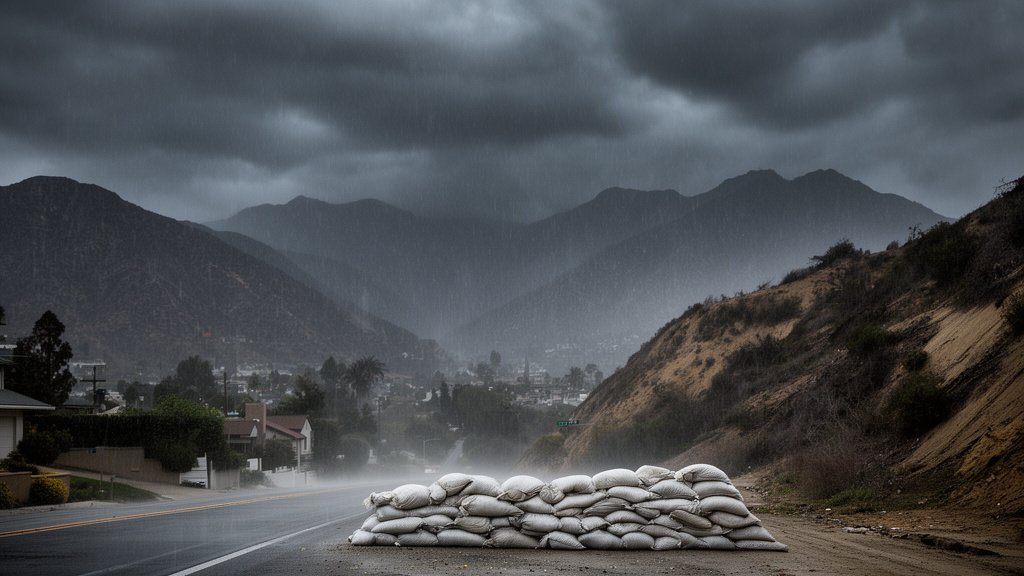
When these elevated baselines meet the gravitational pull of the moon at its closest point to Earth, the resulting water displacement is severe. Scientists monitoring the data have noted that wave run-up—the maximum vertical extent of wave uprush—is significantly higher than projections made even a decade ago. This has turned once-passable boardwalks and parking lots into temporary lagoons, trapping vehicles and forcing businesses to sandbag doorways that have historically remained dry.
Infrastructure and Engineering Challenges
The state’s aging coastal infrastructure, much of which was designed under a different climate regime, is struggling to cope. In cities like Ventura, the iconic pier and surrounding coastal infrastructure have faced repeated battering. The infiltration of salt water into asphalt and concrete foundations is not merely a short-term nuisance; it is a long-term engineering liability. The California Coastal Commission is now facing increased pressure to accelerate resilient infrastructure projects, such as seawall reinforcement and elevated drainage systems, which have stalled due to environmental reviews and funding constraints.
The Economic Ripple Effect on Coastal Commerce
Beyond the immediate physical damage lies a significant economic concern. California’s coastal communities rely heavily on year-round tourism and small-scale, high-visibility commerce. When boardwalks are cordoned off and shops are forced to shutter, the economic velocity of these hubs grinds to a halt. Small business owners in Santa Barbara’s historic districts have reported that this is the most disruptive flooding event in recent memory.
For many, the financial burden extends beyond immediate repair costs. The increased frequency of these “nuisance floods”—which are quickly becoming “catastrophic floods”—is altering the insurance landscape. Small businesses are reporting sharp increases in premiums, with some providers beginning to reassess the risk profiles of properties located in what were previously considered “low-risk” zones. This shift in risk perception could force a long-term reconfiguration of coastal real estate, potentially pushing capital and commerce further inland.
Adaptive Strategies and Future Predictions
The current flooding event is widely viewed by climate experts as a preview of the future. As eustatic sea-level rise continues, the frequency of these high-tide flooding events is projected to increase, regardless of ENSO cycles. Adaptation, therefore, is no longer an optional future consideration but an urgent present requirement.
Municipal Response and Mitigation
Local governments are scrambling to integrate “living shorelines”—using natural elements like dunes, oyster reefs, and native vegetation to absorb wave energy—into their defensive strategies. While traditional hard engineering (seawalls) remains the status quo for heavily developed urban centers like Los Angeles, experts argue that a hybrid approach will be necessary. This includes the implementation of “managed retreat” strategies, where critical infrastructure is slowly moved away from the shoreline, a move that is both politically difficult and economically intensive.
Long-Term Climate Resilience
The state’s focus is shifting toward data-driven urban planning. By utilizing real-time sensor networks and predictive tidal modeling, cities are attempting to provide earlier warnings to business owners and residents. However, the sheer unpredictability of high-impact weather events means that even the most advanced systems cannot prevent the displacement of water entirely. The coming years will likely be defined by a delicate balance between preserving the historical character of California’s iconic coast and fundamentally altering the landscape to survive an encroaching ocean.
FAQ: People Also Ask
1. Why is this tide event being called “record-breaking”?
It is defined as record-breaking because the combination of astronomical high tides and the seasonal thermal expansion of the ocean, amplified by the current strong El Niño, has pushed water levels to peak measurements that exceed previous historical data points for the same calendar period.
2. Is this flooding directly linked to climate change?
While the specific event is triggered by current El Niño conditions and lunar cycles, climate change provides the backdrop of rising sea levels. This higher baseline means that naturally occurring tides now reach higher levels and penetrate further inland than they did in previous decades.
3. Will the flooding stop once the El Niño season ends?
While the extreme frequency and intensity of the flooding may decrease as the El Niño pattern wanes, the underlying issue of rising sea levels remains. Coastal communities will continue to be vulnerable to high tides, though perhaps less frequently than during this peak El Niño period.
4. What resources are available for affected business owners?
Business owners are encouraged to document all property damage immediately for insurance claims, coordinate with local municipal emergency offices to report damage for disaster recovery assistance, and reach out to the Small Business Administration (SBA) if a state or federal disaster declaration is issued for their specific county.