
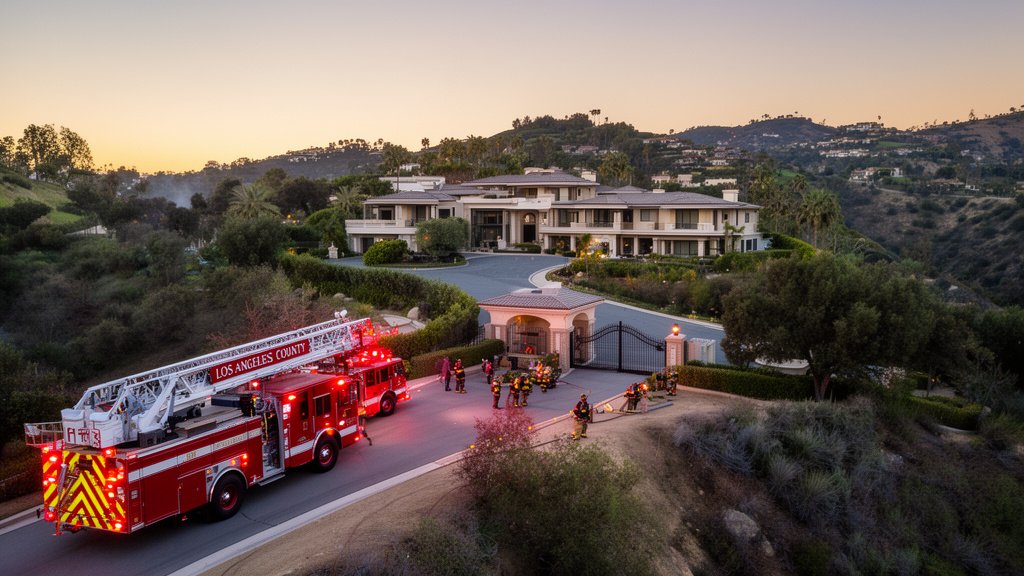
In the early hours of November 23, 2026, emergency services were dispatched to the Calabasas residence of Will Smith and Jada Pinkett Smith following reports of a structure fire at their $42 million estate. The property, known for its expansive architectural footprint and secluded location, became the focal point of a significant emergency response operation that spanned several hours as crews worked to contain the situation.
Key Highlights
- Emergency crews were notified of the blaze shortly after 4:00 AM on November 23, 2026, leading to a multi-unit response.
- The Smith family’s $42 million estate, a sprawling compound in the Calabasas/Hidden Hills area, is the site of the incident.
- Firefighters from the Los Angeles County Fire Department were observed working to secure the perimeter and mitigate structural damage.
- No immediate injuries or fatalities were reported as of the initial investigation period.
- The cause of the fire is currently under active investigation by fire marshals.
The Calabasas Crisis: Inside the Estate Incident
The unexpected emergency at the Smith compound has drawn significant attention to the logistical complexities of managing and securing large-scale, high-value properties in the Los Angeles hills. As the sun rose over the property on the morning of November 23, the presence of multiple emergency vehicles, including specialized ladder trucks and fire suppression units, underscored the severity of the incident. The Los Angeles County Fire Department confirmed that units were deployed to address a structure fire, which necessitated precise maneuvers given the estate’s complex layout, expansive gardens, and secure perimeter.
Architectural Challenges and Fire Suppression
Large-scale residential estates, particularly those valued in the $40 million-plus range, present unique challenges for fire suppression. These properties often feature complex architectural designs—including extensive wooden framing, hidden electrical conduits, and sprawling multi-level configurations—that can complicate containment efforts. Fire safety experts note that in such high-end properties, the primary goal is not only to prevent structural collapse but also to protect valuable assets, both personal and architectural. The Smith residence, famously designed with a focus on blending organic materials with luxury modernism, contains intricate, non-standard fire pathways that fire crews must navigate with extreme caution to avoid further damage. The speed of the response was critical in preventing what could have been a total loss, highlighting the importance of the advanced, automated fire suppression systems typically installed in such high-tier residential projects.
Security and Emergency Access in the Hills
The incident has also reignited local discussions regarding emergency access to high-security, gated communities in the Calabasas area. Navigating narrow, winding, and often private access roads with heavy fire apparatus requires specialized training and clear communication between private security details and municipal emergency services. During this incident, the coordination between the Smith family’s private security, which manages the gatehouse and perimeter logistics, and the Los Angeles County Fire Department was pivotal. Reports indicate that the transition from private security lockdown to municipal emergency takeover occurred without significant delay, a testament to the pre-planned emergency protocols common among celebrities with high-profile residences.
Understanding the Economic and Emotional Impact
Beyond the raw statistics of the fire, the incident raises questions about the long-term impact on the property’s value and the family’s immediate living arrangements. A fire of this nature, even if contained to a specific section of the estate, often necessitates a comprehensive structural audit, potential insurance litigation, and significant renovation efforts. For a property valued at $42 million, the cost of restoration is not merely financial but also involves the painstaking task of preserving unique design elements that define the home’s market standing. Furthermore, the emotional toll of an emergency event at one’s primary residence cannot be overstated. As the investigation into the ignition point continues, the public and local community await updates on the full extent of the damage, while media focus shifts toward the resilience of high-end home safety protocols.
Future Implications for Celebrity Housing
This event is likely to prompt a wider conversation within the luxury real estate sector regarding fire safety standards for ultra-high-net-worth (UHNW) individuals. With climate patterns in California increasingly creating conditions favorable to wildfires, and the high concentration of expensive homes in semi-wildland urban interface zones, the industry may see a shift toward more robust, site-specific fire mitigation technologies. From the installation of rooftop sprinkler systems to the implementation of fire-retardant landscaping buffers, the incident at the Smith estate serves as a high-profile case study for the necessity of proactive safety measures in an era of unpredictable fire risk.
FAQ: People Also Ask
Was anyone home during the fire at the Smith estate?
While official reports have not confirmed the specific occupancy status of the family members at the precise moment the fire started, emergency responders prioritized human life during their initial sweep of the primary structure. No injuries were reported.
What is the estimated cost of the damage?
An official dollar figure for the damages has not been released by the fire department or the insurance assessors. Such valuations often take weeks to calculate given the specialized materials and labor required for high-end home restoration.
Did the fire spread to neighboring properties?
At this time, there is no evidence that the fire spread beyond the Smith compound. The swift arrival of the Los Angeles County Fire Department helped contain the incident to the site of origin.
Is there a known cause for the fire?
Investigators are currently performing a standard, thorough inspection to determine the cause. Until the fire marshal releases a formal report, any claims regarding the cause of the fire remain speculative.