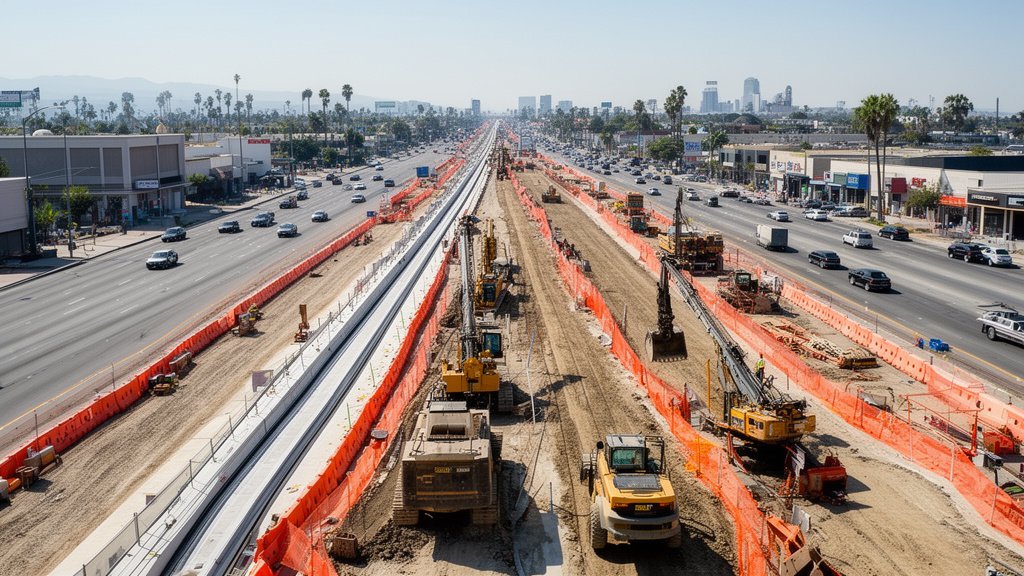
The Los Angeles County Metropolitan Transportation Authority (LA Metro) has officially broken ground on the East San Fernando Valley Light Rail Transit Project, a monumental $4 billion infrastructure undertaking that promises to reshape the transit landscape of Southern California. The 6.7-mile light rail line, which will run predominantly along Van Nuys Boulevard, represents the San Fernando Valley’s most significant investment in fixed-rail transit since the dismantling of the Pacific Electric Railway’s legendary “Red Cars” in the 1950s. This project is not merely an engineering feat; it is a profound structural shift in a region historically defined by the private automobile.
Key Highlights
- Investment: A $4 billion capital allocation to restore fixed-rail transit to the San Fernando Valley.
- Infrastructure: A 6.7-mile light rail transit (LRT) corridor designed to alleviate congestion on one of the busiest thoroughfares in Los Angeles.
- Connectivity: Integration of 11 strategically placed stops along the Van Nuys Boulevard corridor, linking major transit hubs and residential communities.
- Historical Milestone: First light rail service in the Valley since the decline of the Pacific Electric Railway system in the mid-20th century.
Reclaiming the Rails: The East San Fernando Valley Transit Renaissance
The commencement of construction marks the end of decades of advocacy and planning, positioning the East San Fernando Valley Light Rail as the backbone of the region’s future mobility network. For the residents of the Valley, this project is the culmination of a long-standing desire to bridge the gap between their community and the broader Los Angeles rail network. The project is being managed by LA Metro in partnership with the Federal Transit Administration (FTA) and Caltrans, ensuring federal oversight and adherence to rigorous environmental and safety standards.
The Engineering of a New Artery
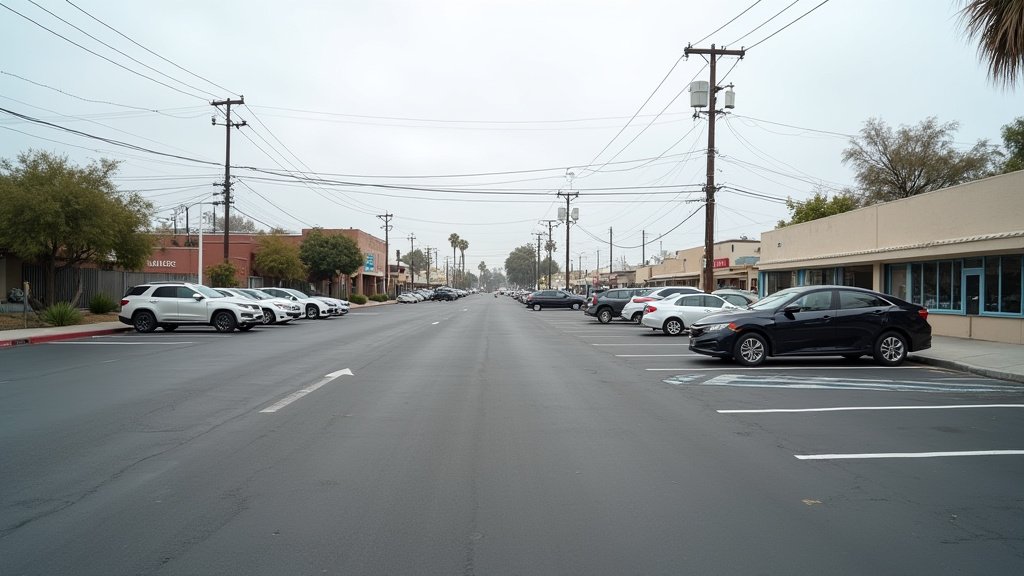
Engineering the 6.7-mile line involves complex urban integration. The route is designed to operate primarily within a median-running configuration, meaning the light rail vehicles will glide down the center of Van Nuys Boulevard. This design choice is deliberate: it prioritizes transit speed and reliability by separating trains from standard automotive traffic flow, significantly reducing travel times compared to bus-only transit.
However, the construction phase will be a test of endurance for local businesses and commuters. Metro officials have emphasized a phased construction plan intended to keep Van Nuys Boulevard operational, utilizing traffic mitigation strategies and night-shift work to minimize the disruption that typically plagues multi-billion dollar transit builds. The engineering teams are also incorporating advanced utility relocation and subterranean stabilization to ensure the tracks can handle the high-volume service frequency planned for the line’s 2030-2031 projected opening.
Historical Continuity and the ‘Red Car’ Legacy
To understand the magnitude of this project, one must look back to the 1950s. The Pacific Electric Railway, with its iconic red cars, once wove a complex web across the San Fernando Valley. Its removal in favor of sprawling freeway development and bus lines is often cited by urban historians as a critical turning point that cemented LA’s car-dependent culture. The new light rail project serves as a modern correction to this mid-century planning philosophy. It acknowledges that as the Valley’s population density increases, reliance on a single-mode transportation system is no longer sustainable. By re-establishing a fixed-rail connection, LA Metro is effectively reconnecting the Valley to the rest of the LA basin in a way that hasn’t been possible for over seventy years.
Economic and Environmental Implications
Beyond the rails and concrete, the project is a massive economic stimulus. The $4 billion price tag accounts for not just the tracks and stations, but the acquisition of rolling stock, the construction of a new maintenance facility, and extensive system testing. Local economic analysts predict that the construction period itself will generate thousands of union-labor jobs, while the long-term impact on the Van Nuys corridor could be transformative. Property values near the 11 stops are expected to shift, with the City of Los Angeles planning for transit-oriented development (TOD)—creating higher density housing and commercial zones near the stations to encourage ridership and reduce carbon emissions.
Environmentally, the project is a cornerstone of LA Metro’s strategy to achieve carbon neutrality in its operations. By providing a clean, electric alternative to the thousands of daily car trips currently traversing Van Nuys Boulevard, the light rail is expected to significantly reduce regional greenhouse gas emissions.
FAQ: People Also Ask
Q: When will the East San Fernando Valley Light Rail be operational?
A: While construction has officially begun, the project is a multi-year undertaking. LA Metro anticipates revenue service to commence around 2030 or 2031, depending on construction pacing and testing phases.
Q: How many stations will the new light rail have?
A: The project features 11 stations spanning the 6.7-mile route along Van Nuys Boulevard, connecting critical points between the Van Nuys Metrolink station and the San Fernando area.
Q: Will this project replace the current bus service on Van Nuys Boulevard?
A: The light rail is designed to complement rather than fully replace transit options. While it will become the primary transit spine for the corridor, complementary bus routes will likely be optimized to act as ‘feeders,’ bringing commuters from surrounding neighborhoods to the light rail stations.
Q: How does this project align with LA Metro’s long-term sustainability goals?
A: The project is a key component of Metro’s broader ‘Vision 2028’ plan, which seeks to reduce traffic congestion and reliance on fossil-fuel vehicles by expanding the rail network to underserved populations in the Valley.