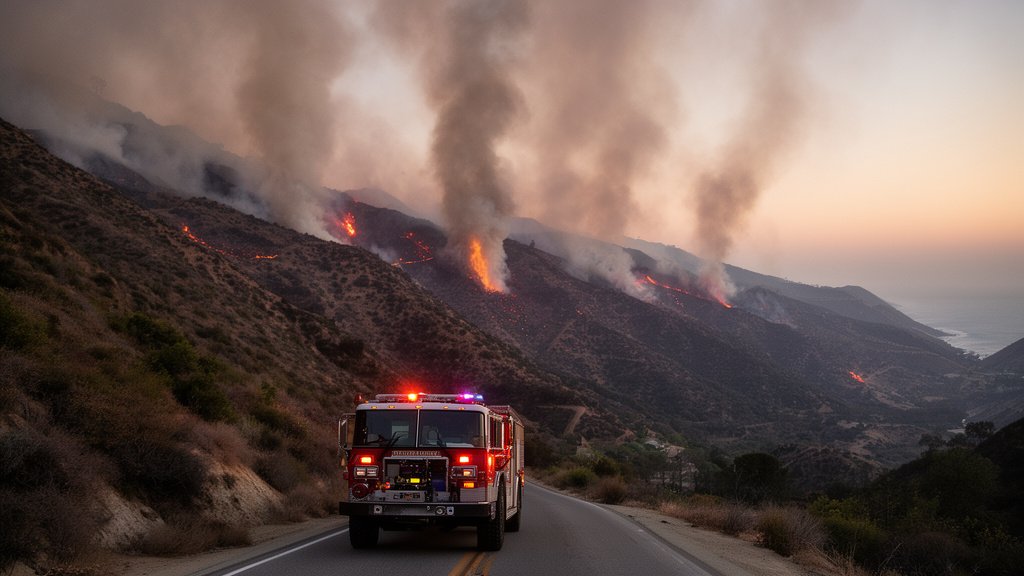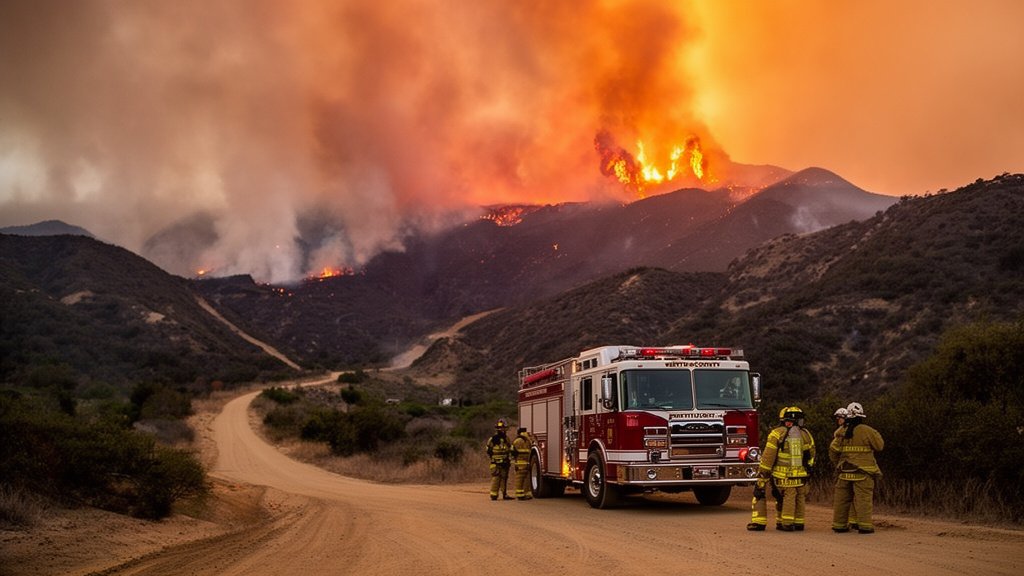
A catastrophic, fast-moving wildfire is tearing through Southern California, reducing homes to ash and forcing thousands to flee as powerful Santa Ana winds create near-impossible conditions for emergency responders. The blaze, identified as the Mountain Fire in Ventura County, has rapidly escalated, prompting immediate evacuation orders for neighborhoods in Camarillo and surrounding areas. Authorities have taken the drastic step of evacuating sensitive locations, including a local juvenile detention facility, as the fire continues to consume structural fuel and dry vegetation under a relentless “Red Flag” weather warning.
Key Highlights
- Rapid Escalation: The Mountain Fire expanded significantly within hours, driven by intense Santa Ana wind gusts that hampered initial containment efforts.
- Mandatory Evacuations: Thousands of residents have been ordered to evacuate, with shelters established for displaced families and individuals.
- Facility Protection: Among the priority evacuation zones was a juvenile detention facility, ensuring the safety of inmates and staff during the emergency.
- Extreme Weather: The National Weather Service (NWS) has maintained Red Flag warnings, noting that low humidity and high winds could prolong dangerous fire conditions through Saturday.
The Mountain Fire: A Crisis in the Wildland-Urban Interface
The ignition of the Mountain Fire represents a textbook example of the extreme vulnerability of the Wildland-Urban Interface (WUI) in Southern California. As the blaze tore through Ventura County, the combination of arid landscape conditions and the season’s first major Santa Ana wind event created an explosive environment. For residents, the sudden nature of the evacuation orders underscored the volatility of the region’s current wildfire climate. The fire, which gained momentum rapidly, quickly breached defensible spaces, proving that even well-prepared properties face severe threats when winds reach near-hurricane force speeds.
The Meteorological Drivers
Meteorologists from the National Weather Service (NWS) have characterized this event as a “significant wind event.” The Santa Ana winds—a phenomenon where high pressure over the Great Basin pushes air down toward the Southern California coast—are heating and drying significantly as they descend. This process, known as adiabatic warming, strips moisture from vegetation, effectively turning the landscape into a tinderbox. By the time these gusts reach the coastal foothills, they are capable of lofting embers miles ahead of the main fire front, starting spot fires that overwhelm containment lines.
Operational Response and Logistics
The Ventura County Fire Department (VCFD), in coordination with CAL FIRE, has deployed massive resources to combat the fire. The evacuation of the juvenile detention center highlights the complex logistical challenges faced by local authorities. Such facilities require specialized transportation and security protocols, adding layers of difficulty to the evacuation effort. Firefighting crews have had to split their focus between active structure protection—attempting to save homes—and the broader strategic objective of establishing containment lines before the winds shift or intensify further.
Economic and Community Impact
Beyond the immediate physical loss of homes, the fire has cast a shadow over the regional real estate and insurance markets. Southern California communities have historically grappled with wildfire risk, but the increasing frequency and intensity of these events are forcing a re-evaluation of property insurance accessibility. Homeowners in the path of the Mountain Fire are facing not only the immediate trauma of evacuation but the long-term uncertainty of recovery. Furthermore, the potential impact on public infrastructure—including power grids managed by Southern California Edison—remains a critical point of analysis for utility regulators, who continue to weigh the benefits of Public Safety Power Shutoffs (PSPS) during extreme wind events.
Future Outlook and Mitigation Strategies
As the region looks toward the remainder of the fire season, the conversation has shifted toward long-term resilience. Emergency management agencies are emphasizing the importance of “defensible space”—the practice of clearing vegetation around structures—to provide firefighters with the best possible opportunity to save homes. Additionally, there is a push for increased investment in fire-resistant building materials and microgrid technologies to prevent the catastrophic failure of local power lines during wind events. While these strategies are designed to mitigate future risk, they provide little solace to the families currently grappling with the aftermath of the Mountain Fire.
FAQ: People Also Ask
1. What causes the current “Red Flag” warning in Southern California?
Red Flag warnings are issued when a combination of high winds, low relative humidity, and dry vegetation creates extreme fire behavior. In this case, Santa Ana winds are the primary driver, transporting extremely dry air from inland regions to the coast.
2. How are authorities managing the evacuation of sensitive facilities like detention centers?
Evacuations of high-security or sensitive facilities like juvenile detention centers are executed via multi-agency coordination. This involves dedicated transport vehicles, law enforcement escorts, and pre-arranged transfer locations to ensure the security and health of individuals while moving them away from the fire’s path.
3. Is the Mountain Fire fully contained?
As of the most recent updates, the fire remains highly active. Containment efforts are ongoing, and the situation is fluid. Residents are urged to monitor the Ventura County Fire Department’s official channels for real-time data on containment percentages and evacuation zone updates.
4. What should residents do if they are in an evacuation zone?
Residents must leave immediately if ordered. Do not attempt to stay and fight the fire, as conditions can change in minutes. Ensure “Go Bags” with essential documents and medications are ready, and follow the instructions provided by local law enforcement and emergency services.