The Legal Clash Over California’s Election Protocols
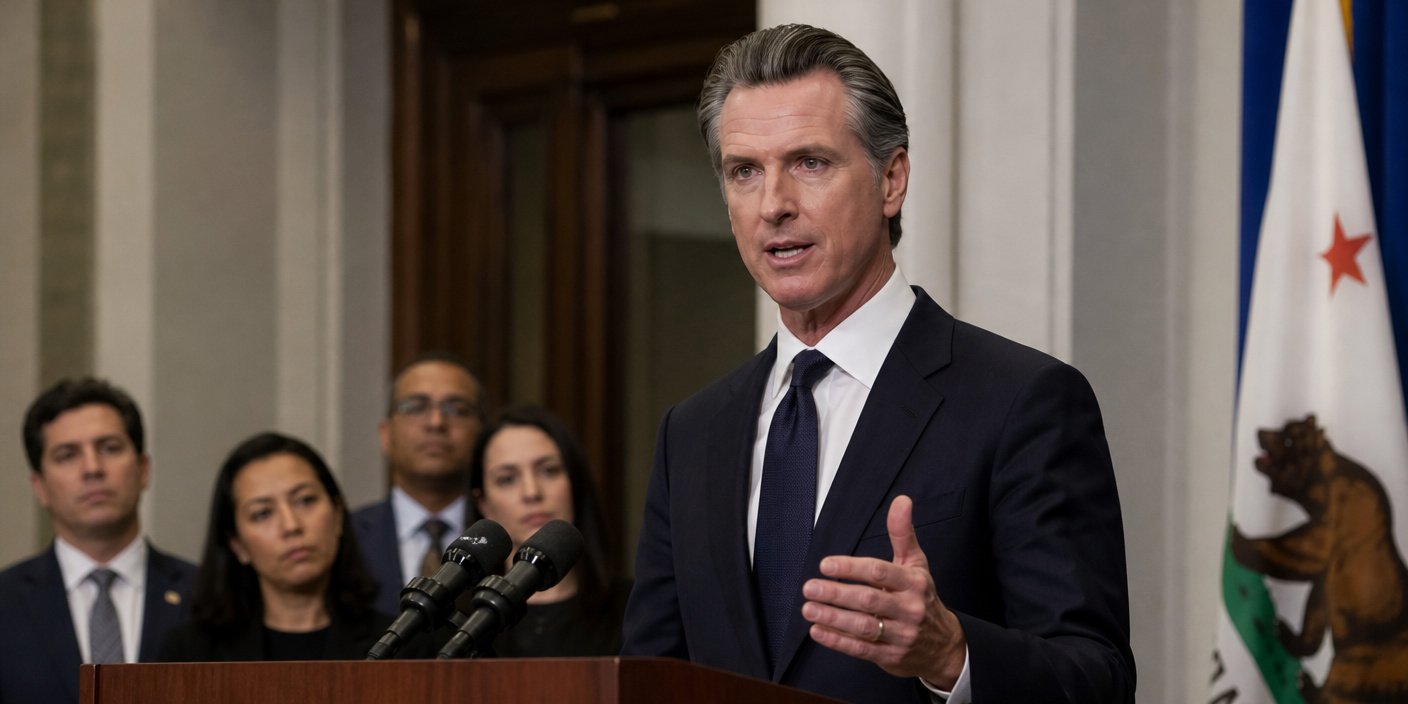
Governor Gavin Newsom has issued an unequivocal condemnation of the latest legal maneuver initiated by the Trump-led Department of Justice (DOJ), which directly challenges California’s established election integrity protocols. The lawsuit, which names top California election officials, including Los Angeles County Registrar-Recorder Dean Logan, centers on accusations that the state has failed to adequately maintain voter rolls. Governor Newsom, however, has framed the litigation as a “desperate effort to suppress voter turnout” barely months before the 2026 election cycle is set to intensify, signaling a new, aggressive phase in the battle for democratic processes.
The Department of Justice’s Legal Basis
The core of the DOJ’s complaint relies on Section 8 of the National Voter Registration Act (NVRA). The federal government alleges that California has not taken sufficient steps to systematically remove ineligible voters from their registration lists—such as those who have passed away or moved to different jurisdictions. The DOJ claims that by failing to purge these records, the state is creating an environment susceptible to administrative error or exploitation. This is not the first time federal agencies have scrutinized state voter list maintenance, but the timing of this specific filing, coming from a newly empowered DOJ, has triggered a defensive posture from California’s executive leadership.
Governor Newsom’s Rebuttal: A Strategy of Fear?
Governor Newsom did not mince words during his response, characterizing the lawsuit not as a good-faith effort to improve election security, but as a political weapon designed to instill doubt in the electoral process. By targeting specific officials, including Dean Logan, the DOJ is, in Newsom’s view, attempting to exert federal pressure on the local level to force changes that could make it harder for registered voters to cast their ballots.
“This is a coordinated attempt to intimidate our local administrators and sow chaos,” Newsom stated. His office maintains that California’s procedures are fully compliant with the NVRA and that the state has already implemented robust, legally sound methods for list maintenance that balance federal requirements with the fundamental right to vote.
The Pressure on Local Election Infrastructure
The inclusion of Los Angeles County Registrar-Recorder Dean Logan as a central figure in this legal dispute highlights the immense pressure being placed on county-level officials. Registrars, who are responsible for the logistical heavy lifting of democracy—from verifying signatures to managing polling sites—are now being positioned as the frontline of a federal-state legal conflict.
The Burden on LA County
As one of the largest election jurisdictions in the United States, Los Angeles County’s administrative processes are naturally high-profile. When the DOJ singles out the LA County Registrar, it sends a signal to every other county in the state. For officials like Logan, this creates a dual burden: ensuring that the upcoming 2026 election proceeds without a hitch while simultaneously navigating the legal discovery and defense mandates imposed by this federal lawsuit. The administrative energy required to respond to such suits is, according to state officials, a distraction from the primary mandate of conducting fair, accessible elections.
Legislative and Administrative Compliance
Critics of the DOJ suit argue that the federal government is misinterpreting the NVRA’s mandates. While the law requires list maintenance, it also strictly protects voters from being purged arbitrarily. California’s current system relies on cross-referencing death records, change-of-address data from the post office, and other reliable sources. Governor Newsom’s administration argues that if the state were to follow the DOJ’s aggressive purge recommendations, it would inevitably lead to legitimate voters being wrongly removed from the rolls, creating a disenfranchisement crisis that far outweighs the administrative concerns raised by the federal government.
Future Implications for the 2026 Cycle
As we look toward 2026, the political stakes could not be higher. This lawsuit is likely to become a central narrative in the California gubernatorial and congressional races, serving as a proxy war for broader ideological divides regarding election “integrity” versus “voter access.”
The Constitutional Tension
This dispute represents a classic tension in American federalism. While the states have the authority to manage the mechanics of their own elections, the federal government maintains the authority to ensure those elections comply with civil rights laws. The question at the heart of this lawsuit is where administrative oversight ends and federal overreach begins. Legal analysts suggest this case could eventually wind its way through the courts, potentially setting a new precedent for how federal agencies can engage with state election officials.
Assessing the Voter Suppression Narrative
Is the DOJ’s lawsuit truly about election integrity? Supporters of the administration might argue yes, pointing to concerns over voter registration databases. However, critics, including Governor Newsom, point to the historical context of similar litigation in the past, which often precedes efforts to restrict ballot access. By framing the lawsuit as “voter suppression,” Newsom is aiming to mobilize the base, reminding voters that administrative battles, while seemingly bureaucratic, have real-world consequences for the ballot box.
FAQ: People Also Ask
1. What is the National Voter Registration Act (NVRA)?
Passed in 1993, the NVRA, often called the “Motor Voter Act,” was designed to enhance voter participation by making it easier to register to vote while maintaining the integrity of voter lists. Section 8 outlines the requirements for states to keep their voter registration rolls accurate and current.
2. Why is Dean Logan involved in this lawsuit?
Dean Logan, as the Los Angeles County Registrar-Recorder, is responsible for overseeing the largest election jurisdiction in the country. The DOJ named him in the lawsuit to put direct legal pressure on the largest voting district in California, signaling that federal scrutiny is targeting the mechanics of California’s election administration.
3. How has Governor Newsom responded to the allegations?
Governor Newsom has dismissed the lawsuit as a political maneuver, labeling it “voter suppression.” He argues that California’s voter maintenance procedures are compliant with federal law and that the lawsuit is designed to create confusion and intimidation ahead of the 2026 elections.
4. Will this lawsuit affect the 2026 election outcome?
While the lawsuit will certainly play out in the courts for months, the immediate impact may be psychological and administrative. It forces election officials to devote resources to legal defense and creates a narrative of instability that can be exploited by political campaigns on both sides of the aisle.