The Santa Monica coastline is poised to become the new epicenter of Southern California’s cultural landscape as the inaugural Ocean Way Festival kicks off on September 26, 2026. This two-day event, set against the iconic backdrop of the Pacific Ocean, aims to fuse world-class musical performances with the unique aesthetic of the Los Angeles beach lifestyle. By securing a high-profile lineup for its opening day—including The Killers, Jack White, and Sublime—the festival is positioning itself not just as a concert series, but as a permanent fixture in the city’s annual cultural calendar.
Key Highlights
- Official Launch: The festival debuts on September 26, 2026, on the sands of Santa Monica Beach.
- Star-Studded Opening: The first day features a powerhouse lineup headlined by The Killers, Jack White, and Sublime.
- New Cultural Landmark: Organizers are positioning Ocean Way as a defining beachside event for Los Angeles, blending music, tourism, and community.
- Format: The inaugural event is structured as a two-day festival experience, aiming to blend high-energy performances with the natural geography of the Pacific coast.
A New Tide: The Strategic Rise of Ocean Way Festival
Curating a California Legacy
The curation strategy for the Ocean Way Festival’s opening day is calculated to bridge the gap between generational demographics and regional identity. By anchoring the event with The Killers—a band whose stadium-filling anthems resonate globally—and Jack White—a paragon of alternative rock innovation—the festival immediately commands international attention. However, the inclusion of Sublime is the tactical masterstroke. As a band synonymous with the Southern California sound and the beach culture of the 1990s and 2000s, Sublime anchors the festival in the authentic fabric of coastal Los Angeles. This mix avoids the generic pitfalls of “destination festivals” by rooting the experience in the specific musical lineage of the West Coast.
The Logistical Challenge of a Beachside Venue
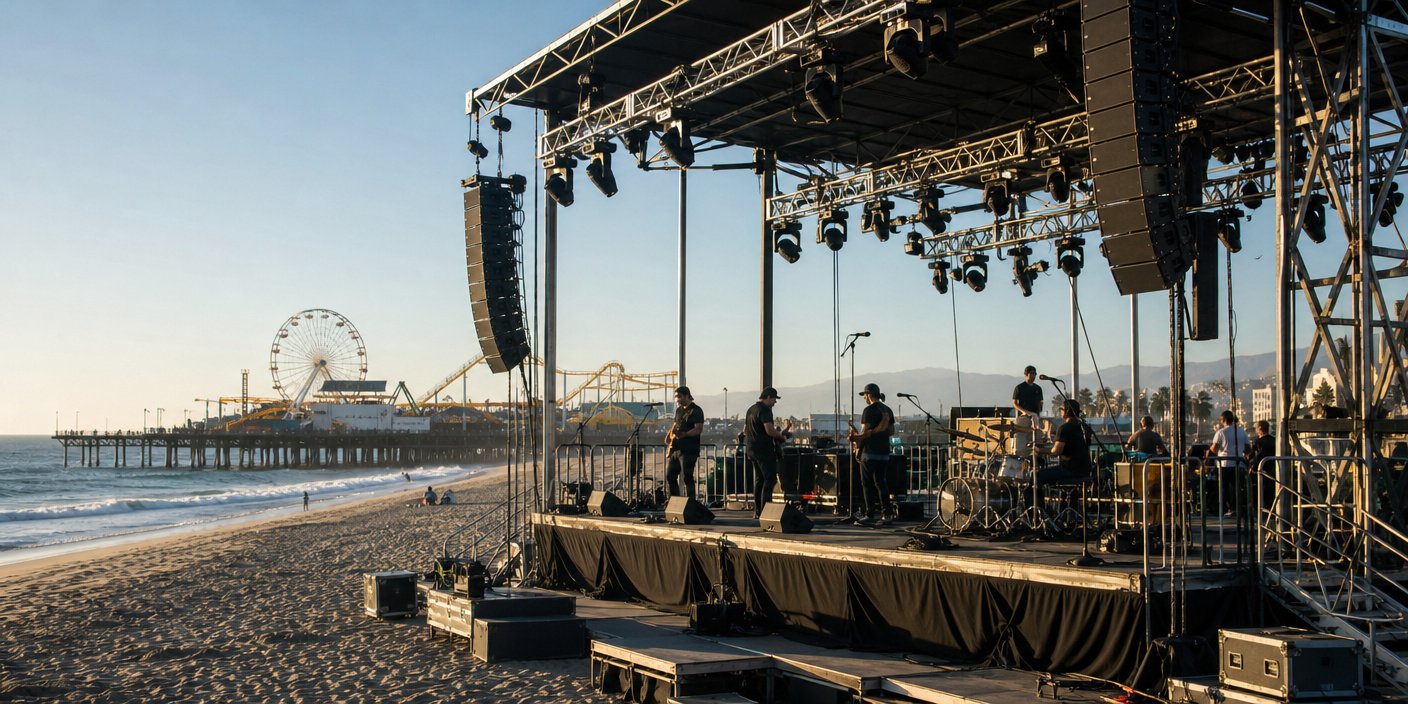
Transforming Santa Monica Beach into a Tier-1 concert venue is a feat of modern event infrastructure. Unlike enclosed arenas or fixed-site festival grounds like Indio’s Empire Polo Club, the beach presents a complex environmental and logistical puzzle. Organizers must contend with tide patterns, the delicate preservation of the coastline, and the logistical nightmare of sound isolation on an open, wind-swept flat surface. The “Ocean Way” branding is clearly an intentional nod to the historic recording studios of the area, suggesting that the organizers intend for this to be a place where musical legacy is both honored and created. The ambition is to create a “cultural landmark,” implying that this is not a one-off promotional stunt but a multi-year effort to change the face of Los Angeles entertainment.
Economic and Environmental Ripple Effects
An event of this magnitude inevitably shifts the economic tide of the local tourism sector. A festival on Santa Monica Beach draws a different demographic than the traditional “corporate” festival circuit—it attracts the local “beach-goer” crowd alongside international tourists. This influx of foot traffic has downstream effects on local hospitality, retail, and short-term rentals within the Santa Monica and Venice districts.
Furthermore, the organizers are under extreme pressure to pioneer sustainable festival practices. Because the stage is set directly on the sand, waste mitigation and sand preservation will be the primary metrics by which the city and the public measure the festival’s success. If the Ocean Way Festival can successfully pull off this inaugural year without compromising the environmental integrity of the beach, it will likely set a new gold standard for coastal events globally.
Secondary Angles: Future-Proofing the Coastal Festival
1. Permitting and Public Space: The festival sets a precedent for how public land in Santa Monica is utilized. Analysts are watching to see how the city balances revenue generation with public access to one of the most visited stretches of coastline in the world.
2. The Evolution of the “Destination” Festival: Unlike the desert festivals that have dominated the last decade, Ocean Way signals a shift toward “urban-beach” festivals. Attendees prefer the accessibility of the city over the isolation of the desert, suggesting a shift in festival consumer preferences toward comfort and proximity to urban amenities.
3. Post-Event Preservation Metrics: The long-term viability of the festival will depend less on the lineup and more on the “Leave No Trace” efficacy. Future expansions of the festival will rely on the 2026 data regarding the impact of high-decibel audio and heavy foot traffic on the shoreline’s ecosystem.
FAQ: People Also Ask
Q: What is the exact location for the Ocean Way Festival?
A: The festival is being held directly on Santa Monica Beach, utilizing the expansive public space near the Santa Monica Pier, ensuring a quintessential Southern California experience.
Q: How does the Ocean Way Festival differ from other LA-based festivals?
A: Ocean Way distinguishes itself by its direct, sand-based “beachside” location and its specific focus on the “California Sound,” blending heritage acts like Sublime with modern rock icons like The Killers and Jack White.
Q: Is the festival a multi-day event?
A: Yes, the inaugural Ocean Way Festival is a two-day event, starting on September 26, 2026, with an additional day of programming to follow.
Q: Are there plans for the festival to return in 2027?
A: While the 2026 event is being marketed as the “inaugural” festival, the goal is to establish it as a new cultural landmark, strongly implying an intent to create a recurring annual franchise.