Los Angeles County emergency officials are calling on residents to prepare for an upcoming, potentially severe El Niño storm season. Crews are currently inspecting infrastructure like dams and storm drains, while officials emphasize that the record-high ocean temperatures in the eastern Pacific signal a dangerous season ahead. With the memory of past devastating atmospheric rivers still fresh, the County is moving to fortify critical systems, urging citizens to treat the current forecast as a call to immediate action rather than a distant possibility.
Key Highlights
- Infrastructure Hardening: The Los Angeles County Department of Public Works has initiated comprehensive inspections of debris basins, dams, and storm drain systems to ensure maximum capacity for heavy precipitation.
- Record Ocean Temperatures: Climatologists highlight that eastern Pacific temperatures are tracking well above historical averages, a key indicator that fuels moisture-rich atmospheric rivers targeted at Southern California.
- Ready LA County Initiative: Residents are strongly advised to utilize the Ready LA County portal to sign up for emergency alerts and create a customized household preparedness plan before the first major storm hits.
- Historical Precedence: Experts are comparing current projections to severe El Niño years like 1997-1998 and 2015-2016, which resulted in significant flooding, mudslides, and power outages across the basin.
Fortifying the Foundation: The Science of Preparedness
The looming El Niño cycle represents a complex meteorological phenomenon that disproportionately impacts Southern California. Unlike standard winter storm systems, El Niño alters the behavior of the subtropical jet stream, creating a superhighway for moisture-laden air masses to dump extreme rainfall across the Los Angeles metropolitan area. The current state of the eastern Pacific, characterized by anomalies in sea surface temperatures, provides the fuel necessary to sustain these atmospheric rivers for extended durations.
The Operational Response: Public Works at Work
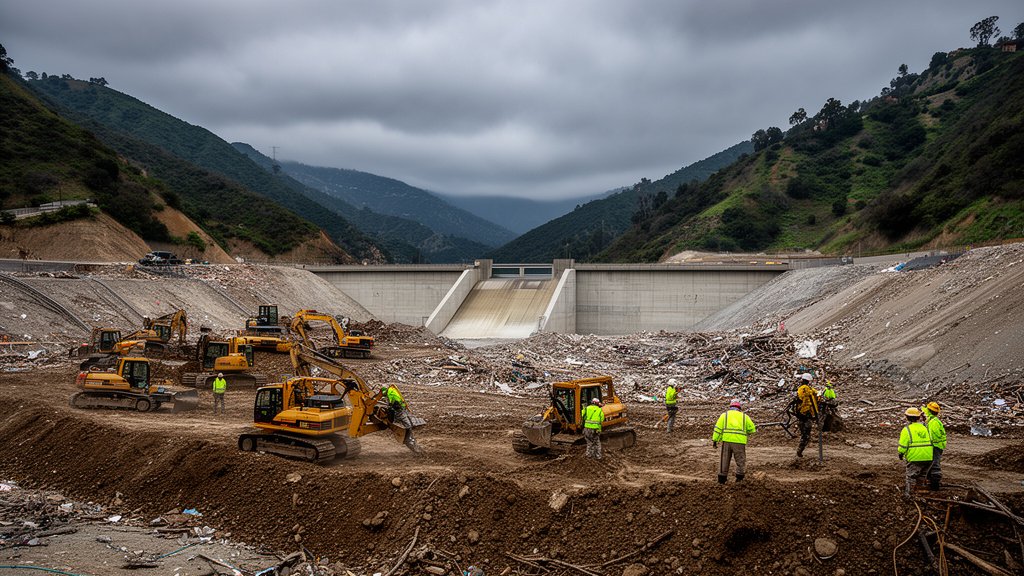
The Los Angeles County Department of Public Works (DPW) operates a massive network of flood control channels, pump stations, and debris basins. Under the current mandate, crews are engaging in aggressive maintenance cycles. This includes clearing thousands of tons of sediment from debris basins located at the mouths of mountain canyons—a critical task to prevent mudslides from reaching residential communities. Furthermore, engineering teams are testing the mechanical integrity of flood gates and dam spillways, including at key installations like the Big Tujunga Dam and Hansen Dam, which serve as the first line of defense for the San Fernando Valley and beyond.
Beyond structural maintenance, DPW is deploying rapid-response teams capable of clearing road blockages caused by downed trees or minor slope failures during peak storm hours. This proactive posture is designed to minimize the impact on essential services, ensuring that emergency vehicles can navigate the county even during extreme weather events.
The Climate Variable: Why This Season Matters
Climate scientists note that the interplay between rising global ocean temperatures and the El Niño cycle is creating a ‘new normal’ for regional weather patterns. The sheer volume of water vapor available in the atmosphere during this cycle increases the probability of high-intensity, short-duration ‘bomb cyclone’ events. While public infrastructure is designed for significant loads, the intensity of recent storms suggests that the existing systems are being pushed to their design limits. This is why the County’s message is so insistent: the capacity to manage water is finite, and once debris basins reach capacity, the risk of localized flooding increases exponentially.
Individual Responsibility: What Residents Must Do Now
While the government works on a macro scale, the micro-level preparation falls on the individual. Emergency management experts stress that the time to prepare is not when the rain begins, but weeks in advance.
1. Flood Insurance and Documentation: Standard homeowner insurance often does not cover flood damage. Residents in or near designated flood zones are urged to review their policies and consider the National Flood Insurance Program (NFIP) if applicable. Documentation of existing property conditions is essential for potential claims.
2. Emergency Kits: An emergency kit should sustain a household for at least 72 hours. This includes potable water, non-perishable food, flashlights, portable chargers, and a battery-operated radio to receive NOAA weather updates if the power grid fails.
3. Debris Management: Residents living near hillsides or in flood-prone areas should clear gutters, downspouts, and nearby storm drains on their property. Even minor blockages can lead to significant water intrusion during a deluge.
Long-term Economic and Strategic Impacts
The economic implications of a severe El Niño are substantial. Beyond property damage, the disruption to supply chains, public transportation, and commercial operations can cost the county millions in productivity. By investing in proactive maintenance and public education now, officials hope to mitigate the cascading effects that typically follow severe weather events. This strategy is also a nod to future-proofing; as climate models become more refined, the County is integrating ‘green infrastructure’—such as permeable pavement and expanded wetland absorption—to better manage storm runoff in the long term, moving away from a reliance solely on concrete drainage.
FAQ: People Also Ask
Q: How do I know if my home is in a high-risk flood zone for this El Niño season?
A: Residents can visit the LA County Department of Public Works flood hazard map portal online. Simply enter your address to view updated FEMA flood zone designations and historical data specific to your parcel.
Q: Will the trash collection schedule be impacted by the storms?
A: In the event of severe weather, waste collection may be delayed for safety reasons. Residents should follow the official LA County DPW social media channels and the Ready LA County website for real-time service alerts.
Q: What is the difference between an ‘Atmospheric River’ and an ‘El Niño storm’?
A: El Niño is a climate pattern caused by warmer ocean temperatures, which affects global weather. An atmospheric river is the physical weather system—a narrow corridor of concentrated moisture—that often forms or is strengthened by El Niño conditions, resulting in heavy, sustained rainfall.