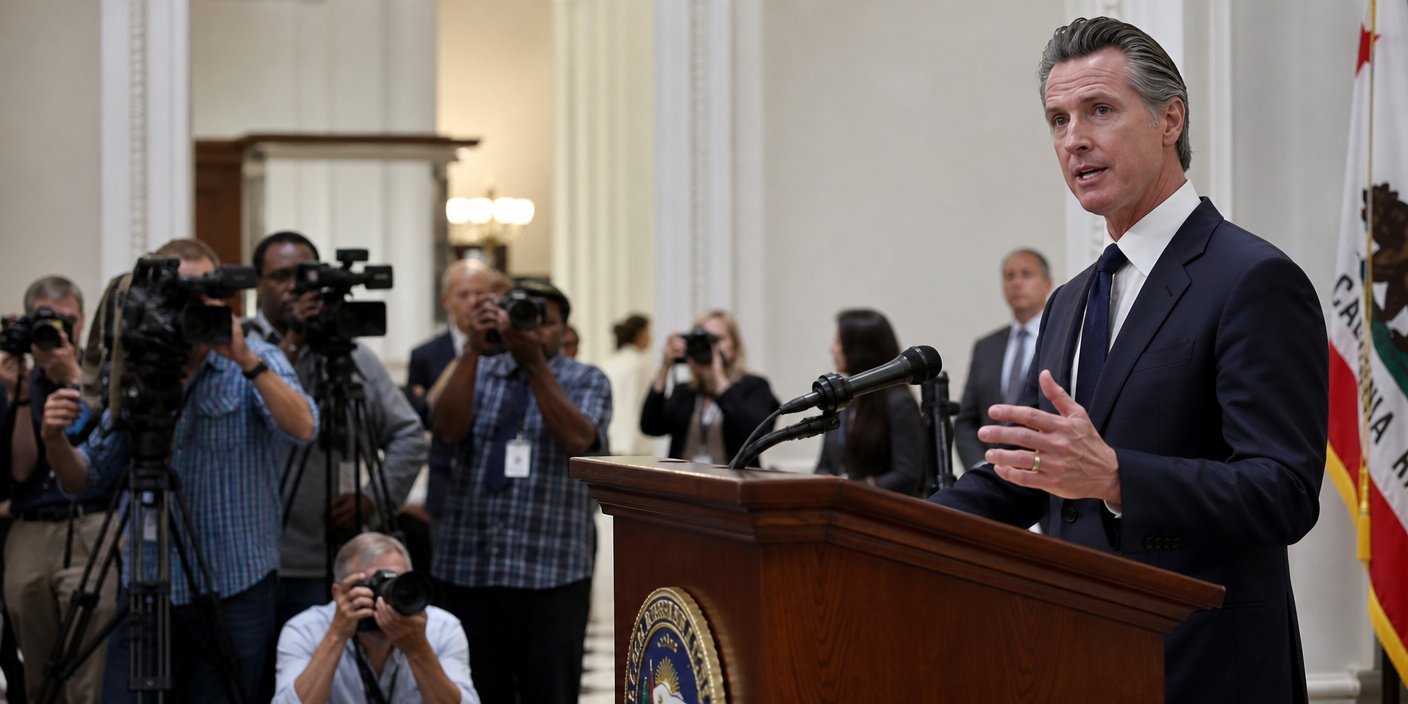
Governor Gavin Newsom has abandoned a significant portion of his legislative proposal intended to shield utility companies from unlimited wildfire liability, citing intense public and political pushback. The retreat marks a pivotal moment in the state’s ongoing struggle to balance corporate accountability, utility solvency, and the escalating threat of climate-driven disasters. For months, the Governor’s administration attempted to negotiate a compromise that would limit the financial exposure of major utility players, most notably Pacific Gas and Electric (PG&E), in the wake of catastrophic wildfire seasons. However, the proposal faced an insurmountable wall of opposition from consumer advocacy groups, fire survivors, and legislators who viewed the move as an unjust bailout for the utility sector.
The “Inverse Condemnation” Controversy
At the heart of the proposed legislation was an attempt to reform the doctrine of “inverse condemnation.” Under current California law, utilities are strictly liable for damages resulting from equipment that starts a fire, regardless of whether negligence is proven. This standard has placed a heavy financial burden on energy providers when their infrastructure fails during extreme weather events. The Governor’s original plan sought to create a more nuanced legal standard, arguing that the existing system was unsustainable and risked pushing essential utility providers into bankruptcy, which would ultimately jeopardize grid reliability for millions of Californians. Critics, however, interpreted the change as a mechanism to absolve utilities of their responsibility for maintaining safe infrastructure. The backlash was swift, with public sentiment heavily favoring the retention of the strict liability standard to ensure victims receive compensation.
Why the Public Pushed Back
The resistance to the Governor’s plan was deeply rooted in the traumatic legacy of recent wildfires. For victims who lost homes, businesses, and loved ones to fires sparked by transmission lines, the idea of limiting utility liability was perceived as a betrayal. The public outcry emphasized that the costs of climate change—and the necessary infrastructure upgrades to mitigate it—should not be passed down to ratepayers or borne by victims. Furthermore, the political optics of appearing to protect a major, investor-owned utility during a climate crisis proved to be a liability the administration could not sustain. The coalition of opposition included a diverse group of stakeholders, ranging from environmental justice organizations to fiscal conservatives who argued against market distortions that protect corporations from the full costs of their operational risks.
The Path Forward for Energy Policy
With the abandonment of these controversial provisions, the focus of the Governor’s office and the California Public Utilities Commission (CPUC) shifts toward alternative solutions for grid resilience. The legislative session is now expected to pivot toward broader infrastructure safety requirements, rather than legal liability caps. This includes accelerated undergrounding of power lines, AI-driven predictive modeling for outage management, and stricter oversight on vegetation management programs. The challenge remains significant: how to incentivize necessary grid hardening without relying on liability relief as the primary tool. Observers note that this retreat forces the state to confront the economic reality of a “new normal,” where the cost of living with wildfire risk requires massive public and private investment rather than legislative quick-fixes.
Economic Consequences of High-Risk Climates
From a secondary angle, the failure of the liability plan highlights the precarious financial position of major utilities. Institutional investors have been closely watching this space, wary of the volatility that wildfire liabilities introduce to utility balance sheets. The shift away from liability caps creates a more challenging environment for utilities to secure capital for infrastructure improvements, as credit rating agencies may continue to view them as high-risk entities. This creates a circular problem: utilities need more capital to harden the grid against climate change, but the high risk of future litigation makes that capital more expensive. This intersection of climate risk, corporate liability, and public policy is rapidly becoming one of the most critical economic challenges facing the state in the coming decade.
FAQ: People Also Ask
What is “inverse condemnation” in the context of California wildfires?
It is a legal doctrine under which a property owner may sue a government entity (or in California, an investor-owned utility treated like a government agency) for damages. For utilities, it means they are held strictly liable for damages from fires caused by their equipment, even if they were not negligent.
Why did the Governor abandon the plan?
Governor Newsom withdrew the proposal primarily due to intense political and public pressure. The plan was characterized by opponents as a corporate bailout that would remove the primary financial incentive for utilities to maintain safe, fire-resistant infrastructure.
How will this affect future energy costs for Californians?
While the liability plan was intended to stabilize costs by preventing utility bankruptcy, the shift in strategy means that the costs of grid hardening and wildfire prevention will likely continue to be an issue in ratepayer proceedings before the CPUC.
What are the next steps for utility regulation in California?
The administration is expected to focus on stricter infrastructure maintenance standards and accelerating the transition to a grid that can withstand high-wind events, likely moving away from efforts to alter liability laws.