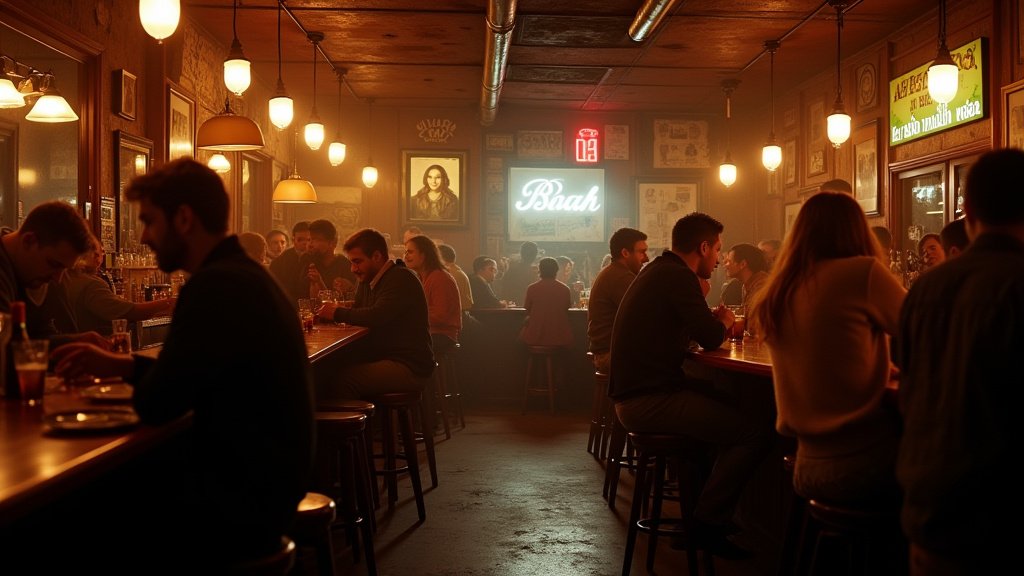
For decades, the American bar has served as the unofficial town square—a place where the rigid hierarchies of the workplace dissolve into the camaraderie of the stool. In the unique ecosystem of Burbank, California, this tradition is being meticulously documented by columnist Chris Erskine. While the city is often defined by its massive studio footprints—Disney, Warner Bros., and Nickelodeon—Erskine argues that the true soul of Burbank resides in its small, unpretentious taverns. These aren’t merely places to grab a pint; they are the modern-day hearths where the ‘wise guys’—the storytellers, the retirees, the weary film editors, and the neighborhood fixtures—gather to trade narratives that never make it into the studio scripts.
The Anatomy of a Burbank Pub
To understand the Burbank bar scene is to understand a specific strain of Los Angeles geography. Unlike the polished, high-energy beach bars of Santa Monica or the trendy, mixology-focused speakeasies of downtown Los Angeles, the Burbank local maintains a steadfast commitment to utility and comfort. Erskine’s observations point toward a specific demographic: the ‘after-work’ crowd. This isn’t a nightlife destination; it’s a decompression chamber. The interiors are often characterized by dim, amber lighting, well-worn mahogany, and a lack of pretense that is increasingly rare in the Southern California landscape. It is here that the concept of the ‘Third Place’—that crucial environment separate from home and work—finds its strongest foothold.
The Storytelling Economy
In an era dominated by digital communication, the currency of the Burbank bar is oral history. Erskine highlights how the structure of these bars facilitates an almost theatrical exchange. The ‘wise guys’ he refers to are the keepers of neighborhood lore. When two regulars strike up a conversation, they aren’t just talking about sports or the weather; they are engaged in a centuries-old tradition of character building. In these establishments, the bartender often acts as a referee, not just of drink service, but of conversational flow. The stakes are low, the narratives are often embellished, and the emotional payoff is high. This is where the friction of daily life—the frustration of a rejected script, the exhaustion of a twelve-hour shoot, or the quiet solitude of retirement—is smoothed over by the collective humor of the room. It’s a therapeutic exchange that remains analog in an increasingly digitized world.
Studio Culture and the After-Work Ritual
It is impossible to discuss the social fabric of Burbank without addressing the influence of the media industry. Burbank is, by many accounts, the creative engine of the world. However, the workers behind the magic—the sound engineers, the animators, the post-production specialists—often face high-stress environments. Erskine notes that the local tavern provides a necessary contrast to the studio environment. While the office is governed by deadlines, revisions, and executive oversight, the bar is governed by the ‘pour.’ This creates a unique social dynamic where the hierarchy is flattened. A junior editor and a senior producer might sit side-by-side, their titles rendered irrelevant by the common pursuit of a cold beer and a good story. This democratization of space is essential to the city’s mental health, providing a pressure valve that allows the creative class to reset.
The Future of Neighborhood Joints
As Burbank continues to develop, with new luxury apartment complexes and upscale retail spaces cropping up near the city center, the future of the ‘classic’ bar is a subject of intense debate. There is a tangible tension between the desire for modernization and the need to preserve the city’s character. Erskine’s observations suggest that the bars that thrive are those that respect their lineage while adapting to a changing clientele. The most successful joints are not necessarily the ones with the most expensive drink menus, but those that maintain an environment where a newcomer can walk in and feel like a regular within an hour. As we move forward, the survival of these establishments will depend on their ability to remain authentic—the quintessential ‘Burbank’ experience that balances the reality of a working-class town with the glamour of the entertainment industry.
The Erosion of Physical Spaces
One of the secondary angles identified in modern urban planning is the disappearance of ‘third places.’ As real estate prices soar in Los Angeles County, the physical space required to operate a neighborhood dive bar—one that isn’t focused on high-margin cocktails or food service—is becoming a luxury. The economic impact of this loss is profound. When a neighborhood bar closes, it’s not just a business shutting its doors; it is a community hub losing its anchor. Erskine’s writing serves as a warning and a tribute: we must support these establishments, for once they are replaced by corporate-friendly facades, the specific, gritty, charming culture of the neighborhood often goes with them. The narrative of the ‘wise guy’ is contingent on a place to tell it, and without that physical space, that history risks being lost to the void of the internet.