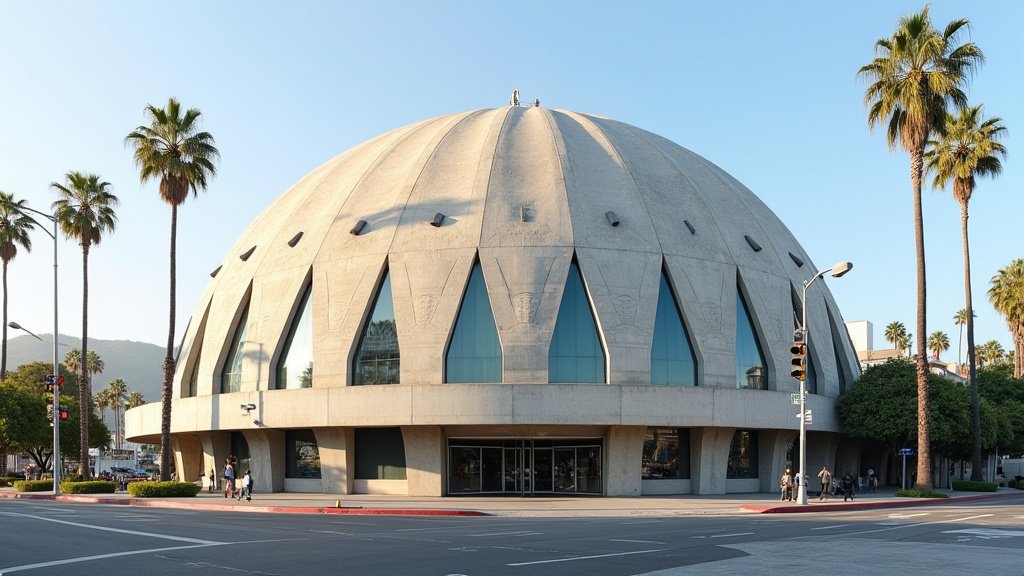
In a major victory for film preservationists and Hollywood’s cultural landscape, Sony Pictures Entertainment has officially announced a multi-year partnership to restore and reopen the iconic Cinerama Dome on Sunset Boulevard. The venue, which has remained dark since March 2021, will undergo a comprehensive renovation under a new management agreement with the acclaimed theater chain Alamo Drafthouse Cinema. This landmark project, developed in collaboration with the current property owner, Decurion Corporation, promises to restore the mid-century masterpiece to its former glory while integrating modern projection technologies, with a targeted reopening date in early 2028. The revitalization represents more than just a real estate project; it marks a significant commitment by a major studio to preserve the communal experience of cinema in the heart of Los Angeles.
- Historic Restoration: Sony Pictures and Decurion Corporation have partnered to revitalize the Cinerama Dome, preserving the architectural integrity of the world’s first concrete geodesic dome.
- Operational Partnership: Alamo Drafthouse Cinema will manage the venue, bringing its signature curation, food-and-beverage service, and cinephile culture to the historic site.
- Timeline to 2028: The restoration is scheduled to span several years, with a reopening goal of early 2028, ensuring rigorous attention to the venue’s heritage.
- Cultural Milestone: The move marks a rare instance of a major studio investing directly in the physical infrastructure of exhibition, signaling a continued reliance on high-profile, in-person theatrical experiences.
The Revival of a Hollywood Landmark
The Cinerama Dome is not merely a theater; it is a structural icon of the mid-20th century. Designed by architect Welton Becket and opened in 1963, the building was the first of its kind—a concrete geodesic marvel constructed in just 16 weeks to host the premiere of It’s a Mad, Mad, Mad, Mad World. For nearly six decades, it served as the heartbeat of Hollywood, hosting countless premieres, festivals, and blockbuster runs that defined the cinematic zeitgeist of Los Angeles.
A Partnership for Preservation
The closure of the Dome in 2021, initially triggered by the COVID-19 pandemic and exacerbated by financial pressures on its owner, Decurion Corporation, sent shockwaves through the industry. For years, the venue sat in a state of suspended animation, fueling intense speculation about its future. Sony Pictures Entertainment’s decision to intervene is seen as a strategic pivot. By securing the lease and bringing in Alamo Drafthouse, Sony ensures that the facility will not just survive, but thrive as a flagship venue. The collaboration combines the vast resources and historical legacy of a major Hollywood studio with the modern, experience-driven model that has made Alamo Drafthouse a favorite among cinephiles.
The Architectural Challenge
Restoring a structure like the Cinerama Dome presents unique technical challenges. The venue’s aesthetic is defined by its 316 pentagonal and hexagonal concrete panels. Any renovation requires balancing modern acoustic and visual requirements with the rigid mandates of the city’s historical landmark status. Sony has emphasized that the goal is “preservation with evolution,” meaning that while the exterior will remain a fixture of the Hollywood skyline, the interior will be overhauled to meet 21st-century expectations, including state-of-the-art 4K laser projection and improved seating comfort.
Beyond the Screen: Economic and Cultural Impact
The reopening is expected to provide a substantial boost to the Hollywood neighborhood, which has struggled to retain foot traffic in the post-pandemic era. By anchoring the block with a high-end, studio-backed cinema, the project acts as a cornerstone for local revitalization. For the industry at large, this investment serves as a counter-narrative to the prevailing trend of theater closures. It reinforces the notion that unique, “eventized” cinema spaces—those that offer more than just a screen, but a sense of place—remain vital to the studio business model.
The Future of Exhibition
As the industry pivots toward premium large formats and “destination” cinemas, the Sony-Alamo Drafthouse partnership offers a template for how historic theaters can remain relevant. The goal is to create a hub where film history meets modern exhibition technology. If successful, the 2028 reopening could become a blueprint for how other studios manage their relationship with the theatrical market, shifting from simple distribution to active stewardship of the theaters themselves.
FAQ: People Also Ask
Q: Why was the Cinerama Dome closed in the first place?
A: The theater shut its doors in March 2021 due to the impact of the COVID-19 pandemic on the theatrical exhibition industry. While many theaters reopened, the Dome remained closed for an extended period, leading to uncertainty about its survival until this recent deal.
Q: Will the exterior design change?
A: No. The Cinerama Dome is a protected historic-cultural monument. The restoration focuses on preserving its iconic geodesic architecture while updating the interior for modern cinematic standards.
Q: When is the official opening date?
A: While specific dates remain subject to construction progress, the partnership has publicly targeted an early 2028 opening.
Q: Who is actually running the day-to-day operations?
A: Alamo Drafthouse Cinema, known for its strict “no talking/no texting” policy and curated dining experience, will operate the venue as the primary tenant under the new arrangement.
Q: How does this impact Sony Pictures Entertainment’s strategy?
A: It represents an investment in “event cinema.” By controlling the venue, Sony can ensure a high-quality presentation for its major tentpole films, creating a prestige home for its biggest releases.