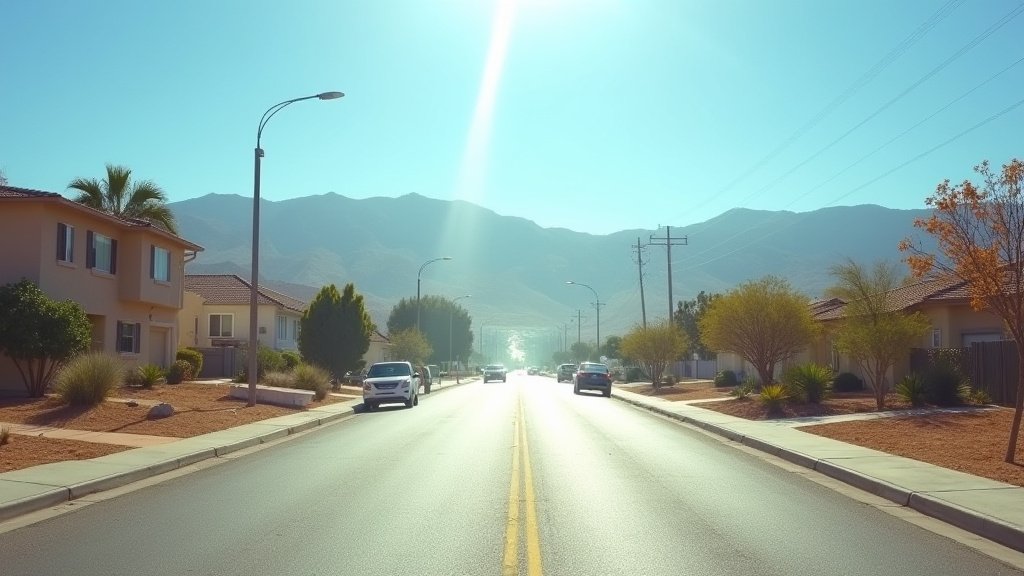
Southern California is bracing for a sustained meteorological event as the National Weather Service (NWS) has issued an extreme heat warning for the Santa Clarita, San Fernando, and San Gabriel Valleys. From Wednesday, July 22, through Monday, July 27, the region will face triple-digit temperatures ranging from 97 to 107 degrees, raising significant concerns regarding public health, infrastructure stability, and emergency preparedness throughout the Los Angeles metropolitan area.
Key Highlights
- NWS Extreme Heat Warning: Effective from Wednesday, July 22, through Monday, July 27, covering the inland valleys.
- Localized Temperature Extremes: Residents in Santa Clarita, San Fernando, and San Gabriel Valleys should prepare for temperatures reaching 97°F to 107°F.
- Public Health Alert: Elevated risk of heat-related illnesses, including heat exhaustion and heat stroke, with specific advisories for vulnerable populations.
- Infrastructure Strain: Potential for localized grid pressure as energy demand surges due to heavy air conditioning usage.
Surviving the Meteorological Siege: A Deep Dive into the SoCal Heat Wave
The Southern California region is currently positioned under a persistent high-pressure ridge, a meteorological phenomenon often referred to as a ‘heat dome.’ This atmospheric condition acts as a lid, trapping hot air at lower elevations and preventing the normal cooling influence of the Pacific Ocean from penetrating inland. For the communities nestled within the Santa Clarita, San Fernando, and San Gabriel Valleys, this means a prolonged period of intense, dry heat that will show little relief even overnight.
The Anatomy of the Valley Heat Trap
Geography plays a cruel role in this forecast. These specific valleys are topographical basins that trap heat and minimize airflow. Unlike coastal communities that benefit from the ‘marine layer’—the cooling moist air that rolls in off the ocean—the inland valleys are shielded by coastal mountain ranges. During a high-pressure event, the sea breeze is effectively blocked, turning these valleys into natural ovens. As the ground temperature rises, the ambient air temperature can spike rapidly, leading to the 107-degree peaks currently predicted by the National Weather Service.
This creates a secondary issue: poor air quality. The stagnant airmass prevents pollutants from dispersing, which, combined with intense solar radiation, can lead to increased ozone levels. For residents with respiratory conditions, this period is doubly dangerous, as they must contend with both thermal stress and declining air quality.
Public Health and Emergency Preparedness
The human body has a limited capacity to thermoregulate when exposed to such extreme temperatures for extended durations. Heat-related illness typically begins with heat cramps and can quickly escalate to heat exhaustion—characterized by heavy sweating, rapid pulse, and dizziness—and eventually, heat stroke, which is a life-threatening medical emergency.
Health officials are urging residents to treat this warning with extreme gravity. The strategy for survival during these six days relies on three pillars: hydration, mechanical cooling, and timing.
1. Hydration: Do not wait until you are thirsty. Water intake should be consistent throughout the day.
2. Mechanical Cooling: If air conditioning is unavailable, residents are encouraged to utilize public cooling centers or transition to ‘cool zones,’ such as libraries or shopping centers, during the peak heat hours of 12:00 PM to 6:00 PM.
3. Timing: Outdoor activity should be restricted to the early morning hours, before the heat reaches its zenith, or after sunset.
Grid Stability and the Infrastructure Burden
A secondary angle often overlooked by the public is the systemic stress placed on the energy grid. As the San Fernando and San Gabriel Valleys reach triple-digit temperatures, residential and commercial HVAC systems will be running at maximum capacity simultaneously. The California Independent System Operator (California ISO), which manages the state’s power grid, constantly monitors these periods for potential instability.
During extreme heat events, the grid faces a ‘duck curve’ challenge: solar production drops off in the evening just as the thermal load remains at its peak. Residents are encouraged to practice energy conservation during peak hours (typically 4:00 PM to 9:00 PM) to reduce the likelihood of rotating outages. This involves raising thermostats to 78 degrees or higher, avoiding the use of heavy appliances like dishwashers and dryers, and turning off unnecessary lighting.
Historical Context and Future Predictions
While Southern California is accustomed to hot summers, the duration of this specific heat wave is notable. Historically, heat waves in these regions have lasted two to three days. A six-day event is statistically significant because it does not allow the body or the ‘urban heat island’—the phenomenon where concrete and asphalt absorb heat during the day and release it at night—to recover.
In urbanized areas like the San Fernando Valley, the nighttime cooling is often insufficient because the concrete structures retain so much thermal mass. This leads to a cumulative effect where each day starts at a higher baseline temperature than the last. Climatologists are increasingly concerned that these prolonged events are becoming more frequent, urging city planners to integrate more green spaces, tree canopies, and cool-roof technologies to combat the urban heat island effect, which will be essential for climate adaptation in the coming decade.
FAQ: People Also Ask
Q: What is the official definition of an ‘Extreme Heat Warning’ by the NWS?
A: An Extreme Heat Warning is issued by the National Weather Service when heat index temperatures are expected to reach a high level that poses a significant risk to health, or even death, if precautions are not taken. It is the highest level of heat-related alert.
Q: Are cooling centers available in my area during this heat wave?
A: Yes. Local municipalities, including Los Angeles County and various city councils, open designated cooling centers when an extreme heat warning is in effect. Residents are advised to check the official County of Los Angeles website or call 2-1-1 to find the nearest location.
Q: How does the heat affect pets and outdoor animals?
A: Pets are highly susceptible to heat stroke. Asphalt and concrete can reach temperatures significantly higher than the ambient air, causing severe paw burns. Keep pets indoors, ensure they have constant access to cool water, and avoid walking them during the heat of the day.
Q: Why does the San Fernando Valley often get hotter than the coast?
A: The San Fernando Valley is an inland basin. The coastal mountain ranges block the cooling marine influence from the Pacific Ocean, and the valley floor retains heat, creating a microclimate that is consistently warmer than the coastal regions.