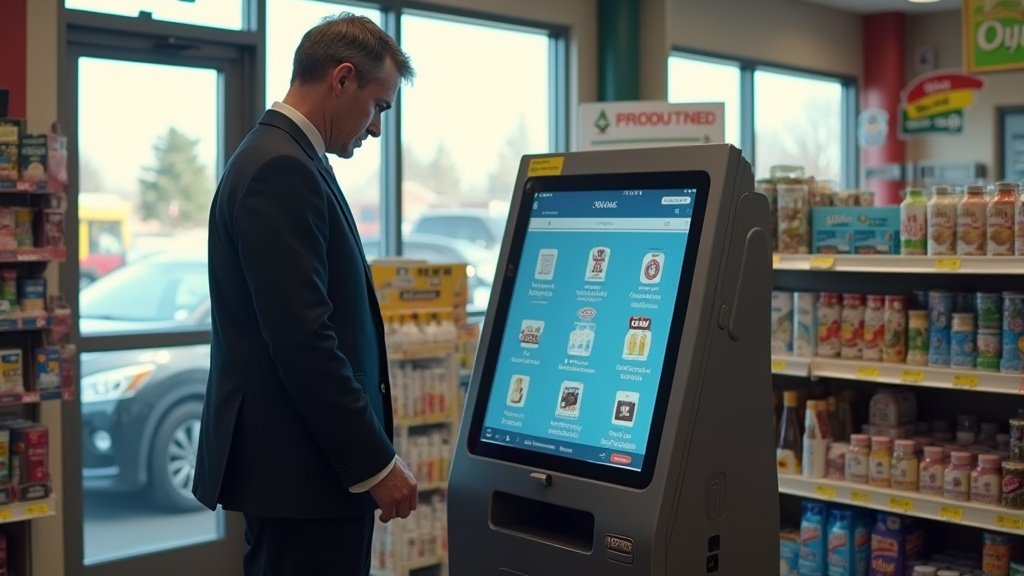
Municipalities throughout Washington State are spearheading a wave of legislative action aimed at curbing the unchecked proliferation of cryptocurrency kiosks—often referred to as Bitcoin ATMs or BTMs. Local governments are increasingly citing mounting public safety concerns, the difficulty of enforcing financial regulations, and the machines’ role in facilitating irreversible fraudulent transactions as the primary drivers behind these bans. While these kiosks were initially marketed as convenient entry points for digital assets, city councils from Kirkland to Redmond and beyond are reassessing whether the convenience outweighs the significant potential for illicit activity and financial exploitation of residents.
The Regulatory Tangle: Why Cities are Acting Now
The central tension driving these bans lies within the intersection of local zoning ordinances and state-level financial law. In Washington, cryptocurrency kiosks are frequently classified as ‘money transmitters’ under the state’s Uniform Money Services Act (UMSA). This classification requires operators to maintain strict licensure, implement robust Anti-Money Laundering (AML) programs, and verify the identities of users through rigorous Know Your Customer (KYC) protocols. However, many kiosk operators have struggled—or failed—to meet these standards, leading to a state of regulatory flux where local municipalities feel compelled to intervene where state enforcement has faced practical limitations.
By enacting municipal bans or lengthy moratoriums, cities are effectively bypassing the complex, slow-moving administrative processes of state-level licensing. These local ordinances often focus on land use, effectively barring the machines from operating within city limits by classifying them as prohibited uses in retail zones. This localized approach allows city officials to respond rapidly to reports of fraud, which have seen a marked uptick as scammers increasingly direct victims to these specific machines to deposit cash, which is then converted into untraceable cryptocurrency.
The Human Cost: Fraud and Exploitation
The primary impetus behind the legislative crackdown is the surge in localized financial crime. Unlike traditional bank transfers, transactions at cryptocurrency kiosks are generally irreversible and instantaneous. Bad actors have exploited this feature to facilitate sophisticated scams, including romance scams, government imposter schemes, and technical support fraud. Victims are often instructed to withdraw large sums of cash from their bank accounts and deposit the funds into a local BTM, believing they are securing their money or paying a debt. Once the cash is fed into the machine and converted to cryptocurrency, the funds are effectively siphoned into digital wallets owned by criminals, making recovery nearly impossible for law enforcement.
Law enforcement agencies in Washington have reported that the presence of these machines in high-traffic, 24-hour retail locations provides an ideal ‘on-ramp’ for scammers. The anonymity—or the perception of it—offered by many of these kiosks creates a vacuum where compliance is rarely observed, despite regulations requiring verification. By eliminating the physical locations for these transactions, city planners and police departments hope to break the chain of the scam before a victim can complete the deposit.
Business Impact and Future Predictions
The ban on these kiosks presents a challenge for local retailers who have historically hosted these machines to generate secondary revenue through rental fees. For small convenience stores and gas stations, the monthly lease payment from a kiosk operator could offer a modest but reliable income stream. However, the reputational risk and the potential for their establishments to be flagged as ‘high-risk’ locations have led many business owners to rethink their relationships with BTM operators.
Looking toward the future, industry analysts predict that the ‘Wild West’ era of cryptocurrency kiosks in Washington is rapidly coming to a close. We are likely to see a shift toward high-compliance, fully regulated financial service kiosks that require biometrics and government-issued ID verification. However, this shift may render many current operators unprofitable, as the costs of maintaining such high-level security compliance are significant. As cities continue to tighten the net, the industry will likely be forced to consolidate, with only the most well-capitalized and compliant operators remaining in the market.
Balancing Innovation and Consumer Protection
The conflict in Washington serves as a microcosm for a broader national debate: how do we foster financial innovation without sacrificing the safety and security of vulnerable populations? Proponents of cryptocurrency argue that these kiosks serve the unbanked and provide access to digital financial services. Conversely, critics and city officials argue that unless an operator can guarantee the same level of security and oversight as a traditional financial institution, they should not be permitted to operate in the public sphere. The current trend in Washington suggests that when innovation outpaces consumer protection, the local government’s duty to protect its citizens will almost always take precedence.