QTS Data Centers has officially catalyzed a massive shift in the Midwest’s technological landscape with the announcement of a $10 billion, 612-acre campus in Cedar Rapids, Iowa. This seven-building hyperscale project arrives at a critical juncture for the global technology sector, as the insatiable demand for AI-ready infrastructure forces providers to seek locations that offer both vast power availability and a commitment to radical sustainability. By integrating water-free cooling technology—a move projected to conserve 4 billion gallons of water annually—QTS is not merely expanding; it is setting a new performance standard for the entire data center industry.
Scaling for the AI Horizon
At the core of the Cedar Rapids project is the immediate response to the computational demands of generative AI and machine learning workloads. Modern AI clusters, driven by dense GPU arrays, require immense electrical loads and thermal management capabilities that traditional data centers are increasingly unable to support. The QTS Iowa campus addresses this through a massive, 612-acre site footprint, allowing for the architectural flexibility required to house seven distinct, massive-scale buildings.
This is not simply about adding floor space; it is about infrastructure density. The project is designed to act as a “hyperscale hub,” where the physical distance between servers is minimized to reduce latency—a vital metric for real-time AI processing. By securing this land, QTS is positioning itself as a primary landlord for the hyperscalers and enterprise tenants currently racing to build out their own AI infrastructure in the United States.
The Sustainability Mandate: Water-Free Cooling
The most significant operational innovation announced by QTS for the Cedar Rapids site is its commitment to water-free cooling. In the data center industry, water consumption has historically been a significant environmental externality, with facilities relying on massive evaporative cooling systems to dissipate the heat generated by thousands of servers running 24/7. By pivoting to an alternative cooling method, QTS expects to save roughly 4 billion gallons of water annually compared to legacy systems.
This figure is staggering. To put it in perspective, 4 billion gallons is equivalent to the annual water usage of tens of thousands of households. This shift is not just for public relations; it represents a fundamental change in the economics of data center operations. As municipalities become increasingly protective of local water rights and as ESG (Environmental, Social, and Governance) mandates tighten for corporate tenants, the ability to operate without massive water throughput provides QTS with a distinct competitive advantage over older, water-reliant facilities.
Strategic Energy & The Iowa Advantage
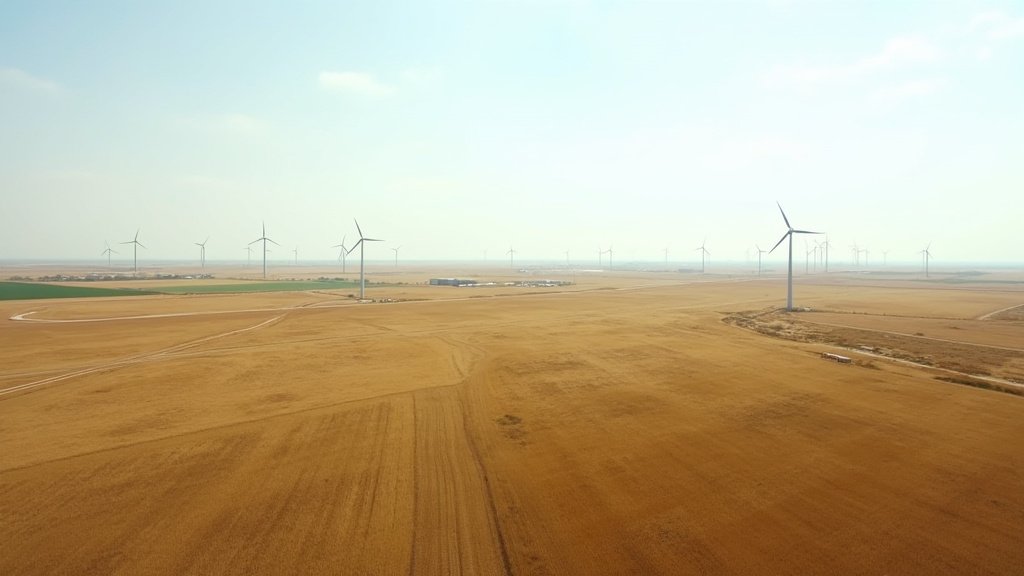
Beyond water, the project is underpinned by a commitment to carbon-free energy. Iowa has emerged as a premier destination for data centers due to its favorable combination of existing power infrastructure, wind-energy generation capacity, and geographic stability. The Cedar Rapids campus will leverage this regional power mix to ensure that the massive energy draw required by these seven buildings aligns with the shift toward renewable energy sources.
For channel partners and enterprise clients, this infrastructure is a “plug-and-play” solution for sustainability compliance. By housing their data within a carbon-free, water-neutral facility, these companies can effectively lower their Scope 2 emissions without having to build the infrastructure themselves. This outsourcing of sustainable, hyperscale capability is the future of the channel ecosystem.
The Economic Ripple Effect
The economic impact of a $10 billion investment in Cedar Rapids cannot be overstated. Beyond the construction phase, which will require thousands of specialized laborers, the operational phase will create a permanent high-tech workforce. This infusion of capital into the local economy is expected to spur secondary development in supporting industries, including logistics, specialized hardware maintenance, and fiber-optic networking.
Furthermore, this development solidifies the role of the Midwest as the new “Data Heartland.” As coastal markets face land constraints and exorbitant power costs, the Cedar Rapids project serves as a beacon for other major providers, likely signaling a multi-year migration of compute capacity toward the central United States.
Future-Proofing for 2030 and Beyond
Looking ahead, the seven-building configuration offers modularity. QTS is building for the next decade, not just the next fiscal quarter. This project represents a “future-proof” philosophy where the underlying physical infrastructure—power distribution, cooling, and fiber connectivity—is over-engineered to handle computing demands that are currently in their infancy. As AI models continue to evolve from training to inference, the demand for this level of robust, reliable, and sustainable infrastructure will only increase.
For channel partners, the QTS Iowa campus is more than just a real estate play; it is a strategic asset. Aligning with a provider that is building at this scale, with this level of sustainability, is increasingly the only way to manage the risks and requirements of the modern, AI-driven enterprise.
FAQ: People Also Ask
Why did QTS choose Cedar Rapids for this $10 billion project?
Cedar Rapids offers a strategic combination of abundant, renewable energy access and significant land availability. The 612-acre site allows for the massive, 7-building footprint necessary to meet modern hyperscale and AI demand, which is difficult to replicate in more densely populated coastal areas.
How does the water-free cooling technology work?
While QTS has not released proprietary schematics, “water-free” cooling typically involves sophisticated heat exchange systems that utilize ambient air or closed-loop refrigerant cycles, eliminating the need to evaporate water to regulate server temperatures. This is a critical move to lower the operational impact of the facility.
Does this project cater to individual business customers?
While the primary tenants will be hyperscalers, the “hyperscale era” benefits the broader channel ecosystem by providing modular capacity. Channel partners and enterprise companies can leverage QTS’s massive sustainable footprint to meet their own ESG goals and infrastructure requirements.
How many buildings are included in the QTS Iowa plan?
The approved plan includes a total of 7 buildings. The scope of the project, spanning 612 acres, is designed to allow for a phased rollout to meet the surging compute demand as AI infrastructure evolves.