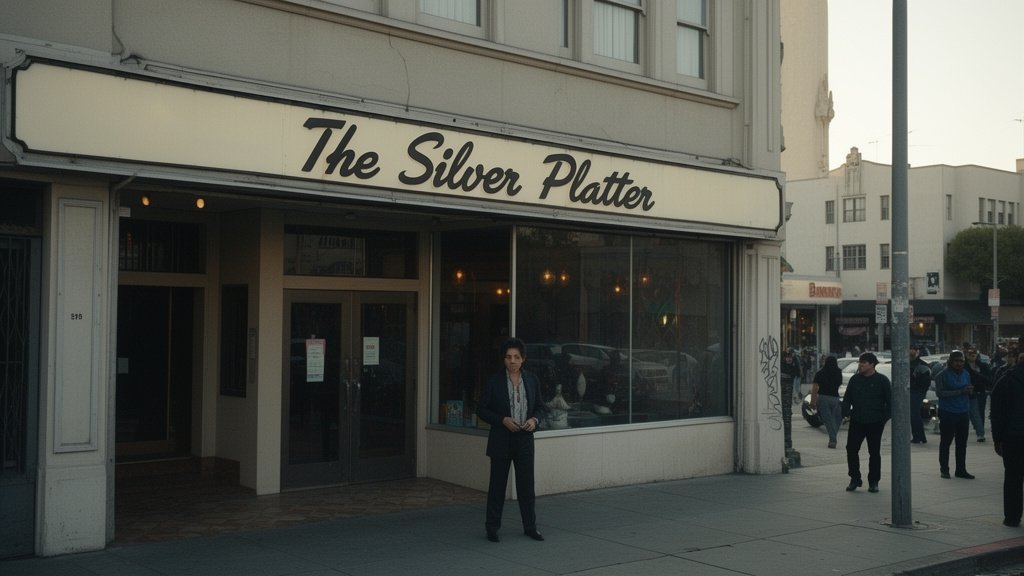
The recent Conditional Use Permit (CUP) hearing for The Silver Platter, an enduring beacon of Los Angeles’ LGBTQ+ Latino nightlife, collapsed into procedural disarray this week. The session, intended to address the venue’s ongoing permit renewal, was abruptly halted—and then continued in a state of confusion—due to the complete absence of a Spanish-language translator. This administrative failure, which left a significant portion of the affected community unable to participate in a public proceeding, has sparked immediate outrage and calls for an investigation into the Los Angeles City Planning Department’s adherence to accessibility protocols.
Key Highlights
- Language Access Failure: The hearing proceeded without a Spanish interpreter, effectively disenfranchising the Spanish-speaking community that makes up the core constituency of the MacArthur Park-area landmark.
- LAUSD Opposition: The Los Angeles Unified School District (LAUSD) formally opposed the renewal, citing the venue’s proximity to six local schools and raising concerns about student safety and public nuisance.
- Community Friction: Beyond the school district’s intervention, local residents aired persistent grievances regarding noise pollution and the lack of available parking in the already congested Westlake neighborhood.
- Administrative Breakdown: The inability to provide required linguistic services has cast doubt on the procedural validity of the hearing, leading to calls for the entire session to be re-noticed and held again.
A Historic Venue at a Crossroads: The Silver Platter Hearing Breakdown
The Silver Platter is not merely a business; it is a cultural institution. Located in the Westlake neighborhood, it has served as a sanctuary for the LGBTQ+ Latino community for decades. However, the recent attempt to secure a Conditional Use Permit (CUP) renewal brought to the surface a complex intersection of urban planning, civil rights, and neighborhood gentrification. When the hearing commenced, it quickly became apparent that the expected Spanish-language translation services were missing, a critical oversight in a city where the municipal code and general equity standards necessitate inclusivity in public discourse. This exclusion was not just a logistical error; for many attendees, it felt like an erasure of their voice in their own neighborhood’s future.
The Language Gap as a Civil Rights Issue
The absence of a translator is more than a bureaucratic inconvenience; it is a potential violation of the principles underpinning public participation in municipal governance. Under Los Angeles city protocols, public hearings regarding zoning and land use are designed to be accessible to all stakeholders. When that bridge of communication is severed, the legitimacy of the process is compromised. Community advocates present at the meeting argued that the Planning Department failed to meet its obligations, effectively silencing the patrons of The Silver Platter who rely on Spanish as their primary language. This failure has now become the focal point of the debate, overshadowing the technicalities of the CUP renewal itself. Experts in municipal law suggest that this could force a restart of the entire hearing process, as any decision made under such circumstances could be legally challenged for lack of due process.
The LAUSD Intervention and the Zoning Tug-of-War
Compounding the tension was the formal intervention of the Los Angeles Unified School District (LAUSD). The district’s opposition is based on a strict interpretation of zoning laws regarding the proximity of alcohol-serving establishments to educational facilities. With six schools in the immediate vicinity, the LAUSD contends that the presence of the venue creates an environment that is fundamentally incompatible with student safety and the educational mission of the surrounding area. This argument, while common in land-use disputes, places the school district in direct conflict with a business that has deep historical roots in the area. The contention is no longer just about the bar’s operation, but about the shifting priorities of the neighborhood and whether legacy cultural sites can coexist with the increasingly rigid zoning requirements favored by institutional stakeholders like the school district.
Assessing the Community Impact: Noise, Parking, and Legacy
Beyond the headline-grabbing language access failure and the school district’s stance, there remains the perennial issue of urban integration. Neighbors of the venue have raised consistent concerns regarding noise levels during late-night hours and the scarcity of parking in an area already suffering from high density. These are valid quality-of-life concerns, yet they are exacerbated by the lack of a transparent, inclusive forum to negotiate compromises. The Silver Platter’s defenders argue that the venue acts as a vital community hub, providing services and spaces that are scarce for marginalized groups in the city. The challenge for city planners moving forward is to balance these legitimate community grievances—noise and infrastructure—with the preservation of an cultural asset that defines the character of the Westlake corridor. Without a functional, language-inclusive hearing process, it is impossible for the city to achieve a resolution that respects all parties involved.
FAQ: People Also Ask
Q: What is a Conditional Use Permit (CUP) and why is it needed for The Silver Platter?
A: A CUP is a zoning tool that allows a city to consider special uses that may be essential or desirable to the community but which are not allowed as a matter of right in a specific zone. For a bar like The Silver Platter, it allows the city to impose conditions on operations—such as hours of operation, security requirements, and noise controls—to mitigate impacts on the surrounding neighborhood.
Q: Can the hearing be repeated because of the translation issue?
A: Yes, it is highly likely. If the public process is found to be deficient because a significant segment of the affected community was unable to participate due to a lack of language access, the city may be legally required to vacate the proceeding and hold a new, properly translated hearing.
Q: How many schools are currently citing The Silver Platter as a point of concern?
A: During the proceedings, the LAUSD identified six schools within the immediate vicinity of the venue, which formed the basis for their formal objection to the permit renewal.
Q: What does this mean for the future of LGBTQ+ nightlife in Los Angeles?
A: This incident highlights a growing trend where legacy venues face increasing pressure from both changing zoning regulations and neighborhood density concerns. The ability for these institutions to survive depends on their ability to navigate complex administrative processes and maintain strong relationships with their neighbors, even in the face of institutional opposition.