The intersection of hardware acceleration and generative software just hit a new milestone. Adobe and NVIDIA have officially announced a significant expansion of their strategic partnership, centered on the deployment of NVIDIA’s proprietary RTX Spark superchip technology within the Adobe Creative Cloud ecosystem. This collaboration is designed to redefine the ceiling for “agentic creation”—a shift from simple AI-assisted tooling to autonomous, intelligence-driven creative workflows. By bridging the gap between raw compute power and complex generative tasks, the partnership promises up to 2x faster AI processing for power users in Photoshop, Premiere Pro, and Substance 3D.
The Technical Catalyst: NVIDIA RTX Spark
At the core of this integration is the NVIDIA RTX Spark superchip. Designed specifically for high-throughput creative workloads, the Spark chip utilizes a novel architecture optimized for parallel vector processing. Unlike standard GPUs, which are tasked with generalized rendering, the RTX Spark focuses specifically on the inferencing demands of Adobe’s generative models.
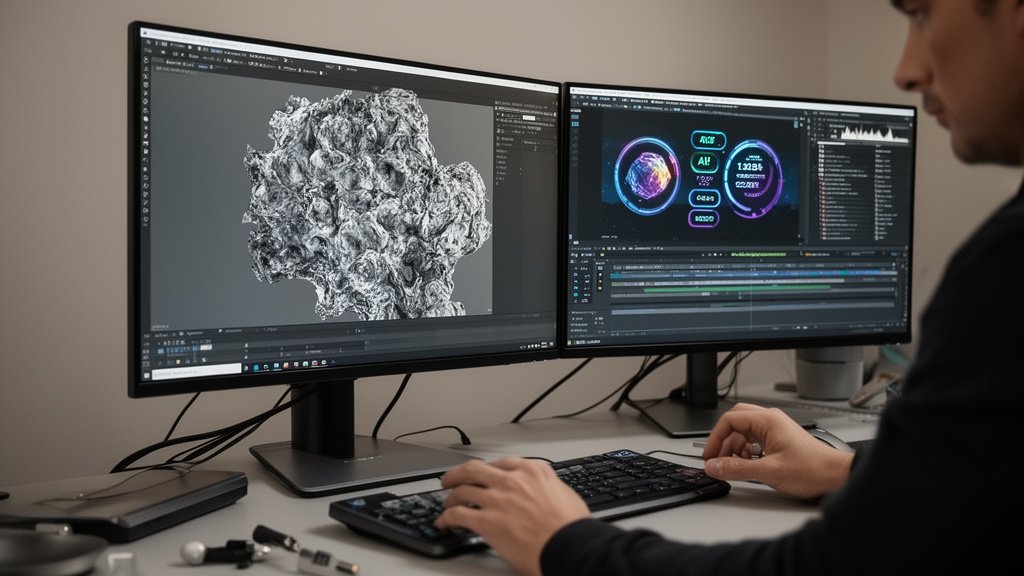
For creative professionals, this hardware-software synergy translates into a massive reduction in latency. In applications like Premiere Pro, where AI-powered features such as object removal, frame interpolation, and color grading are becoming standard, the 2x speed increase means that tasks which previously required minutes of compute time can now be completed in seconds. For Substance 3D artists, the RTX Spark integration accelerates real-time ray tracing and texture baking, allowing for seamless iteration on complex 3D assets without the typical “render-and-wait” bottleneck that has historically plagued the industry.
Agentic Creation and the Nemotron Deployment
Perhaps the most transformative aspect of this partnership is the integration of NVIDIA’s Nemotron open models into the Adobe Brand Concierge platform. Adobe Brand Concierge has historically acted as a repository for brand assets, but with the addition of Nemotron, it is evolving into an active agentic entity.
By leveraging the reasoning capabilities of the Nemotron models, Brand Concierge can now “understand” the semantic intent of a project. Instead of a designer manually searching for a brand-compliant font, color palette, or asset variant, the agentic workflow can autonomously generate or retrieve the exact compliant asset, ensuring that the brand voice remains consistent across all creative outputs. This is not merely automation; it is a collaborative partnership between the software and the artist, where the software anticipates the requirements of the workflow.
Strategic Analysis: The Future of Workflow
To understand the broader implications of this development, we must look at three secondary angles that define the current landscape of AI-driven creativity:
1. The Economics of Speed: The 2x speed efficiency gain is not just a technical benchmark; it is a fundamental shift in the economics of creative production. In high-velocity environments, such as social media agencies or enterprise marketing firms, halving the time required for AI-intensive tasks allows for a doubling of creative volume. This effectively lowers the cost-per-asset, potentially disrupting current billing models in professional creative services.
2. Infrastructure as a Creative Tool: The integration of the RTX Spark superchip signals that Adobe is treating hardware as a first-class citizen of its software suite. This creates a “walled garden” of high-performance creativity. Professionals who invest in the specialized hardware-software stack will be exponentially more productive than those relying on legacy compute configurations, creating a clear technological divide in the creative workforce.
3. The Rise of Brand Concierge: By deploying the Nemotron models, Adobe is positioning the Brand Concierge platform as the central nervous system of modern enterprise creativity. As AI becomes more autonomous, the guardrails provided by the Brand Concierge become the most valuable asset of the suite. It is the gatekeeper that ensures speed does not come at the cost of brand integrity, a critical requirement for enterprise clients.
As Adobe and NVIDIA continue to push the boundaries of what is possible with RTX Spark and Nemotron, the creative industry must prepare for a future where the bottleneck is no longer compute power, but the imagination of the creator themselves. The transition to agentic workflows is well underway, and this partnership represents the essential infrastructure required to support that evolution.
FAQ: People Also Ask
Q: What specific applications benefit from the RTX Spark integration?
A: The RTX Spark superchip integration is currently optimized for Adobe Photoshop, Adobe Premiere Pro, and Adobe Substance 3D, providing significant performance boosts for AI-intensive operations in these suites.
Q: How much faster is the new AI processing?
A: Adobe and NVIDIA have reported that users can expect up to 2x faster AI processing speeds for creative workflows utilizing the integrated RTX Spark technology.
Q: What is the role of NVIDIA Nemotron in this partnership?
A: NVIDIA Nemotron open models are being integrated into the Adobe Brand Concierge platform to enable more intelligent, agentic workflows, allowing the platform to autonomously manage brand-compliant assets and creative intent.
Q: Is this update available immediately?
A: The companies have announced the collaboration expansion, with implementation details and availability for the RTX Spark integration and Nemotron models rolling out to Adobe Creative Cloud users throughout the coming quarter.