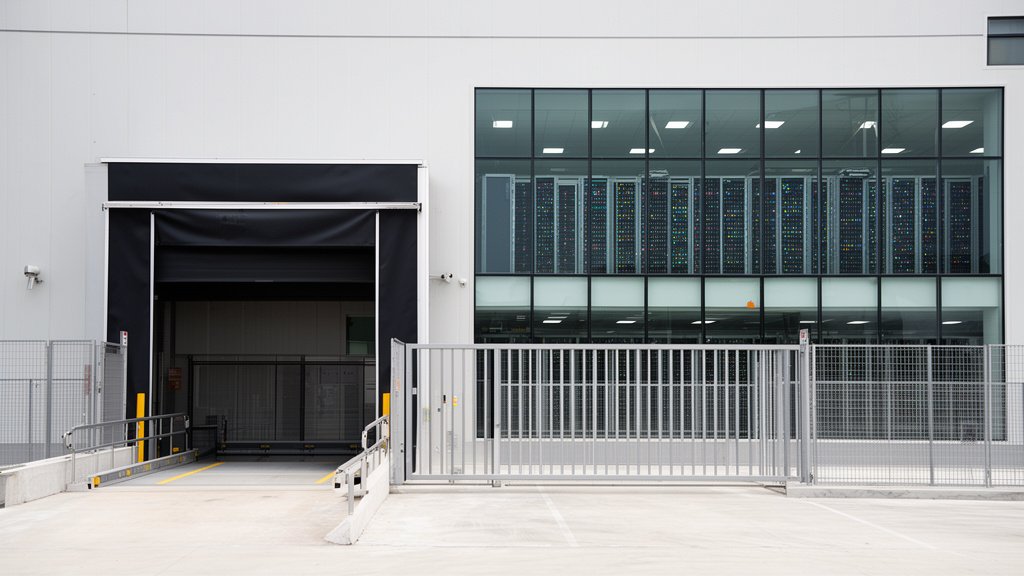
In a move that sends shockwaves through the regional tech sector, semiconductor giant Nvidia has directed its manufacturing partners to immediately suspend shipments of servers housing its most sophisticated AI chips to four key Southeast Asian nations: Malaysia, Singapore, Thailand, and Indonesia. This strategic pivot, aimed at ensuring full compliance with expanding US export controls, underscores the widening net of Washington’s efforts to curb Beijing’s access to high-performance computing capabilities that could bolster its military and AI advancement goals.
Key Highlights
- Immediate Halt: Nvidia has instructed all third-party server manufacturers to stop shipping units containing high-end graphics processing units (GPUs) to Malaysia, Singapore, Thailand, and Indonesia.
- Regulatory Compliance: The decision is a proactive measure to avoid potential violations of the US Bureau of Industry and Security (BIS) export licensing requirements.
- Regional Disruption: The Southeast Asian nations impacted have been aggressive in building out data center capacity to support the global AI boom, and this restriction poses a significant bottleneck to their expansion plans.
- Focus on Re-exports: US officials are increasingly concerned that jurisdictions without strict oversight could serve as transit points for advanced hardware ultimately destined for Chinese end-users.
The Silicon Bottleneck: Navigating the New Compliance Reality
The landscape of the global semiconductor market is undergoing a seismic shift, one where geopolitical guardrails are beginning to outweigh market efficiency. For Nvidia, the premier supplier of the hardware powering the generative AI revolution, the directive to halt server shipments to Malaysia, Singapore, Thailand, and Indonesia is not merely a logistical choice—it is a mandatory exercise in regulatory risk management.
At the heart of the matter are the Bureau of Industry and Security (BIS) regulations, which have been iteratively updated to include a broader spectrum of advanced computing chips. These controls are designed to restrict the flow of high-performance hardware that can be utilized to train large language models (LLMs) or support complex defense-related simulations. While the initial sanctions focused directly on China, the US government has moved toward a more comprehensive stance, targeting the supply chain in intermediate countries that might act as bypasses for restricted goods.
Impact on the Southeast Asian AI Hub
Southeast Asia has rapidly positioned itself as a critical node in the global data center ecosystem. Singapore, with its stable infrastructure, has long been an attraction for hyperscalers, while Malaysia, Thailand, and Indonesia have been aggressively courting investment to become regional AI hubs. By halting the flow of servers—which typically arrive pre-configured with Nvidia’s high-end GPUs like the H100, H200, or the latest Blackwell architecture—these countries face a sudden and profound challenge to their growth trajectory.
For companies operating in these regions, the disruption is twofold. First, it introduces immediate supply chain delays for projects currently in the pipeline. Second, it adds a layer of uncertainty for future capacity planning, as firms can no longer assume that advanced hardware will be readily available without clearing rigorous and potentially lengthy US export licensing hurdles. This forces a recalibration of investment strategies across the region, as stakeholders must now account for the reality that the ‘path of least resistance’ for acquiring hardware has been closed.
The Mechanics of the Export Web
How does a shipping halt in Southeast Asia connect to geopolitical tension in the Pacific? The answer lies in the concept of the ‘re-export.’ Under US law, items subject to the Export Administration Regulations (EAR) maintain their status as regulated goods even after they have left the United States. If an intermediary country fails to implement controls equivalent to those of the US, it becomes a ‘leakage’ point.
Nvidia’s instruction to its partners (such as Foxconn, Quanta, or Wistron) creates a buffer. By requiring these partners to verify that the final destination and the end-user are not on restricted lists, Nvidia shifts the compliance burden upstream. If the documentation or the end-user profile is deemed insufficient by the manufacturer’s internal compliance teams, the shipment is blocked before it ever leaves the factory floor. This proactive stance is designed to shield Nvidia from the reputational and legal fallout of a potential violation, which could carry severe fines or further restrictions on the company’s ability to export its products globally.
Navigating the Future of Hardware Diplomacy
Looking ahead, this development signals a long-term shift in how high-performance hardware will be deployed globally. We are moving toward a tiered system of global technology distribution, where the geographic location of a data center is just as critical as its power connectivity or cooling capacity.
Industry analysts anticipate that regional leaders will likely push for ‘trusted country’ status, seeking to establish robust local verification protocols that satisfy US authorities. However, this is a slow and politically delicate process. Until these frameworks are established, the burden of proof rests heavily on the end-users and the logistics providers. For the affected Southeast Asian nations, the path forward involves rigorous engagement with US regulators to prove that their domestic infrastructure is secure, monitored, and effectively insulated from the risks that the US government seeks to mitigate.
FAQ: People Also Ask
1. Why is Nvidia halting shipments to countries that are not sanctioned?
Nvidia is not necessarily halting shipments because the countries themselves are sanctioned, but because of concerns regarding the potential for re-exporting high-performance hardware to restricted end-users in China. The halt is a compliance measure to ensure every transaction aligns with strict US BIS export license requirements.
2. Which specific chips are affected by this policy?
While Nvidia has not released an itemized list, the restrictions generally target advanced data center-grade GPUs, including but not limited to the H100, H200, and Blackwell series, which provide the high-performance computing power necessary for large-scale AI development.
3. Will this halt be permanent for Malaysia, Singapore, Thailand, and Indonesia?
It is likely not permanent. The halt acts as a ‘compliance pause.’ Once manufacturers and the relevant governments in these nations can implement stronger oversight and verification mechanisms that meet the satisfaction of US authorities, the flow of hardware is expected to resume, albeit with more stringent documentation requirements.
4. How does this impact the development of AI in Southeast Asia?
In the short term, it creates a supply-chain bottleneck, delaying project timelines for companies and hyperscalers relying on the latest GPU technology. Over the long term, it forces these nations to establish ‘trusted’ regional standards to ensure their local tech growth is not hindered by future export control iterations.