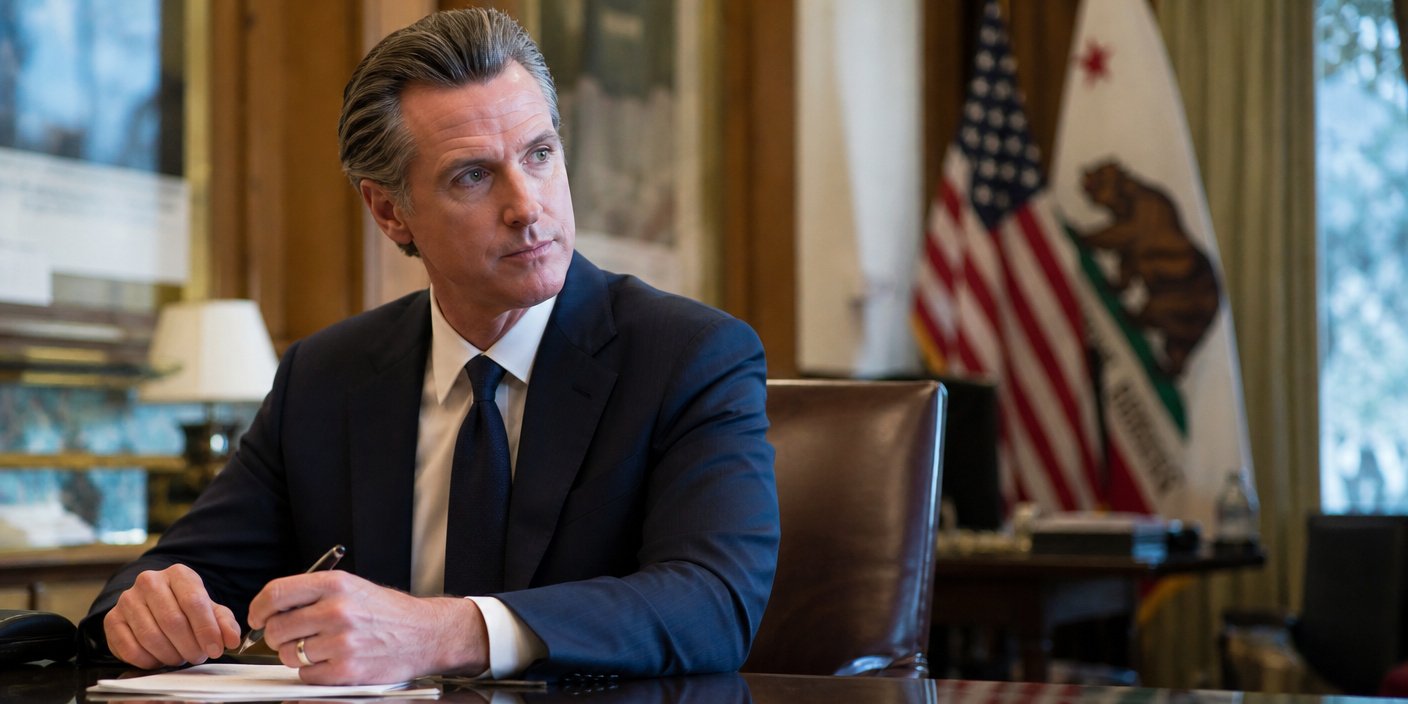
Governor Gavin Newsom’s recent decision to veto Senate Bill 877 and Senate Bill 878 has sent shockwaves through the community of Los Angeles County fire survivors, sparking accusations that the executive action was less about policy and more about retribution. The bills, which aimed to enforce stricter transparency and timeliness requirements for insurance claims, were touted by advocates as essential protections for residents reeling from the state’s ongoing wildfire crisis. As the Governor stands by his administration’s broader strategy, the tension between Sacramento’s executive office and the victims of California’s increasingly volatile landscape has reached a new boiling point.
The Anatomy of the Vetoed Bills: SB 877 and SB 878
To understand the gravity of the public outcry, one must look at the technical nature of the legislation Newsom blocked. SB 877 and SB 878 were designed as structural safeguards for policyholders navigating the often-opaque processes of the California Department of Insurance and private carriers. SB 877 sought to mandate specific timelines for insurance companies to respond to claims following a declared state of emergency. Proponents argued that such constraints would prevent the ‘bureaucratic stonewalling’ that many survivors report during the initial, most vulnerable weeks after a fire event.
SB 878, conversely, focused on transparency. It would have required insurance carriers to disclose the specific methodologies used in their claim-handling assessments and adjustment periods. Currently, survivors often find themselves at a disadvantage, unable to verify if their settlement offers align with the true cost of rebuilding, exacerbated by inflation and the volatility of the California construction market. By vetoing these bills, Newsom has effectively preserved the status quo, drawing sharp criticism from legislative sponsors who argue that the Governor is prioritizing corporate insurance stability over constituent protection.
The ‘Petty’ Politics Narrative
For the Los Angeles County fire survivors, the veto is not merely a policy disagreement; they are characterizing it as a deliberate act of political punishment. Survivors have been vocal in their activism, consistently pressuring the Governor and the California Legislature to pass more aggressive wildfire-liability reforms. These activists have not been shy about highlighting the perceived failings of the Governor’s previous efforts to stabilize the insurance market.
‘It feels like retaliation,’ stated one representative from a prominent survivors’ advocacy group. The community suggests that their recent, high-visibility campaigns against Newsom’s other legislative attempts—specifically his broader approach to wildfire-liability and the ‘Sustainable Insurance Strategy’ championed by Insurance Commissioner Ricardo Lara—have put them in the Governor’s crosshairs. The term ‘petty’ has been thrown around in press releases and town halls, suggesting that these vetoes were intended to weaken the survivors’ political leverage and silence a critical voting bloc before the next legislative session.
The Governor’s Defense and the ‘Sustainable’ Strategy
In response to the backlash, representatives for the Governor have framed the vetoes within the context of the administration’s ‘Sustainable Insurance Strategy.’ Newsom’s office argues that imposing rigid, state-mandated timelines and disclosure rules on insurance carriers could lead to the unintended consequence of further market flight. The logic is that if the regulatory environment becomes too stringent, major insurers may opt to leave California entirely, causing the available market to shrink further and premiums to spike for all homeowners.
Commissioner Ricardo Lara and the Department of Insurance have been working to stabilize the market by allowing insurers to use more forward-looking catastrophe modeling. The administration argues that the Governor’s vetoes were not an act of malice but a tactical decision to keep carriers operating within the state. This creates a fundamental dichotomy: does the state protect the individual homeowner’s right to a speedy, transparent claim, or does it prioritize the macro-economic need for an insurance market to exist at all?
Secondary Angle: The Historical Context of California’s Insurance Crisis
This dispute sits atop a decades-long historical trajectory of wildfire insurance instability in California. Since the devastating wildfires of 2017 and 2018, the state has struggled to keep major carriers from non-renewing policies in high-risk zones. This is not the first time legislation has been caught in this crossfire; historical precedents show that attempts to regulate the insurer-claimant relationship often run into the ‘market viability’ wall. However, what makes this current instance unique is the level of organized activism from victims. The transition from passive policyholder to organized political activist group marks a new chapter in California’s disaster politics.
Secondary Angle: The Economic Impact on Policyholders
Beyond the political maneuvering, there is a very real economic impact on survivors. When claims are delayed, survivors are forced to continue paying rent or mortgage for properties that are uninhabitable. Every month of administrative delay translates into thousands of dollars in out-of-pocket expenses for families who are already financially devastated. The veto of SB 877, in particular, removes a mechanism that could have mitigated this ‘liquidity trap’ for fire victims, potentially forcing more families into personal bankruptcy or reliance on state aid.
Secondary Angle: The Future of Legislative Reform
Looking ahead, the legislative future remains uncertain. If the Governor continues to use his veto pen against these types of reforms, it may force the hand of the Legislature to bypass his office through ballot measures or push for veto-proof majorities on future bills. Alternatively, this may catalyze a new form of cooperation where the Department of Insurance agrees to adopt some of the spirit of SB 877 and SB 878 through regulatory rule-making, effectively sidestepping the need for new legislation while still placating survivor groups. However, trust is currently at an all-time low, and until a concrete compromise is reached, the adversarial relationship between the Governor’s office and wildfire survivors is unlikely to thaw.