The intersection of high art and the raw, noisy reality of modern Los Angeles creates a unique tension, nowhere more palpable than at the Hollywood Bowl. For conductors like Michael Tilson Thomas (MTT), the venue is not just an amphitheater; it is a battleground where the purity of the orchestra must contend with the chaotic hum of the city. Perhaps no moment crystallized this struggle—and the sheer force of a maestro’s will—quite like the infamous 2017 incident during a performance of Igor Stravinsky’s The Rite of Spring. As a helicopter buzzed overhead, drowning out the delicate tension of the strings, Tilson Thomas did something that would become a defining anecdote in his storied career: he stopped the music.
The Incident: A Study in Professional Control
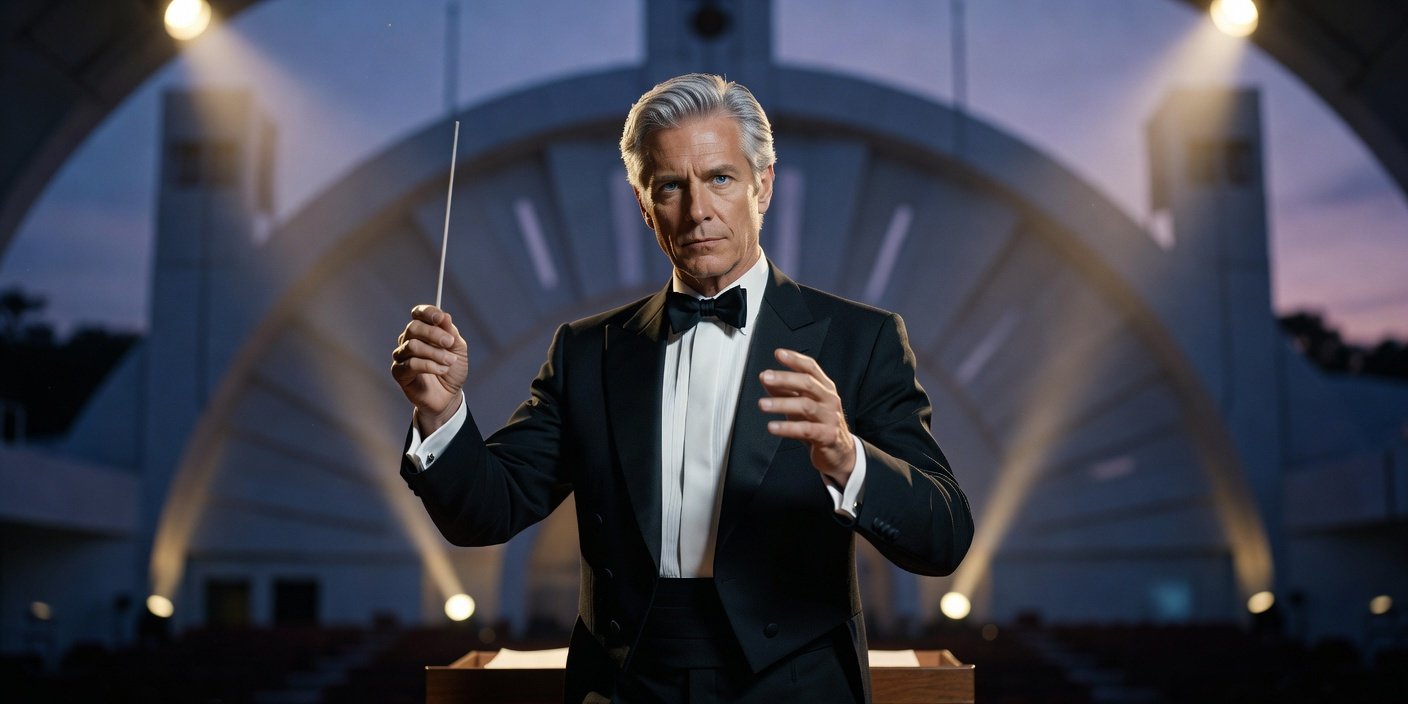
The Rite of Spring is not merely a piece of music; it is an aggressive, volatile, and rhythmically complex beast of a composition. It requires absolute focus from the hundred-plus musicians on stage. During that summer evening in 2017, as the Los Angeles Philharmonic neared a pivotal, quiet passage, the rumble of a helicopter began to permeate the open-air shell of the Bowl. Instead of attempting to conduct over the noise or allowing the music to be swallowed by the urban cacophony, Tilson Thomas lowered his baton. He didn’t rush. He didn’t panic. He simply waited. He looked up at the sky, acknowledging the intrusion not with anger, but with a wry, performative recognition of the absurdity of the situation. The audience, initially confused by the sudden halt, quickly understood. The silence in the amphitheater was absolute. The maestro was not fighting the city; he was forcing the city to acknowledge the art. After the noise passed, he raised his hands, and the orchestra resumed with a renewed, electric intensity. The incident became a masterclass in how a conductor manages the energy of an entire space.
Orchestrating Chaos: The Art of the Live Performance
To understand why this moment went viral in the arts community, one must look past the simple anecdote of a helicopter interruption. It serves as a microcosm for the precarious nature of live classical performance. The conductor, in this context, is not merely a time-keeper; they are the gatekeeper of the acoustic environment. When Tilson Thomas paused, he was asserting the value of the performance over the background noise of modern life.
The Acoustic Vulnerability of the Hollywood Bowl
The Hollywood Bowl is an architectural marvel of Southern California, but it is fundamentally an outdoor venue. This makes it structurally susceptible to the ambient noise of a sprawling metropolis. Helicopters, sirens, and the distant roar of freeway traffic are constant companions for any artist performing at the venue. Unlike the controlled, sterile environment of the Walt Disney Concert Hall, the Bowl demands a collaborative relationship with the environment. Conductors who frequent the Bowl have learned to incorporate this randomness into their craft. Yet, Stravinsky—a composer who thrived on tension and release—demands a level of precision that is often at odds with the open sky. The ‘Rite of Spring’ incident highlighted the inherent vulnerability of orchestral music when removed from the traditional concert hall. It also showcased the ‘L.A. sound’—a blending of high-culture aspiration with the grit of urban reality.
The Psychology of the Modern Maestro
Michael Tilson Thomas has always been characterized by a blend of intellectual rigor and showmanship. His reaction to the helicopter was not an act of ego, but of artistic integrity. He understood that to continue playing during the intrusion would have been to accept that the music was secondary to the noise. By forcing a stop, he elevated the audience’s awareness. They were no longer passive listeners; they became participants in a shared struggle against the distraction. This is a crucial element of MTT’s leadership style: the ability to bring the musicians and the audience into a singular, focused intent. He transformed a potential disruption into a moment of collective presence.
The Legacy of the Disruption
Years later, this story is frequently cited in discussions about the future of arts and culture in Los Angeles. It serves as a reminder that live performance is an act of rebellion against a digital, noisy, and fragmented world. The ‘helicopter moment’ has entered the lexicon of orchestral folklore, teaching students of conducting that the greatest tool at their disposal is not the baton, but the power of presence. It challenges the assumption that the show must go on regardless of circumstances. Sometimes, the most powerful thing an artist can do is stop, demand silence, and start again.
Analyzing the Intersection of Urban Soundscapes and Classical Art
Looking at the broader impact, this incident raises fascinating questions about the sustainability of urban cultural venues. As cities become denser and air traffic increases, the challenges faced by venues like the Hollywood Bowl will only intensify. Is it possible to maintain the purity of a symphonic experience in an increasingly noisy world? The answer lies in the adaptability of the performer. The 2017 incident proved that the audience is not just willing to accept the interruptions; they are eager for the human, authentic, and ‘real-time’ resolution to them. They want to see the conductor win the battle against the helicopter. It is a form of interactive, high-stakes theater that occurs in real-time, making every performance a unique, unrepeatable event.
FAQ: People Also Ask
1. Why was the helicopter so loud?
The Hollywood Bowl is located in an area with active airspace over Los Angeles. Because it is an open-air amphitheater, soundproofing is impossible, making it susceptible to the ambient noise of the city, including low-flying aircraft.
2. Did Michael Tilson Thomas apologize for the stop?
No. The stop was widely viewed by critics and audience members as a necessary act of artistic control. It allowed the orchestra to perform the piece as intended, rather than competing with the external noise.
3. How does this impact the ‘L.A. arts and culture’ narrative?
It highlights the unique personality of Los Angeles as a city where high art and grit constantly collide. It reinforces the reputation of the Hollywood Bowl as an unpredictable, yet beloved, performance space that requires artists to be flexible and commanding.
4. Is this still relevant to the L.A. Philharmonic today?
Yes. The incident is frequently discussed as a testament to the discipline of the LA Phil and the leadership of MTT, serving as a case study in concert management and maintaining focus during live performances.