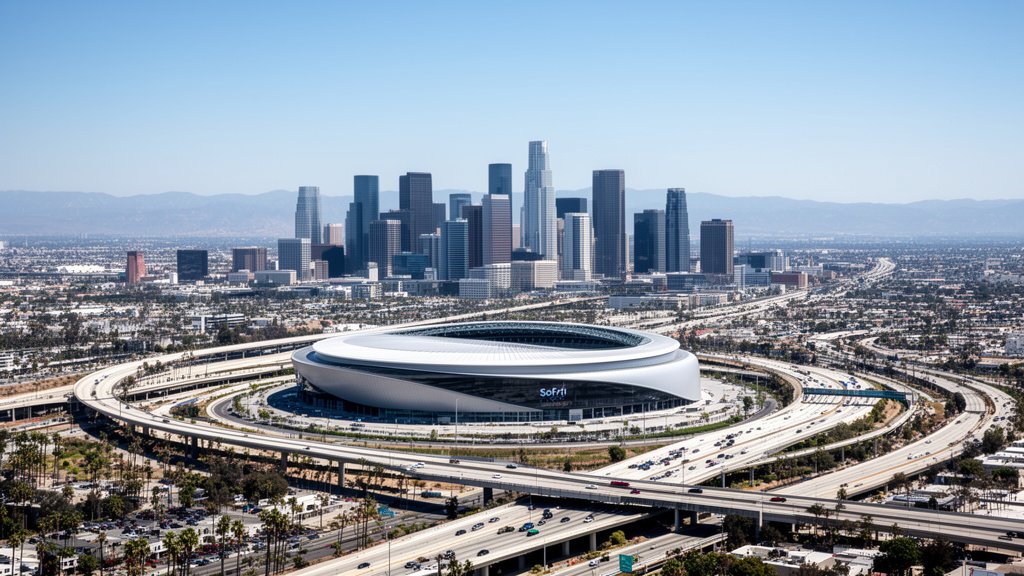
In a decisive move to solidify Los Angeles’ standing as a global leader in environmental sustainability, Mayor Karen Bass unveiled a comprehensive Climate Action Plan today. The strategy, announced at the Donald C. Tillman Water Reclamation Plant in Van Nuys, establishes a rigorous framework for the city to transition away from fossil fuels, expand green infrastructure, and fortify its resilience against the escalating threats of extreme heat and water scarcity. This pivot represents a significant escalation in L.A.’s environmental agenda, aiming to meet the urgent demands of a warming planet with concrete, measurable outcomes.
Core Targets for a Carbon-Free Future
- Ambitious Energy Goals: Achieve 80% renewable energy by 2030, with a full transition to 100% clean energy by 2035.
- Transportation Revolution: Convert the entire L.A. Department of Transportation bus fleet to electric by 2028 and install 120,000 electric vehicle (EV) chargers by 2030.
- Infrastructure Resilience: Implement a prohibition on new oil and gas drilling while phasing out existing extraction operations.
- Water Security: Reach 70% local water reliance by 2035 and reduce per-capita water consumption by 25% within the same timeframe.
- Green Equity: Establish 15 new parks by 2035 and significantly increase the urban tree canopy to mitigate neighborhood heat islands.
A New Era for L.A.’s Green Infrastructure
The Climate Action Plan marks a pivotal departure from previous strategies, focusing heavily on actionable metrics and tangible infrastructure investments. Where earlier initiatives were sometimes criticized for lacking specific tracking, Mayor Bass’ strategy includes 14 core objectives and over 50 individual targets. By situating the launch at the Donald C. Tillman Water Reclamation Plant—a site currently undergoing a massive expansion to recycle wastewater into 45 million gallons of daily drinking water—the administration underscored its commitment to integrating climate action with critical utility upgrades.
Decarbonizing the City’s Lifeblood
A centerpiece of the plan is the aggressive timeline for energy and transportation. With the city’s electric utility, LADWP, playing a central role, the plan mandates a total shift in how Los Angeles powers its grid. The goal is to move rapidly toward 100% clean energy, effectively decoupling the city’s power supply from coal and gas. This transition is supported by record-level investments in solar-plus-storage projects and regional partnerships designed to increase the availability of sustainable aviation fuels at LAX and Van Nuys Airport, addressing emissions at the city’s most significant transit hubs.
Transportation and the Electrification Push
Transportation remains the largest source of greenhouse gas emissions in the region. To combat this, the city is doubling down on its commitment to public transit electrification. Converting the LADOT bus fleet to electric vehicles is not merely an emissions reduction target; it is an effort to improve public health in transit-dense corridors. Furthermore, the installation of 120,000 EV chargers over the next four years aims to eliminate the ‘charging anxiety’ that frequently stalls private EV adoption. This infrastructure rollout is specifically designed to reach neighborhoods that have historically lacked access to green technology, ensuring an equitable transition that benefits all Angelenos, not just those in affluent areas.
Water, Shade, and Urban Resilience
The plan also addresses the immediate, lived reality of climate change in Southern California: extreme heat and drought. By setting a 70% local water reliance target by 2035, the city plans to invest heavily in stormwater capture and recycling technologies. Beyond utility-scale solutions, the plan introduces a ‘Cooling Through Greenery’ initiative. By adding 10 new parks by 2035 and drastically expanding the city’s tree canopy, the administration aims to create natural cooling zones. These measures are essential for lower-income neighborhoods, which often suffer from higher ambient temperatures due to a lack of shade and high concentrations of heat-absorbing asphalt.
Accountability and the Path Forward
Historically, Los Angeles has struggled to maintain momentum on long-term climate goals. The Mayor’s office has emphasized that this plan is distinct because of its transparency. By defining clear benchmarks for each of the 14 objectives, the city intends to allow for public oversight and ensure that city departments remain accountable. This is a critical pivot, addressing the call from the City Controller and environmental advocates for more rigorous oversight of the city’s climate spending and progress. The plan also includes a clear regulatory path to prohibit new oil drilling, signaling that the city is no longer willing to accommodate traditional extraction industries in an era defined by the need for rapid decarbonization.
FAQ: People Also Ask
Q: How does this plan differ from the previous ‘Green New Deal’ in Los Angeles?
A: While the 2019 Green New Deal set the stage, Mayor Bass’ new Climate Action Plan introduces more granular metrics and specific, enforceable targets for city departments, aiming to correct previous shortcomings regarding transparency and measurable progress.
Q: What is the timeline for the transition to 100% renewable energy?
A: The city has set a target to achieve 80% renewable energy by 2030, with the complete transition to 100% clean energy slated for 2035.
Q: How will the city pay for these infrastructure upgrades?
A: The plan leverages a combination of federal and state grants, public-private partnerships, and redirected city utility funds, such as those within LADWP, to finance these large-scale energy and water projects.
Q: Does this plan address the recent concerns regarding the city’s climate office?
A: The current strategy is intended to supersede earlier fragmented approaches, centralizing climate action under a unified, department-wide mandate that prioritizes concrete infrastructure projects over purely administrative functions.
Q: What is the status of oil drilling in the city under this new plan?
A: The plan includes a new ordinance to prohibit all new oil and gas drilling within city limits and establishes a formal regulatory process to phase out existing extraction operations.