
Los Angeles County continues to struggle with a deep-seated housing shortage, even as modest gains in ADU construction and stabilized homelessness figures offer a glimmer of hope. According to the latest USC Lusk Center for Real Estate report, the region’s persistent affordability challenges are being driven by a population surge of 100,000 residents in 2024, a growth rate that continues to outpace new housing production, keeping the dream of homeownership—and even stable renting—out of reach for many.
Key Highlights
- USC Lusk Center findings confirm that housing supply is failing to keep pace with rapid population demand.
- Accessory Dwelling Unit (ADU) production hit record-breaking levels in 2025, providing a crucial but insufficient inventory boost.
- Homelessness data indicates a period of stabilization, though affordability remains a primary stressor for the broader population.
- The net population increase of 100,000 residents in 2024 remains the primary structural bottleneck for reaching market equilibrium.
The Structural Imbalance: Deciphering the LA Housing Deficit
The Los Angeles housing landscape remains one of the most complex economic puzzles in the United States. While policymakers and urban planners have long sought to mitigate the impacts of restricted supply through legislative action, the latest data from the USC Lusk Center for Real Estate provides a sobering reality check. The fundamental tension between an expanding populace and a rigid, slow-to-adapt housing market continues to dominate the economic narrative of Southern California.
The 2025 ADU Boom: A Partial Solution
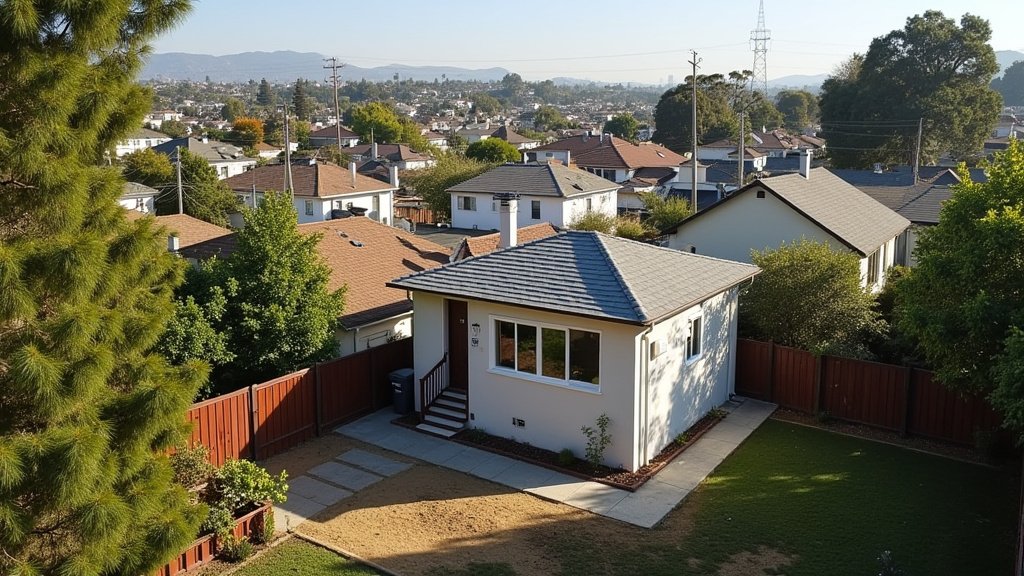
One of the most significant takeaways from the recent USC analysis is the meteoric rise in the development of Accessory Dwelling Units (ADUs). In 2025, ADU production reached a historic high, marking a definitive shift in how the county approaches “missing middle” housing. These smaller units, often referred to as granny flats or backyard cottages, have become the frontline of the housing defense. By utilizing existing residential lots, homeowners have inadvertently become micro-developers, helping to alleviate the acute lack of rental stock. However, while the sheer volume of ADU permits and completions is impressive, the USC Lusk Center emphasizes that these units alone cannot bridge the massive gap required to stabilize market prices. ADUs serve as a vital release valve, yet the magnitude of the housing shortage demands a structural overhaul of larger-scale residential development.
Population Dynamics and the Supply-Demand Chasm
The mathematical reality facing Los Angeles is relentless. In 2024 alone, the county experienced a population influx of 100,000 new residents. In any functional real estate market, such growth would typically be met with an immediate, proportional increase in housing starts. In LA, however, land scarcity, stringent zoning regulations, and the high cost of raw materials create a massive lag between demand and delivery. When the number of households seeking shelter outstrips the number of new units coming online by a significant margin, upward pressure on rent and property values becomes inevitable. This creates an environment where low-to-moderate income families are priced out of their own neighborhoods, driving economic displacement and forcing longer commutes that further strain the regional infrastructure.
Economic Implications for Working-Class Residents
Beyond the raw statistics lies the human cost. The LA County housing shortage is not merely an inconvenience; it is a profound economic stabilizer that is currently failing. When a substantial portion of a household’s income is dedicated to basic shelter, their ability to participate in the broader economy—via retail, dining, education, and savings—is severely curtailed. The USC report highlights that while homelessness levels have seen a degree of stabilization—a testament to various state and local intervention programs—the transition from housing insecurity to long-term stability is hindered by the lack of available, affordable units. As supply remains constrained, the competition for existing units increases, and landlords maintain a dominant position in pricing, perpetuating the cycle of unaffordability.
Policy Pathways to Long-Term Stability
The path toward a balanced market is fraught with institutional hurdles. To move past the current stagnation, the region must look beyond just ADUs. Comprehensive policy reform that streamlines the entitlement process, reduces the regulatory burden on multi-family developments, and incentivizes the conversion of underutilized commercial real estate into residential living spaces is required. The USC Lusk Center’s findings serve as a clarion call: incrementalism is no longer sufficient. Without aggressive, large-scale supply interventions that can accommodate the steady stream of newcomers, the county risks cementing a status quo where housing stability is a privilege reserved for the few.
The Future of Development in Southern California
Looking ahead, the next five years will be decisive. Developers, municipal governments, and community stakeholders are at a crossroads. Will the region embrace higher-density development in transit-rich corridors, or will the resistance to change continue to dictate the urban form? The success of 2025’s ADU initiative proves that when the bureaucratic path is cleared, supply can be generated. The challenge now is to scale that success across all housing tiers. As the USC Lusk Center suggests, the housing shortage is a multifaceted beast that requires a synchronized response. A failure to address the supply-demand imbalance now will only exacerbate the affordability crisis, potentially altering the socioeconomic composition of Los Angeles for generations to come.
FAQ: People Also Ask
Q: What is the main cause of the LA housing shortage identified by the USC Lusk Center?
A: The primary cause is a fundamental supply-demand mismatch, where the addition of new housing stock consistently fails to keep pace with rapid population growth, which saw an influx of 100,000 residents in 2024.
Q: How have Accessory Dwelling Units (ADUs) impacted the market?
A: ADU production reached record highs in 2025, providing a significant boost to housing inventory, but the report indicates that this incremental supply is not sufficient to fully solve the county-wide shortage.
Q: What does the report say about the current state of homelessness in LA County?
A: The report notes that homelessness levels have stabilized, suggesting that recent interventions are having an effect, even though broad affordability challenges remain for the general population.
Q: Why is it so difficult for LA to build enough housing?
A: Development is hampered by a combination of factors, including high construction costs, strict zoning regulations, land scarcity, and a slow, complex entitlement process for multi-family projects.