Los Angeles continues its relentless evolution as a global culinary epicenter with a wave of daring new establishments that define the April 2026 dining landscape. From the revitalized industrial chic of Chinatown to the hushed, minimalist elegance of Beverlywood, these new venues are not merely places to eat, but cultural touchpoints that blend hyper-local sourcing with groundbreaking gastronomic techniques. As the city moves away from the saturation of generic concepts, diners are seeing a clear pivot: a return to distinctive, narrative-driven hospitality that values the guest experience over the exhausting “server-splaining” of the past few years.
Key Highlights
- Mitsi Arrives in Chinatown: Owned by Mumford & Sons’ Ben Lovett, this elegant bar-sushi hybrid is already becoming a staple of the DTLA-adjacent dining scene.
- Nordic-Californian Fusion: Chef Marcus Jernmark’s Lielle in Beverlywood introduces a three-Michelin-starred perspective to the Westside.
- The “Server-Splaining” Backlash: A growing city-wide trend of diners seeking restaurants that ditch the repetitive “4-5 plates per person” lecture for more intuitive service.
- Strategic Expansions: Established brands like Jinya are moving upscale in West Hollywood, signaling a maturation of fast-casual heavyweights.
The New Guard: Redefining the Los Angeles Palate
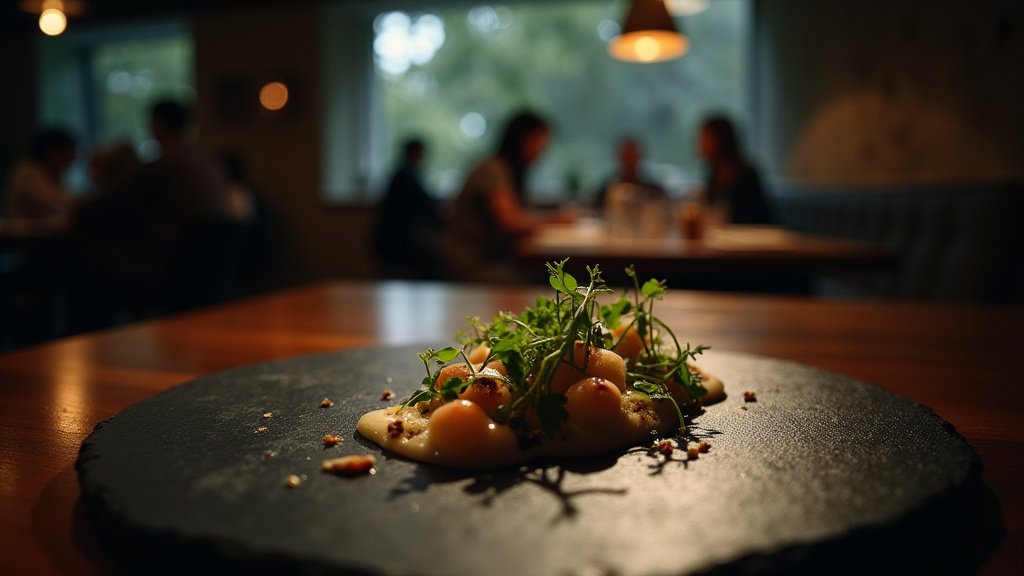
The most striking trend in April 2026 is the deliberate shift toward intention. We are moving away from the “concept-first” era of the early 2020s and into an era of “chef-driven” specificity. This is perhaps best exemplified by Lielle, the subterranean Beverlywood space helmed by Swedish three-Michelin-starred chef Marcus Jernmark. By merging Nordic precision with the seasonal bounty of California, Jernmark is doing more than just cooking; he is challenging the local definition of bistronomy. The space itself, designed in partnership with Lovers Unite, eschews the bright, chaotic energy of recent openings for a warmer, cave-like intimacy—a welcome respite from the city’s usual noise.
The Chinatown Renaissance
Equally compelling is the opening of Mitsi in Chinatown. When a high-profile musician like Ben Lovett enters the hospitality space, the skepticism is usually high. Yet, Mitsi has bypassed the “celebrity-project” trap by delivering a serious, cocktail-forward, sushi-centric experience. The 50/50 martini—a savory, gin-based marvel with tomato and cilantro—is already becoming a conversation piece. Chinatown is cementing its status as the city’s most exciting corridor for those who want their dinner with a side of edge.
The Economics of Intimacy
Why are we seeing so many small, intimate openings alongside massive luxury expansions like Jinya’s new West Hollywood flagship? It is a reflection of the bifurcated L.A. economy. High-end, branded restaurants are leveraging economies of scale to provide reliable, high-volume luxury, while independent operators are finding success in “micro-dining”—smaller footprints that allow for higher quality control and lower overhead, which is essential in a climate of rising labor and utility costs. Picala, the sister concept to the renowned Loquita, enters the Culver City market with a massive 135-seat footprint, proving that while micro-dining is trendy, there is still massive demand for high-capacity, destination-style restaurants that can anchor a neighborhood’s social life.
Breaking the Script
Perhaps the most refreshing narrative this month isn’t about the food, but the service. A growing segment of the L.A. dining public is exhausted by the scripted “server spiel”—the mandatory explanation of how a menu “works” or how many plates to order. The restaurants succeeding this April are the ones that trust their guests. They are opting for more streamlined, confident service models. Whether it’s the resurrected, legendary atmosphere of the Airliner Bar or the disciplined, quiet focus at a counter-seat spot, the message is clear: the best “concept” for 2026 is simply treating the diner like an adult.
FAQ: People Also Ask
Which neighborhood is the most exciting for food right now?
Chinatown and Silver Lake are currently neck-and-neck. Chinatown is attracting high-concept, destination spots like Mitsi, while Silver Lake retains its crown as the neighborhood for “in-the-know” Italian and bistro-style discoveries like Bar di Bello.
Are reservations harder to get in April 2026?
Yes, but with a caveat. While the most popular, intimate tables (like 8-10 seat chef counters) remain incredibly difficult to secure, there is an influx of larger-capacity openings this month—such as Picala—which are providing more accessibility for spontaneous dining.
How does the current “server-splaining” trend affect where people eat?
It is becoming a significant driver of consumer choice. Reviews and social media sentiment show a clear preference for restaurants that offer a “quiet” service style, where the focus remains on the food and atmosphere rather than a lecture on how to order.
Is the fine-dining bubble bursting?
Not bursting, but re-calibrating. We are seeing a distinct move toward “affordable luxury”—tasting menus under $100 and refined small-format bars—rather than the overly exorbitant, multi-hour prix fixe experiences that dominated the early part of the decade.