The Los Angeles Police Department (LAPD) is undergoing a major tactical evolution, securing approval for a $2.1 million donation to significantly expand its ‘Drone as First Responder’ (DFR) program. This expansion, bolstered by a $1.8 million retail theft grant, marks a pivotal moment in the department’s effort to integrate autonomous technology into everyday patrol operations. By transitioning from a reliance solely on traditional patrol vehicles and helicopters to a network of high-tech, rooftop-docked drones, the LAPD aims to gain eyes on the scene before boots hit the pavement, drastically altering the landscape of urban policing in one of America’s largest cities.
Key Highlights
- Strategic Expansion: The LAPD plans to install 23 drone docking stations across eight police divisions and key high-profile commercial centers, including The Grove and Palisades Village.
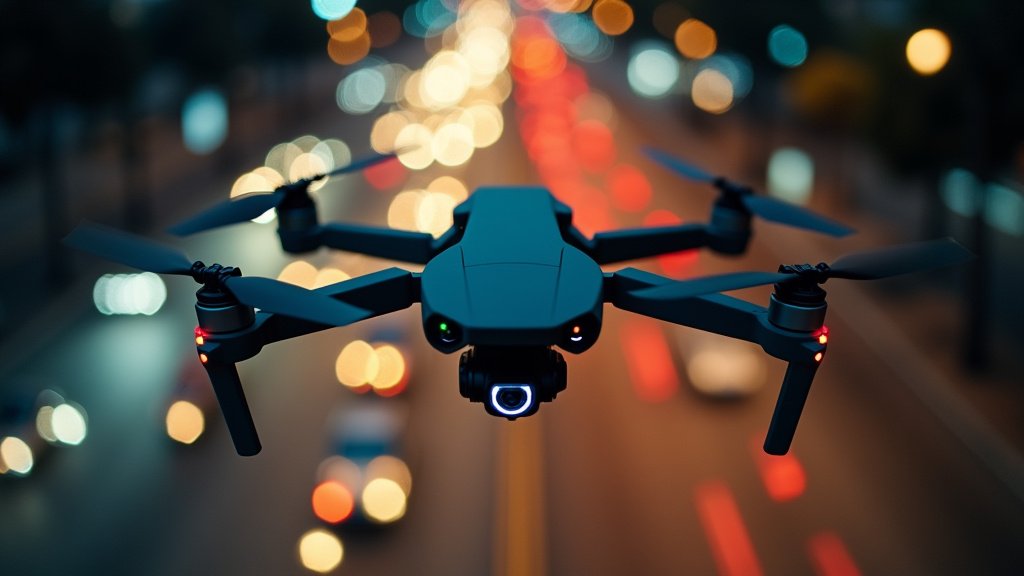
- Operational Tech: The program utilizes Skydio drones, which provide real-time thermal imaging and high-definition video directly to responding officers, enhancing situational awareness.
- Funding Model: The expansion is powered by a $2.1 million donation from the LA Police Foundation and a $1.8 million grant, shifting the immediate financial burden away from general city funds.
- Transparency vs. Surveillance: While the department touts increased safety and efficiency, the program faces ongoing scrutiny from civil liberties advocates regarding data storage, flight paths, and unauthorized surveillance.
The New Horizon of Rapid Response
The implementation of the DFR program is more than just a tech upgrade; it represents a fundamental shift in how the LAPD manages incident response. Historically, the ‘Golden Hour’ of emergency response was determined by how quickly a cruiser could navigate the dense, often gridlocked traffic of Los Angeles. With the new drone infrastructure, that timeline is being slashed. By deploying unmanned aerial vehicles (UAVs) from rooftop docking stations, the department can now observe a scene within minutes of a 911 call, providing commanders and responding officers with critical intelligence long before they arrive.
Technology Behind the Badge
At the core of this initiative is the partnership with Skydio Inc. The hardware selected for this fleet is sophisticated, designed for autonomous flight and precision. These drones are not meant for indefinite patrolling; rather, they are reactive tools. When a call for service comes in, the drone is dispatched to the location, providing an aerial vantage point that is otherwise inaccessible to ground units. This allows officers to determine if a situation involves a weapon, if suspects are fleeing, or if a medical emergency requires immediate intervention from specific resources. The integration of thermal imaging also provides a crucial advantage in low-light environments, ensuring that the department can maintain operational effectiveness regardless of the time of day.
The Shift from Helicopter Reliance
The reliance on police helicopters—a long-standing staple of the LAPD’s aerial presence—is increasingly being questioned due to high operational costs, noise pollution, and environmental impact. The DFR program offers a more cost-effective and agile alternative. While drones cannot replace the heavy-lift capacity or long-endurance capabilities of a police helicopter, they offer a ‘surgical’ approach to urban monitoring. By installing docking stations at key points, such as Century City’s Avenue of the Stars and Porter Ranch, the LAPD is decentralizing its aerial support, moving away from a single-point hub and towards a city-wide grid of readiness.
The Privacy Paradox and Community Oversight
No technological advancement in modern policing comes without friction. The LAPD’s drone program has been met with skepticism from privacy advocates and community members who fear the normalization of mass surveillance. Concerns center on the storage of data, the permanence of footage, and the potential for ‘mission creep’—where technology originally intended for acute emergency response eventually drifts into routine monitoring of non-emergency activities.
To address these concerns, the department has created a public-facing portal that logs flight paths and usage data. This transparency initiative is an attempt to build community trust in a digital age. Commissioner Jeffrey Skobin and other members of the Board of Police Commissioners have pressed the department on the security of this data, demanding audit logs and strict adherence to privacy protocols. The success of this program will likely depend not just on its technological efficacy, but on the department’s ability to demonstrate to the public that these drones are tools for safety, not instruments of overreach.
Economic and Strategic Future
Looking forward, the financial model of this program is notable. Relying on foundation donations and specific retail theft grants allows the department to circumvent some of the immediate budgetary constraints that often plague municipal law enforcement. This model sets a precedent for other major US cities that are looking to modernize their infrastructure without immediate tax hikes.
However, this also raises questions about sustainability. Once the initial three-year contract with Skydio expires, the department will need to prove the return on investment—not just in financial terms, but in crime reduction statistics and officer safety improvements. If the DFR program proves as effective as its proponents suggest, we may see a rapid proliferation of these ‘drone hives’ on rooftops across the nation, changing the skyline of urban public safety permanently.
FAQ: People Also Ask
1. Does the LAPD use drones for routine patrol?
No. The Drone as First Responder (DFR) program is designed specifically for emergency calls. Drones are deployed to specific incident locations to provide situational awareness for officers and do not conduct routine, unprompted patrols of neighborhoods.
2. How is the privacy of residents protected?
LAPD officials state that camera activation is limited to the specific location of the emergency call. The department has implemented a public website that logs flight times and paths for transparency, and data is stored in the department’s evidence database with strict access protocols.
3. Is this program funded by taxpayer money?
Most of the current expansion is funded by a $2.1 million donation from the LA Police Foundation and a $1.8 million retail theft grant. This specific expansion plan effectively operates outside of general municipal tax funding, though long-term maintenance may eventually require city budget integration.
4. Why is the LAPD switching to drones instead of just using helicopters?
Helicopters are expensive to operate, noisy, and consume significant fuel. Drones provide a faster, quieter, and more cost-effective way to get immediate visual intelligence on a scene, serving as a tactical complement to ground units rather than a total replacement for aviation support.