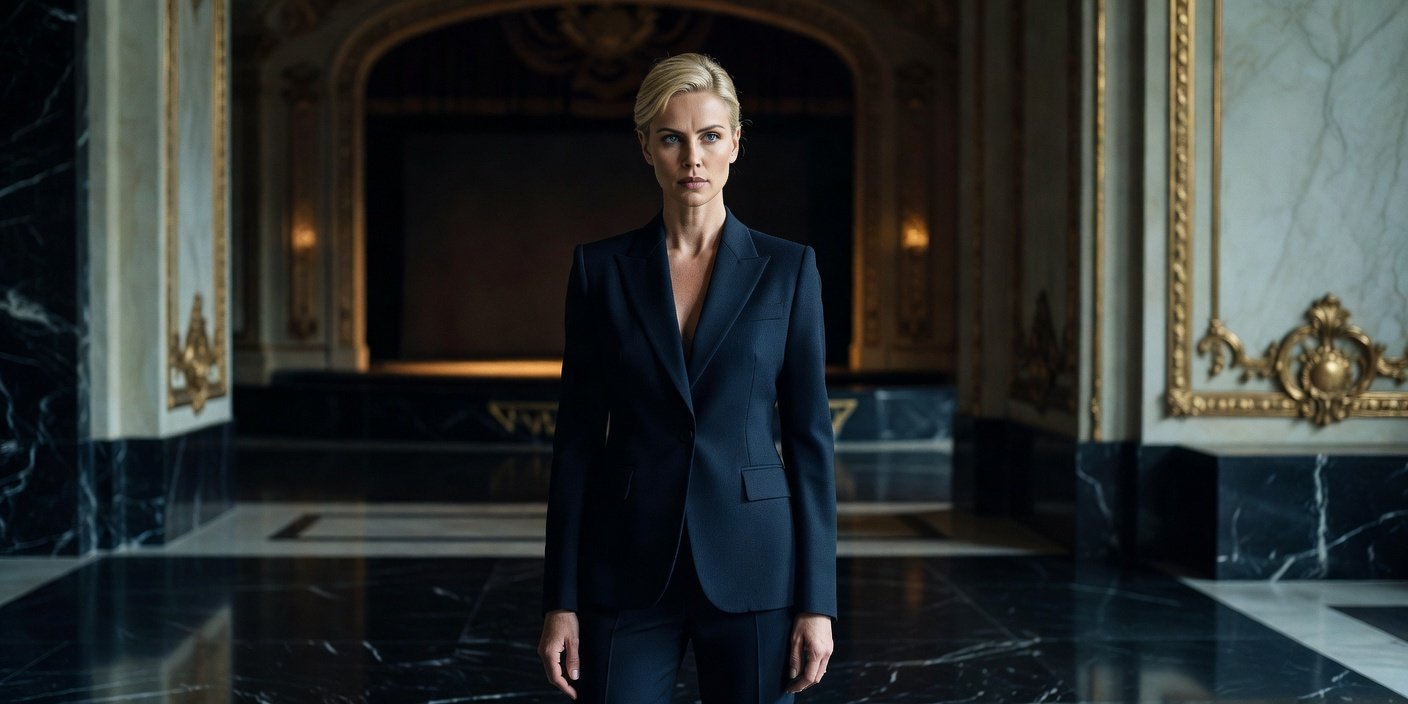
Academy Award-winning actress and former professional ballet dancer Charlize Theron has publicly criticized Timothée Chalamet for his earlier disparaging remarks about opera and ballet. Theron, appearing in a wide-ranging interview with The New York Times, labeled Chalamet’s assertion that “no one cares” about these historic art forms as “reckless,” while boldly suggesting that while artificial intelligence may soon be able to replicate screen acting, it will never be able to replace the raw, human discipline required for live dance.
The Resurfacing Controversy
The dispute centers on comments made by Timothée Chalamet during a February 2026 CNN and Variety town hall event. While discussing the state of the film industry with Matthew McConaughey, Chalamet mused, “I don’t want to be working in ballet, or opera, or things where it’s like, ‘Hey, keep this thing alive,’ even though no one cares about this anymore.” Although Chalamet immediately offered a disclaimer, stating he meant no disrespect to those working in the fields, the comment ignited a firestorm of backlash from the performing arts community.
For months, theater, ballet, and opera institutions—including the Royal Ballet and Opera—have faced the challenge of addressing these comments while simultaneously leveraging the viral discourse to boost attendance. However, Theron’s recent intervention has elevated the narrative from mere social media drama to a philosophical debate regarding the future of human performance versus digital simulation.
Theron’s Personal Defense of the Stage
Theron, who trained at the Joffrey Ballet School in New York from the age of four, spoke with a visceral intensity about the grueling nature of the art form. She described ballet not as a dying relic, but as one of the most demanding physical pursuits a person can undertake. During the interview, Theron recounted her personal history, detailing the physical toll that professional dance extracts from its practitioners.
“It taught me discipline. It taught structure. It taught hard work. It taught me to be tough,” Theron stated. “It’s borderline abusive. There were several times that I had blood infections from blisters that just never healed. And you don’t get a day off. I’m literally talking about bleeding through your shoes.” This personal testimony served as a sharp rebuke to the notion that these art forms lack contemporary relevance. For Theron, the value of ballet lies not in its viewership numbers, but in the irreplicable human resilience required to master the craft.
The AI Question: Performance vs. Simulation
Perhaps the most jarring aspect of Theron’s critique was her pivot toward the technological future of cinema. While many industry figures have criticized Chalamet’s remarks for being elitist or out of touch, Theron introduced a sobering angle: the existential threat of artificial intelligence. By claiming that “in 10 years, AI is going to be able to do Timothée’s job,” she positioned film acting as a profession vulnerable to synthetic reproduction, contrasting this with the organic authenticity of a dancer on a live stage.
This argument suggests a deeper philosophical divide between the two actors. Where Chalamet’s comments were framed in the context of cinematic industry trends and audience attention spans, Theron shifted the lens toward the longevity of human endeavor. Her suggestion is clear: if an actor’s work can be synthesized by a computer, perhaps they should be more cautious when dismissing art forms that rely on the untouchable, tangible effort of the human body.
Secondary Angles: The Future of Cultural Criticism
1. The ‘Controversy Marketing’ Effect: While Chalamet’s comments were initially perceived as damaging, industry reports indicate that his remarks sparked a surge in ticket sales for major ballet and opera houses. This highlights a modern media phenomenon where outrage, even unintentional, drives engagement in traditional, often overlooked arts sectors.
2. Generational Divides in Art Appreciation: The conflict underscores a growing tension between younger Hollywood actors and traditionalists. As the industry moves toward high-action, digital-heavy blockbuster filmmaking, the friction with heritage art forms like opera—which require slow-burn engagement and high technical skill—is becoming increasingly pronounced.
3. The AI Anxiety in Hollywood: Theron’s comment is part of a broader, mounting anxiety within the entertainment industry regarding the integration of generative AI. By positioning human physical endurance as the final frontier against AI obsolescence, she has inadvertently touched upon the central labor concern currently haunting every guild and union in Los Angeles.
FAQ: People Also Ask
What did Timothée Chalamet actually say about ballet and opera?
During a February 2026 town hall event, Chalamet expressed concerns about his own acting career, stating: “I don’t want to be working in ballet, or opera, or things where it’s like, ‘Hey, keep this thing alive,’ even though no one cares about this anymore.” This was interpreted by many as dismissive of these art forms.
How did Charlize Theron get involved in this?
Theron was asked during a New York Times interview for her thoughts on the discourse surrounding the performing arts. Drawing on her own background as a former ballet dancer, she expressed strong disagreement with Chalamet’s sentiment, labeling it “reckless” and using the opportunity to champion the discipline required for dance.
What is the significance of the AI comment made by Theron?
Theron’s comment serves as a critique of current trends in film acting, suggesting that screen acting may become increasingly susceptible to AI simulation, whereas the physical mastery of live performance remains a uniquely human, non-replicable experience.
Has Chalamet responded to Theron’s criticism?
As of the time of this publication, Timothée Chalamet has not issued a public response to Charlize Theron’s remarks.