As the 2026 wildfire season looms, California officials have initiated a significant expansion of high-severity fire hazard zones, a move that places thousands of previously unaffected properties under strict new maintenance requirements. Driven by the catastrophic lessons learned from recent events like the Palisades and Eaton fires, this update—spearheaded by the California Department of Forestry and Fire Protection (CAL FIRE)—aims to modernize how the state identifies, manages, and mitigates wildfire risk in the Wildland-Urban Interface (WUI). For homeowners, this administrative change is not merely a bureaucratic footnote; it is an immediate call to action that touches on property maintenance, legal compliance, and the increasingly volatile landscape of homeowner insurance.
The Reshaping of California’s Fire Hazard Map
The Mechanics of the Expansion
The latest update to the Fire Hazard Severity Zone (FHSZ) maps has brought an estimated 15,000 to 20,000 additional properties into the high-risk designation. According to officials, including the Los Angeles Fire Department’s Captain Chris Thyfault, these changes were necessitated by a rigorous re-evaluation of wildfire behavior and the growing threat of urban conflagration. Unlike previous iterations of these maps, which often relied on legacy data, the current expansion utilizes modern climate modeling and granular geospatial analysis to identify neighborhoods that, while perhaps not in the middle of a forest, are uniquely vulnerable due to wind patterns, topography, and surrounding fuel loads.
This expansion specifically impacts areas north of Ventura Boulevard, where many long-time residents find themselves in a designated high-severity zone for the first time. For these property owners, the shock is compounded by the sudden requirement to adhere to brush-management rules that were previously foreign to their daily maintenance routines. The shift highlights a broader reality: the state’s definition of ‘high risk’ is evolving from a geographic consideration to a structural one, where the proximity to wildland fuel is secondary to the ignition potential of the home itself.
Understanding ‘Zone Zero’
At the heart of the new compliance framework is the implementation of ‘Zone Zero,’ or the ember-resistant zone. Stemming from Assembly Bill 3074, this mandate requires homeowners in the most severe hazard areas to manage the five-foot perimeter immediately surrounding their structure. This zone is critical because research indicates it is the most common point of initial ignition during wind-driven ember storms.
Compliance in Zone Zero involves removing all combustible materials, including wood piles, mulch, and debris, and ensuring that no vegetation touches the structure. The regulation goes as far as dictating fencing materials and the placement of decorative elements, aiming to eliminate the ‘bridge’ that allows a fire to jump from the environment to the home. While many residents are accustomed to clearing 100 feet of defensible space, the granular focus on the immediate home perimeter represents a shift toward more specialized, precision-based mitigation.
The Economic and Insurance Ripple Effect
The Insurance Crisis and the FAIR Plan
Perhaps the most pressing concern for residents in these newly designated zones is the impact on insurance affordability and availability. California’s property insurance market has been in a state of sustained crisis, with major carriers reducing their footprint or exiting the state entirely, citing the inability to price wildfire risk effectively. The expansion of high-risk zones complicates an already precarious situation. When a home is reclassified into a high-severity zone, it often flags the property in the automated underwriting systems of major insurers, leading to non-renewal notices or prohibitively expensive premiums.
As private market options dwindle, reliance on the California FAIR Plan—the state’s insurer of last resort—has surged. Between 2024 and 2026, enrollment in the FAIR Plan has seen dramatic increases, covering billions of dollars in exposure that the private market deems too risky. This dynamic creates a vicious cycle: as more properties are added to high-risk maps, the FAIR Plan assumes more risk, potentially leading to further state-level interventions and political friction regarding premium caps and solvency.
The Failure of Legislative Reform
This insurance volatility was front-and-center during the recent debate over SB 1076, the Insurance Coverage for Fire-Safe Homes Act. The proposed legislation, which sought to require insurers to provide coverage for homeowners who proactively harden their properties against wildfire, failed to pass the Senate Insurance Committee. The defeat underscored the deep-seated tension between state regulators, who want to incentivize individual mitigation efforts, and the insurance industry, which remains wary of taking on more risk without the ability to use forward-looking catastrophe modeling. For the average homeowner, the failure of such legislation means that the burden of safety—and the cost of insuring it—remains squarely on their shoulders, despite the state’s calls for increased community resilience.
The Future of Wildfire Resilience: Beyond Compliance
Community-Level Hardening
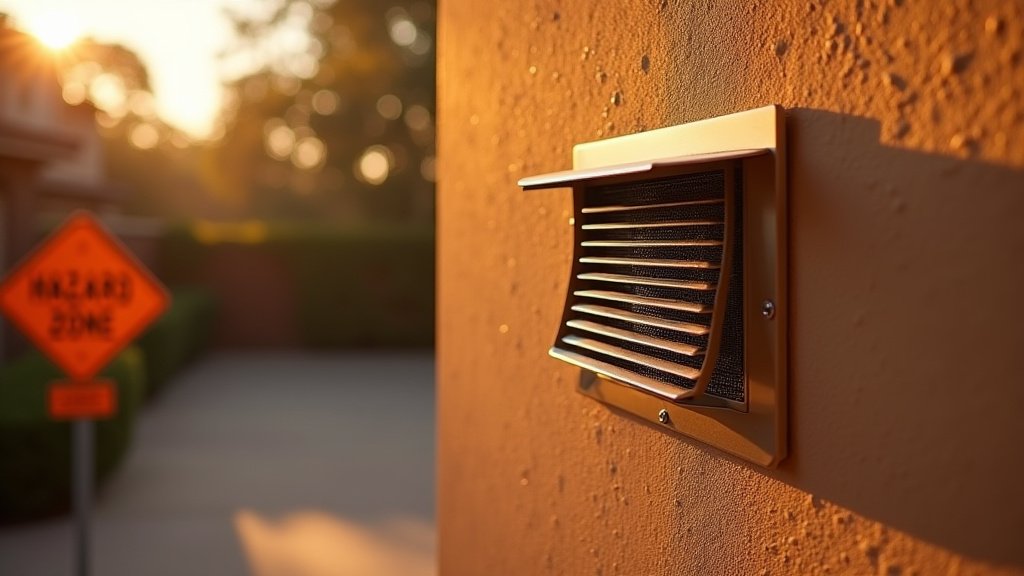
While individual homeowners are tasked with trimming trees and clearing brush, experts argue that the most effective way to combat wildfire spread is through community-wide mitigation. Recent studies, including a landmark collaboration between the California Department of Insurance and the NAIC, demonstrate that when entire neighborhoods adopt IBHS (Insurance Institute for Business & Home Safety) standards—such as ember-resistant vents, Class A roofing, and non-combustible siding—the reduction in wildfire losses is exponential.
This shift towards ‘community-level’ resilience is slowly being integrated into city planning. Local leaders are beginning to view wildfire safety not as a private landscaping challenge, but as a public infrastructure project. Projects that prioritize the hardening of accessory structures and neighborhood-level vegetation management are showing promise, offering a potential path forward where communities can proactively lower their risk profile, thereby making themselves more attractive to insurance carriers.
Technological Frontiers in Mitigation
Beyond the physical hardening of homes, the state is increasingly relying on technological advancements to manage the wildfire threat. AI-driven early detection systems and high-fidelity mapping are allowing CAL FIRE and local agencies to respond with unprecedented speed. However, for the resident, technology often manifests in the form of smarter, more responsive inspection systems. The era of manual, sporadic brush inspections is fading in favor of digital oversight, where property risk is continuously monitored and data-informed. This digital transformation, while invasive to some, is the necessary backbone for a state that must learn to live alongside a near-permanent wildfire season.
FAQ: People Also Ask
Q: How do I verify if my property is now in a high-severity fire zone?
A: Property owners can access the official Fire Hazard Severity Zone maps through the CAL FIRE website or their local municipal planning department’s digital portals. Residents are encouraged to enter their specific parcel number or address to see the latest classification changes.
Q: What are the primary ‘Zone Zero’ requirements I must meet?
A: Zone Zero requires that you maintain the area within five feet of your home free of all combustible materials. This includes clearing away mulch, wood piles, and dry debris, trimming branches so they do not touch the roof or siding, and ensuring no flammable fencing or structures connect directly to the house.
Q: Will the new fire zone designation automatically raise my insurance rates?
A: Not necessarily, but it is a significant factor. Being in a high-risk zone can trigger an automatic review of your policy by your insurer. If you are in a designated zone, you should be proactive in providing your insurer with documentation of any fire-hardening improvements you have made, as some carriers are now offering credits for verified safety upgrades.
Q: What should I do if my insurance company issues a non-renewal notice due to the zone change?
A: First, contact your agent to discuss mitigation measures that might make the property ‘insurable’ under their guidelines. If that fails, contact the California Department of Insurance for a list of available carriers or to learn about the FAIR Plan options. Do not wait until the final notice period to start this process.