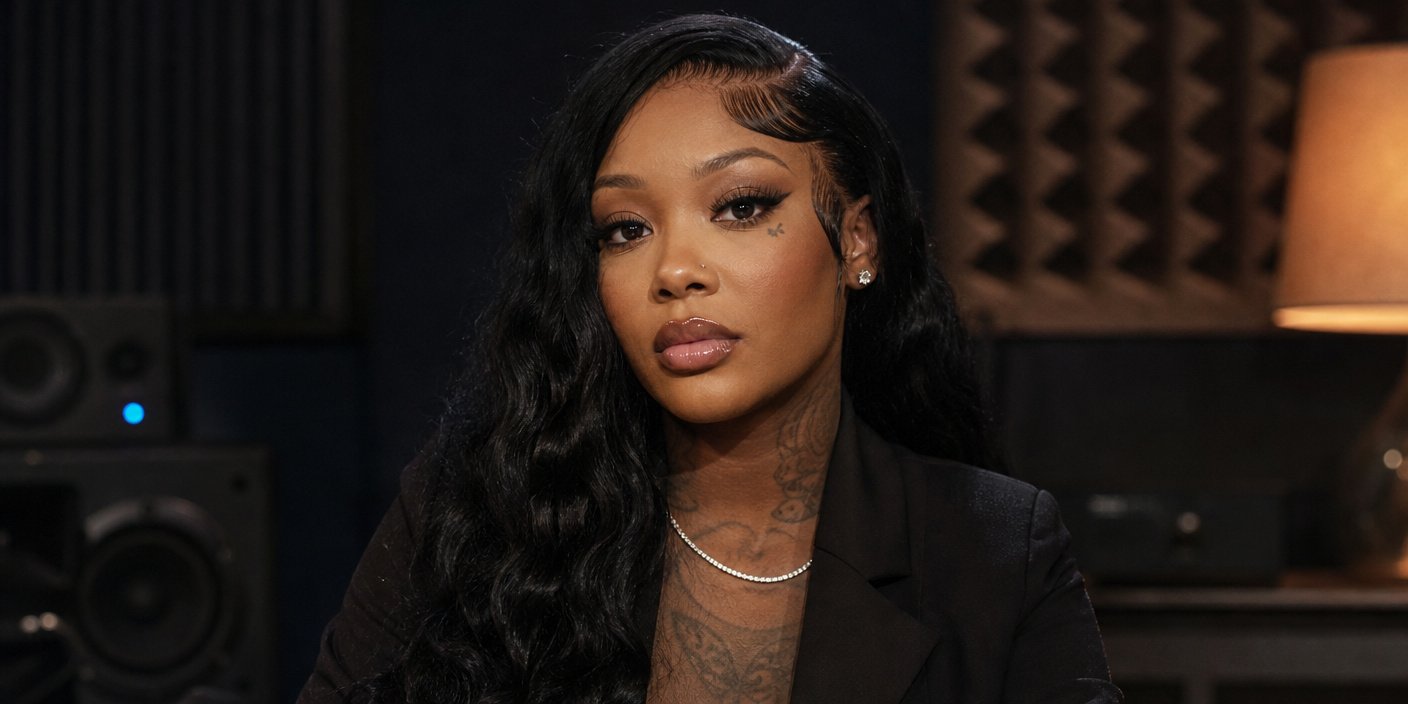
The music industry’s mid-summer landscape has been decisively recalibrated this week. As of the Billboard Hot 100 chart dated August 15, 2026, the industry is witnessing a seismic shift in audience consumption patterns, largely catalyzed by the meteoric rise of ADELA’s latest single, ‘Ain’t In LA.’ While the summer has been dominated by legacy acts and established pop titans, this week’s data reveals a growing appetite for distinct, narrative-driven lyricism that breaks away from the generic tempo of seasonal anthems. ADELA has managed to capture a cultural zeitgeist that resonates with a disillusioned, digital-native demographic, proving that even in a saturated market, a well-placed track can bypass traditional gatekeepers to command the national conversation.
Key Highlights
- ADELA’s Crossover: ‘Ain’t In LA’ officially enters the Top 20, marking the artist’s highest chart placement to date.
- Data Dominance: Streaming metrics, as reported by Luminate, show a 14% increase in on-demand audio streams for the genre defined by ADELA’s new sound.
- Methodological Shifts: The August 15 chart reflects a stronger weighting toward user-generated content (UGC) platforms, influencing overall radio airplay requests.
- Genre Fluidity: The chart indicates a continued blurring of lines between Alternative and Pop, with more artists like ADELA leveraging this hybridity to broaden reach.
The Streaming Surge: Analyzing Mid-August Chart Volatility
The Billboard Hot 100, powered by Luminate, remains the gold standard for measuring American music consumption. However, the week of August 15, 2026, provides a fascinating case study in how modern charts are increasingly defined not just by raw numbers, but by algorithmic velocity. The ascent of ‘Ain’t In LA’ is not merely a statistical anomaly; it is a textbook example of the ‘snowball effect’ within the streaming ecosystem.
Deconstructing the Luminate Metrics
When we look at the data provided by Luminate for this tracking week, the disparity between pure sales and streaming equivalent units (SEUs) continues to widen. ADELA’s track has performed exceptionally well on leading digital service providers (DSPs) such as Spotify and Apple Music. This indicates that while physical sales and digital downloads are dwindling relics of a past era, the ‘listening session’—the fundamental unit of 2026 consumption—is becoming more intense and repeat-heavy. The track’s success suggests a high ‘skip rate’ immunity, meaning listeners are engaging with the song in its entirety rather than skipping it, a vital metric for maintaining long-term chart relevance.
The ‘LA’ Trope and Historical Context
It is worth noting that ‘Ain’t In LA’ arrives at a point in musical history where the ‘California Song’ trope is reaching a point of saturation. From the folk-rock legends of the 1970s like The Eagles to the grunge-era odes of the Red Hot Chili Peppers, Los Angeles has always been a muse. However, ADELA’s entry subverts this. She isn’t singing about the promise of the city; she is singing about its absence. This lyrical pivot—the ‘negative space’ of the song—is likely what has captured the imagination of listeners who are increasingly weary of the glossy, over-produced aesthetics associated with traditional LA-centric pop. By positioning herself as an outsider to the industry’s epicenter, ADELA has created a paradox: she is criticizing the city while using the mechanisms of the industry to broadcast that criticism back into the center of the Billboard charts.
The Monetization of Viral Snippets
A secondary angle of this week’s analysis involves the economics of virality. We have observed a direct correlation between the snippets trending on social media and the subsequent conversion to full-song streams on DSPs. The industry has shifted to a ‘hook-first’ economy. Labels are no longer looking for three-minute compositions; they are looking for 15-second ‘moments’ that can sustain a TikTok or Instagram Reel cycle. ADELA’s track is uniquely structured to facilitate this. The bridge of ‘Ain’t In LA’ functions as an earworm that is perfectly calibrated for algorithmic amplification, demonstrating that songwriting in 2026 is as much about data architecture as it is about melody.
Future Predictions and Algorithmic Control
As we look toward the remainder of the third quarter, the success of this track signals a move away from the ‘corporate-pop’ dominance we saw in early 2026. The major labels, including the conglomerates overseeing distribution for independent artists like ADELA, are beginning to shift resources toward artists who can ‘self-market’ via authentic-seeming narratives. We predict that if ADELA can maintain this momentum for three more weeks, she will move from a ‘breakout star’ to a ‘chart anchor,’ forcing radio programmers at major networks like iHeartMedia to increase rotation, regardless of their initial hesitation to support non-label-backed content. This is the new reality of the Billboard Hot 100: the barrier to entry remains high, but once breached, the digital feedback loop creates a momentum that is increasingly difficult for legacy radio to ignore.
FAQ: People Also Ask
Q: How does the Billboard Hot 100 calculate the ranking for a song like ADELA’s?
A: The Hot 100 utilizes a multi-metric system provided by Luminate. It blends all-genre streaming activity (audio and video), radio airplay audience impressions, and sales data (digital song sales). The ranking is determined by a weighted formula that prioritizes streaming and radio airplay, as these represent the widest listening habits in the United States.
Q: Is ‘Ain’t In LA’ a sign of a genre shift on the charts?
A: It reflects a growing trend toward ‘Genre Fluidity.’ We are seeing more tracks that blend Alternative, Pop, and even Indie sensibilities charting alongside traditional Hip-Hop and Pop. This signifies that listeners are moving away from rigid genre categorization and toward ‘mood-based’ listening, which allows artists like ADELA to break through.
Q: How does radio airplay impact these rankings in 2026?
A: Radio airplay remains a significant component, but its influence has shifted. In 2026, streaming numbers often lead the way, and radio airplay acts as the ‘reinforcement’ mechanism. Once a song gains massive streaming traction, radio stations feel pressure to add the track to their rotation to maintain relevance with their younger, data-conscious audience base.
Q: What should we expect for ADELA next week?
A: Sustaining a position in the Top 20 is difficult. The next week is critical; she will need to maintain her streaming numbers while attempting to grow her radio impressions to climb higher. If the streaming dips, the radio airplay will have to compensate, which is a common challenge for newer artists without major label promotional muscle.