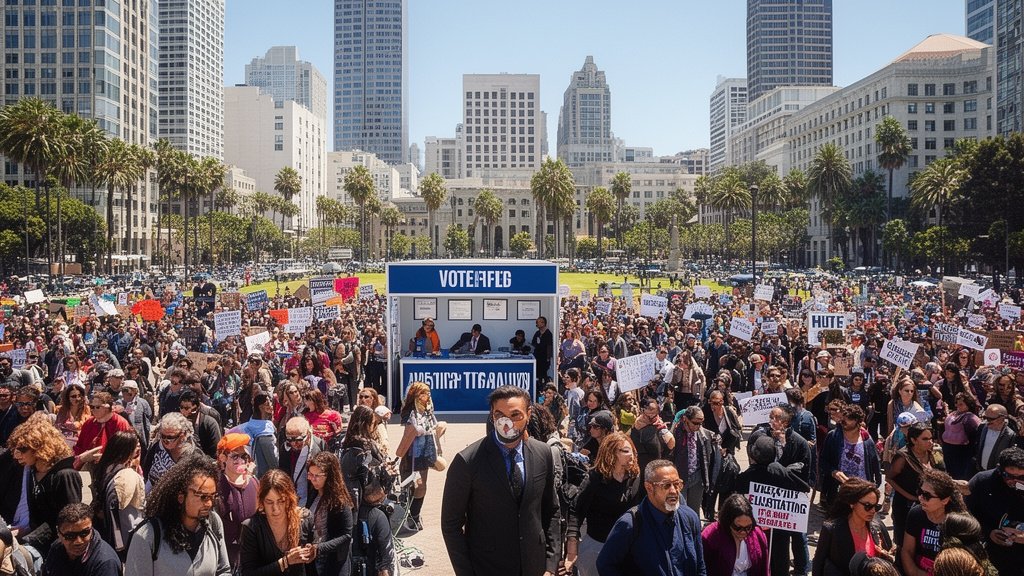
Hundreds of protesters descended upon the heart of downtown Los Angeles this Saturday for the ‘No Kings’ rally, a potent demonstration of civic unrest that sought to bridge the gap between street-level activism and the ballot box. While the visual aesthetic of the gathering was one of protest, the underlying message was a strategic, data-driven appeal to increase voter participation in the upcoming midterm elections, framed against a backdrop of fierce opposition to current immigration and U.S. Immigration and Customs Enforcement (ICE) policies.
The ‘No Kings’ Rhetoric: Democracy Under Review
The choice of the name ‘No Kings’ is deliberate, signaling a return to foundational anti-authoritarian principles that have long served as a rallying cry for progressive movements. In the context of this Los Angeles gathering, the phrase is less about literal monarchies and more about the perceived concentration of power within the executive branch regarding administrative law and federal enforcement agencies.
Organizers and speakers at the event argued that the current political landscape—particularly regarding how immigration policies are executed through federal agencies—operates with a lack of sufficient legislative oversight. By invoking the concept of ‘No Kings,’ the protesters are effectively pushing a narrative that the midterm elections are not merely a contest between parties, but a referendum on checks and balances. This rhetoric resonates particularly strongly in a city like Los Angeles, which has historically been a nexus for debates regarding federal jurisdiction and local autonomy.
The Intersection of ICE and Civic Duty
Central to the rally’s demands was a critique of ICE operations. The protesters voiced specific grievances regarding the scope and methods of enforcement, arguing that current policies disrupt families and destabilize communities without addressing the root causes of the immigration crisis. The rally served as a localized hub for disseminating information about current policy bills and candidates who have pledged to reform—or in some cases, significantly restrict—federal enforcement powers.
For many attendees, the link between the protest and the ballot box was explicit. Organizers utilized the gathering to set up voter registration booths and distribute literature on how to identify candidates who align with their stance on immigration enforcement. The strategy here is tactical: convert the high-energy, high-visibility emotional output of a rally into the low-visibility, high-impact action of voting. This represents a maturing of the modern grassroots movement, which often struggles to bridge the gap between public demonstration and political efficacy.
Voter Mobilization: The Midterm Calculus
The midterm elections often face a significant ‘enthusiasm gap’ compared to presidential election cycles. The ‘No Kings’ rally attempted to mitigate this by painting the midterms as a ‘critical juncture’ for the future of civil rights and immigration policy. By framing the election as a way to curb executive overreach, the movement seeks to provide a specific, actionable goal for voters who might otherwise feel disillusioned by the perceived slow pace of Washington politics.
Historical data suggests that voter turnout in Los Angeles County for midterm elections is sensitive to local engagement efforts. By bringing the protest to the downtown core, organizers effectively targeted the diverse, urban voter base that is essential for driving turnout in California. The rally acted as a catalyst for a broader ‘get out the vote’ (GOTV) effort, which the coalition plans to roll out through digital campaigns and door-to-door canvassing in the coming weeks.
Strategic Implications and Political Echoes
The rally is significant not just for its size, but for its timing. Occurring in the lead-up to the midterm cycle, it serves as a bellwether for how immigration issues might influence local and regional outcomes. Politicians and political strategists often watch these urban demonstrations closely, as they frequently mirror the underlying anxieties and policy preferences of younger, urban-dwelling voters.
Furthermore, the ‘No Kings’ rally highlights the evolving nature of political discourse in the U.S. The movement demonstrates a shift away from traditional party-line endorsements toward single-issue or value-based mobilization. By focusing on specific outcomes—such as checking the power of federal enforcement agencies—rather than broad party loyalty, the organizers are attempting to build a coalition that spans the traditional political spectrum, potentially attracting independents who are wary of both executive overreach and bureaucratic inertia.
Challenges and Future Outlook
Despite the passion on display, the movement faces significant hurdles. Translating the fervor of a downtown protest into actual ballot participation is a notoriously difficult logistical challenge. Many protesters may be passionate about the issues but lack the organizational continuity required to see their political preferences through to Election Day. Additionally, the opposition to ICE policies, while popular within specific enclaves of Los Angeles, remains a polarizing topic on a national level, potentially making it difficult for the movement to expand its message beyond its current base.
However, the ‘No Kings’ organizers appear undeterred. They view this rally as merely the first step in a coordinated plan. With the midterm cycle heating up, the group has pledged to maintain a consistent presence in both the public sphere and the digital realm, attempting to keep the momentum going until the polls close. Whether this energy will translate into meaningful voter participation remains the defining question of their campaign.
Ultimately, the downtown LA rally underscores a fundamental truth about American democracy: even in an era of digital communication, the physical assembly of people remains a primary tool for setting the political agenda. By forcing their issues into the public consciousness, the ‘No Kings’ protesters have ensured that the conversation around immigration, executive power, and voter participation will remain central to the political narrative of this election season.
FAQ: People Also Ask
Q: What is the ‘No Kings’ movement’s main goal?
A: The movement aims to curb what it perceives as executive overreach within the federal government, specifically targeting the enforcement policies of agencies like ICE, and to convert that political frustration into increased voter turnout for midterm elections.
Q: Why was the rally held in downtown Los Angeles?
A: Downtown Los Angeles serves as a major hub for diverse, politically active, and urban-dwelling voters. It provides high visibility for demonstrations and is a strategic location to launch voter registration drives for the county’s large, influential voting population.
Q: Does this movement focus only on immigration?
A: While immigration and ICE policies were the primary catalyst for this specific rally, the ‘No Kings’ rhetoric encompasses a broader critique of federal power and administrative accountability, which the organizers hope will resonate with voters concerned about civil rights and government transparency.
Q: How does a protest like this impact the midterm elections?
A: Such protests primarily act as mobilization tools. By aggregating voters, organizations can effectively register new participants, disseminate information about candidates’ stances, and create a sense of urgency that motivates people to vote who might otherwise abstain from midterm cycles.