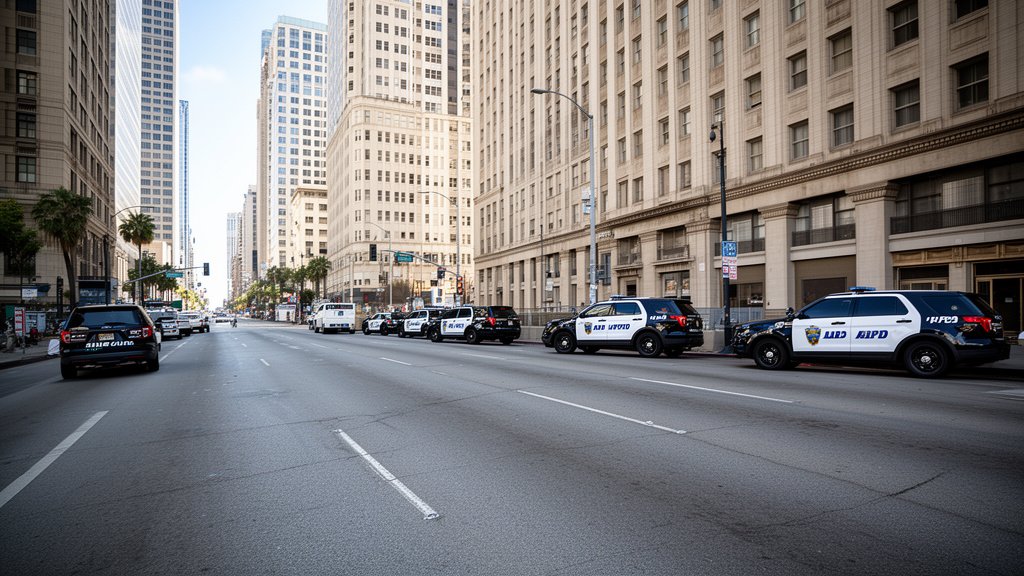
The streets of Downtown Los Angeles saw a major tactical shift this week as federal authorities joined forces with the Los Angeles Police Department (LAPD) to launch ‘Operation Save Skid Row.’ The coordinated, multi-agency initiative targeted the sophisticated, gang-linked drug distribution networks that have long operated within the district, resulting in a flurry of search warrant executions and significant arrests. This operation represents more than a routine policing action; it serves as a strategic intervention aimed at severing the supply chains that fuel the area’s illicit underground economy.
Strategic Coordination and Federal Involvement
The escalation of this operation, characterized by the involvement of federal agents, marks a critical pivot in how law enforcement is addressing the persistent drug trafficking crisis in Skid Row. By leveraging federal resources, the operation moved beyond standard patrol responses to execute a comprehensive, evidence-based dismantling of distribution nodes. Unlike localized efforts, the federal partnership allows for the prosecution of high-level organizers and regional drug wholesalers who often evade municipal-level enforcement. The logistical orchestration of this operation involved deep intelligence gathering, tracking the flow of narcotics from larger distribution hubs into the concentrated environment of the downtown core.
The Anatomy of the Trafficking Networks
At the heart of ‘Operation Save Skid Row’ is the targeted disruption of gang-linked organizations. These syndicates have utilized the density and transient nature of the district to establish and camouflage their operations. Investigative data suggests these networks operate with a high degree of compartmentalization, utilizing street-level sellers as buffers to protect upper-level management. By executing simultaneous search warrants across multiple locations, the task force was able to seize not only illicit substances—primarily synthetic opioids and methamphetamine—but also communication devices, ledgers, and cash caches that link street-level actors to wider criminal enterprises. This strategy is designed to create a ‘force multiplier’ effect, forcing these criminal networks to scramble as their structural hierarchy is exposed and their inventory is seized.
The Intersection of Crime and Public Safety
The persistence of drug trafficking in Skid Row creates a compounding crisis for both the city and the vulnerable populations residing there. The influx of highly potent synthetic drugs has turned the area into a focal point for the regional overdose epidemic. By dismantling the supply side, law enforcement officials aim to curb the availability of these substances, providing breathing room for city agencies to address the concurrent humanitarian and housing crises. However, the complexity of this urban environment presents unique challenges. The presence of dense encampments, often used as cover for illegal activities, requires a delicate, highly tactical approach to ensure that the cleanup and enforcement do not displace the most vulnerable residents while simultaneously rooting out the criminal actors exploiting the chaos.
Future Outlook: Beyond the Initial Sweep
The immediate success of the operation—measured in the number of warrants served and the volume of narcotics seized—is only the first phase. The long-term challenge for the LAPD and federal agencies will be maintaining this pressure to prevent criminal re-infiltration. Historical data from similar operations in major metropolitan areas suggests that drug networks are highly adaptive; once a primary pipeline is severed, they often attempt to reroute through adjacent neighborhoods. Therefore, the ‘Operation Save Skid Row’ strategy incorporates a monitoring phase, utilizing persistent surveillance and continued intelligence-sharing between municipal and federal entities to detect and neutralize emerging cells. This is a critical departure from the ‘whack-a-mole’ tactics of the past, signaling a more sustainable commitment to reclaiming public space.
Assessing the Economic Impact
The financial footprint of the illegal drug trade in Downtown Los Angeles is substantial, with millions of dollars in revenue flowing through shadow markets annually. By disrupting these specific gangs, authorities are also hitting the revenue streams that fund other forms of organized crime, including weapons trafficking and extortion. The economic destabilization of these gangs serves as a deterrent, increasing the operational cost for criminals who once viewed Skid Row as a low-risk, high-reward environment for drug distribution. As the investigation progresses and suspects are processed through the federal judicial system, the ripple effects are expected to diminish the capacity for these gangs to project influence in the region.
FAQ: People Also Ask
What is ‘Operation Save Skid Row’?
‘Operation Save Skid Row’ is a multi-agency law enforcement initiative led by the LAPD in coordination with federal agents. It is designed to dismantle gang-linked drug trafficking networks specifically operating within the Skid Row district of Downtown Los Angeles through targeted search warrants and arrests.
Why are federal agents involved in a local operation?
Federal involvement is necessary to address the high-level supply chains and organized crime syndicates that operate across jurisdictional lines. Federal prosecutors provide the legal framework to pursue major drug traffickers and organizers who are beyond the scope of municipal law enforcement.
Does this operation address the homelessness crisis?
While the primary goal is the disruption of illegal drug trafficking, officials state that improving public safety is a prerequisite for broader urban revitalization. By removing criminal elements that exploit the vulnerable, the operation aims to create a more stable environment for humanitarian services to function effectively.