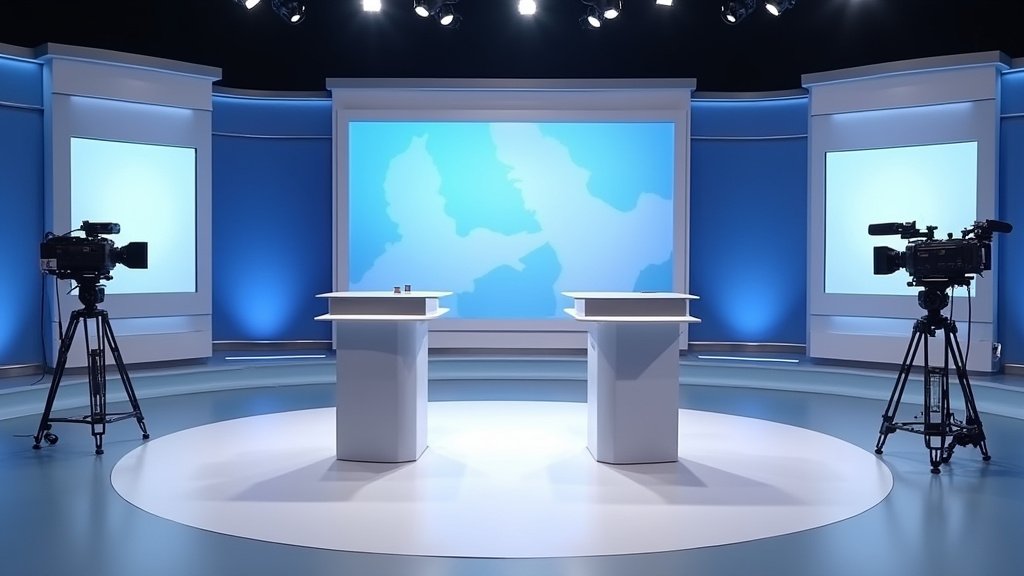
In a pivotal development for local democracy, KNBC (NBC4) and KVEA (Telemundo 52) have officially confirmed they will co-host a live, televised debate for the Los Angeles mayoral race. This partnership represents a significant moment in the municipal election cycle, underscoring the necessity of accessible, high-stakes political discourse in the second-largest city in the United States. As voters prepare to head to the polls, this broadcast will serve as a primary vehicle for candidates to articulate their platforms, debate policy nuances, and engage with a diverse, multi-lingual electorate.
Key Highlights
- Joint Broadcast Partnership: KNBC and Telemundo 52 are collaborating to reach a broad demographic, ensuring the debate is accessible in both English and Spanish.
- Strategic Civic Engagement: The event is designed to provide undecided voters with direct insight into candidate temperament and policy specifics.
- Policy Focus: The debate will cover critical urban issues, including housing, homelessness, public safety, and economic recovery.
- Real-Time Fact Checking: The networks have committed to comprehensive coverage, aiming to maintain transparency throughout the proceedings.
The Strategic Importance of the Los Angeles Mayoral Debate
The decision to host a joint broadcast on NBC and Telemundo is not merely a logistical choice; it is a strategic acknowledgment of the demographic and cultural landscape of Los Angeles. As the city navigates complex challenges ranging from infrastructure modernization to an ongoing housing affordability crisis, the ability for candidates to communicate their vision across language barriers is paramount. This debate acts as the great equalizer in the campaign season, moving beyond curated social media clips and campaign advertisements to place candidates in a live, unpredictable, and high-pressure environment.
The Intersection of Media and Municipal Governance
For the average Angeleno, the mayoral office is the most direct point of contact between their daily lives and government bureaucracy. The partnership between KNBC and Telemundo 52 creates a unified media event that mirrors the diversity of the city. By broadcasting simultaneously on both English and Spanish channels, the debate reaches a massive, bilingual audience, reinforcing the principle that civic engagement should not be gated by language access. This integration is essential in Los Angeles, where the Latino vote is a decisive factor in virtually every city-wide race. Analysts have long pointed out that candidates who fail to engage with Spanish-language media effectively often find themselves struggling to build the necessary coalition to win city hall. This debate provides the platform for candidates to address issues of specific concern to Latino households, such as small business support, immigrant services, and neighborhood safety, in a forum that is treated with the same journalistic rigor as the English-language broadcast.
Analyzing Candidate Performance Under Pressure
The televised debate format is the ultimate stress test for any political campaign. Unlike campaign rallies or pre-recorded interviews, a live debate forces candidates to defend their policy proposals against direct counter-arguments and unexpected moderator questions. This is where the “optics” of the campaign often crystallize. For candidates, the objective is twofold: to avoid the “gaffe” that can dominate a news cycle for days, and to create the “viral moment” that can energize their base or attract undecided independents. In the context of the Los Angeles mayoral race, we expect a intense focus on the candidate’s ability to demonstrate command over municipal budget details. With the city facing mounting pressure to resolve long-standing issues, voters are looking for technocratic competence matched with a visionary approach. The visual language of the debate—the positioning of the podiums, the direct eye contact with the camera, the response to a hostile line of questioning—will be analyzed extensively by political consultants and the public alike.
The Historical and Future Impact of Televised Debates
Historically, televised debates have served as turning points in mayoral elections. We only need to look back at past races to see how a singular performance—or lack thereof—can shift momentum. In an era where digital consumption of news is increasingly fragmented, the “appointment television” nature of a live mayoral debate remains a rare occurrence that commands collective attention. It forces a pause in the relentless pace of daily life, inviting citizens to witness the candidates in their most authentic, unscripted moments. Furthermore, as we look to the future of urban governance, this debate will likely set the tone for how candidates engage with digital-native voters, utilizing social media “second-screen” experiences alongside the traditional broadcast. The networks are expected to integrate social sentiment and fact-checking tickers, acknowledging that today’s voter is likely watching the screen while simultaneously analyzing the discourse on platforms like X or Threads. This multi-layered engagement represents the modern standard for journalistic integrity in local elections.
FAQ: People Also Ask
Where can I watch the Los Angeles mayoral debate?
The debate will be available live on KNBC (NBC4) and KVEA (Telemundo 52). Local viewers can also expect digital simulcasts on the stations’ respective websites and streaming platforms.
Will the debate be fact-checked in real-time?
Both networks have indicated that they will employ their editorial teams to provide context and verification during and after the broadcast to ensure voters have accurate information regarding claims made by the candidates.
How are candidates selected for the debate?
Participation is generally determined by the station’s editorial criteria, often based on polling thresholds, fundraising milestones, or ballot access requirements established by the city and the networks.
Why is a joint broadcast between English and Spanish networks significant?
It reflects the demographics of Los Angeles and ensures that a massive portion of the electorate receives equal access to candidate information, which is critical for a representative and inclusive democratic process.