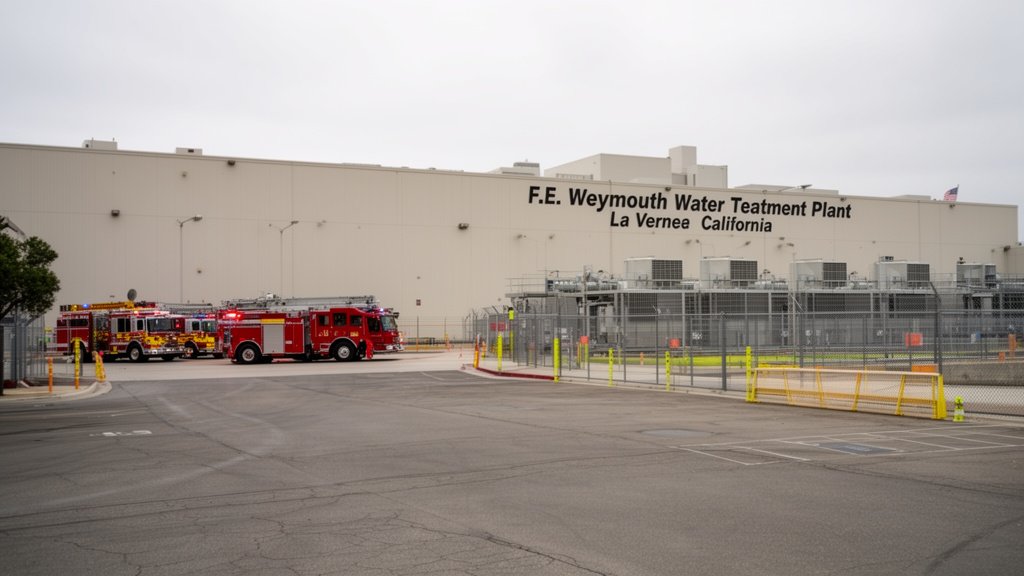
The evacuation order remains in effect for designated zones in La Verne, California, following a critical lithium-ion battery fire that broke out at the Metropolitan Water District’s (MWD) F.E. Weymouth Water Treatment Plant on September 22. Emergency management teams and hazardous materials units continue to monitor the site, citing ongoing concerns regarding air quality and the stability of the battery energy storage system (BESS) involved in the blaze. While fire suppression efforts are active, the situation necessitates strict containment protocols to protect public health.
Key Highlights
- Incident Origin: The fire began at the F.E. Weymouth Water Treatment Plant, a major utility facility, on September 22.
- Active Evacuations: A specific evacuation zone remains enforced for residents in the immediate vicinity due to potential toxic byproducts from the lithium-ion batteries.
- Hazardous Materials: Specialized hazmat teams are actively monitoring air quality and thermal runaway conditions typical of large-scale battery fires.
- Safety Precaution: Authorities have prioritized the containment of the BESS unit to prevent the spread of fire and chemical contaminants into the surrounding environment.
Managing the Hazards of BESS Infrastructure
The situation in La Verne has spotlighted the complexities associated with modern Battery Energy Storage Systems (BESS) installed within critical infrastructure. The F.E. Weymouth Water Treatment Plant serves as a vital component of the Metropolitan Water District’s delivery network, and the fire at its site represents a significant operational challenge. When lithium-ion batteries ignite, they often undergo a phenomenon known as ‘thermal runaway,’ where the battery cells generate excessive heat, potentially leading to a self-sustaining cycle of combustion that is notoriously difficult to extinguish using traditional water-based methods.
Unlike structural fires, BESS fires require a specialized response. The primary concern for incident commanders is not just the fire itself, but the emission of hydrogen fluoride and other toxic gases that can pose respiratory risks. This is the primary driver behind the continued evacuation orders. Residents within the zone are advised to follow official directives strictly, as the dissipation of these chemical compounds depends on weather conditions and the progress of the cooling operations being conducted by the fire response teams.
The Role of the F.E. Weymouth Plant
As one of the largest water treatment facilities in the region, the Weymouth plant is an essential node for Southern California’s water supply. The integration of battery storage at such facilities is part of a broader push toward sustainable energy resilience, allowing utilities to store power during off-peak hours and discharge it when demand spikes. However, the events of September 22 demonstrate the inherent risks of co-locating this high-density energy technology with critical water infrastructure. While officials have assured the public that the drinking water supply remains safe and unaffected by the incident, the presence of fire-fighting run-off and the proximity of the storage facility to operational components remain areas of intense focus for engineers and safety inspectors.
Challenges in Extinguishment and Containment
Fire suppression strategy for this event has been categorized as defensive. Rather than aggressive, rapid-fire knockdown, crews have focused on containment. Lithium-ion batteries often require massive amounts of water to cool the cells down to a point where the chemical reaction stops. In an industrial setting, this creates a logistical hurdle: managing the water used to fight the fire so that it does not become a secondary hazardous material issue. The presence of specialized teams on-site indicates that the recovery phase will be deliberate. Until the BESS unit is deemed stable and the atmosphere is cleared of potential toxic particulates, the evacuation order will remain a necessary precaution for local authorities to ensure public safety.
Long-term Implications for Energy Storage
This incident is likely to trigger a comprehensive review of BESS installation standards. As California moves toward its renewable energy goals, the installation of battery arrays is accelerating rapidly. Municipalities and utility providers are now faced with the task of balancing the benefits of green energy with the safety requirements of high-density lithium storage. Future facility designs may require enhanced physical barriers, more advanced fire suppression systems integrated directly into the BESS containers, and more sophisticated air monitoring sensors that can provide real-time data to emergency services during a potential malfunction.
FAQ: People Also Ask
Q: Is the local drinking water safe to consume?
A: Yes. Metropolitan Water District officials have confirmed that the fire is contained to the battery energy storage system at the facility and has not compromised the water treatment operations or the quality of the water being processed for the public.
Q: Why was the evacuation order issued?
A: The order was issued as a precautionary measure to protect residents from potential smoke and chemical fumes associated with lithium-ion battery combustion. These types of fires can release hazardous particulates, and keeping the public away from the site ensures the safety of the community.
Q: When will the evacuation order be lifted?
A: Local emergency management and hazmat crews are continuously assessing the site. The order will be lifted only when the fire is completely extinguished, the batteries are stabilized, and air quality readings confirm there is no longer a risk to the public. Residents should monitor official city channels for the most current updates.
Q: Why are BESS fires so difficult to put out?
A: BESS fires are complex because the energy is chemically stored within the battery cells. ‘Thermal runaway’ means the battery produces its own oxygen and heat, allowing the fire to persist even without external air. This often requires long-duration cooling rather than traditional fire suppression techniques.