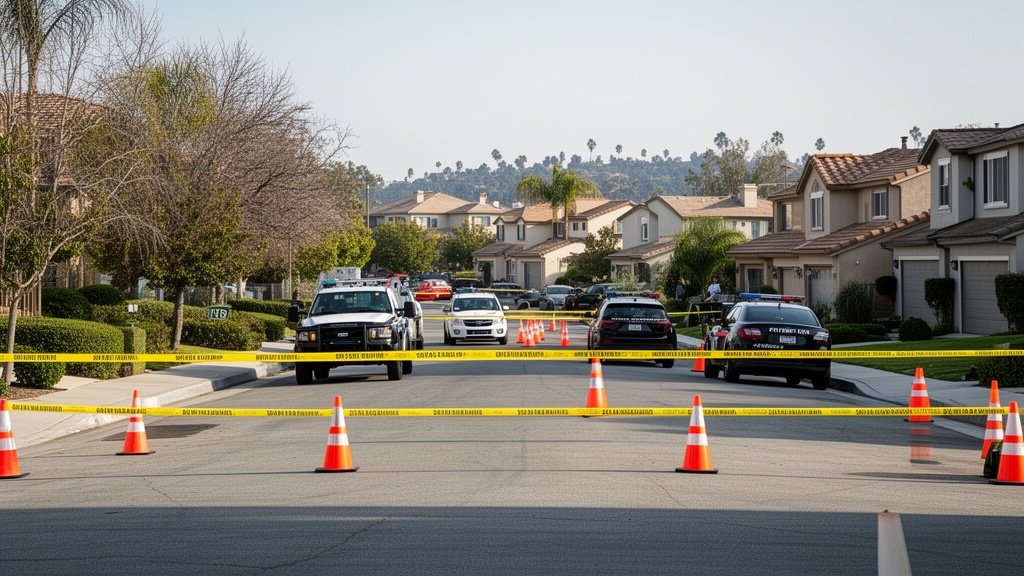
On September 15, 2024, a routine news gathering operation in Southern California transformed into a catastrophic tragedy, leaving the Chatsworth community reeling. The Los Angeles County Medical Examiner has now officially identified the pedestrian who lost their life on the ground during the NBC4 news helicopter crash as 29-year-old Edy Gutierrez Mejia. This identification brings a painful clarity to an incident that claimed a total of three lives and prompted immediate, sweeping investigations into the safety protocols of urban aerial news reporting.
Key Highlights
- Victim Identified: 29-year-old Edy Gutierrez Mejia has been confirmed as the pedestrian on the ground who perished in the incident.
- Date of Incident: The catastrophic crash occurred on September 15, 2024, in the Chatsworth area of Los Angeles.
- Total Casualties: The accident resulted in the deaths of the pilot, the camera operator, and the pedestrian, Mejia.
- Regulatory Oversight: The National Transportation Safety Board (NTSB) and the Federal Aviation Administration (FAA) are conducting separate, concurrent investigations to determine the mechanical or human factors that led to the crash.
The Aftermath of the Chatsworth Air Tragedy
The identification of Edy Gutierrez Mejia has provided a degree of closure for the family of the 29-year-old local, but it has simultaneously intensified the focus of the ongoing investigation. The incident, which unfolded rapidly in a residential sector of Chatsworth, involved a helicopter operated for news gathering purposes. While aerial coverage is a staple of Southern California media, this event has triggered a wave of public scrutiny regarding the necessity and safety of low-altitude flights over densely populated urban zones.
The Investigation: NTSB and FAA Protocols
Following the crash, investigators from the National Transportation Safety Board (NTSB) arrived on the scene to secure the wreckage and retrieve onboard data, including flight recorders and any potential telemetry data transmitted prior to the impact. The primary focus of the NTSB’s “Go-Team” is to determine the sequence of events leading to the loss of control. Investigators are analyzing maintenance logs, pilot flight hours, and the structural integrity of the aircraft involved. Simultaneously, the Federal Aviation Administration (FAA) is reviewing the flight path and compliance with current regulations governing news aircraft operating within restricted or residential airspaces.
The Human Impact: A Community in Mourning
For the residents of Chatsworth, the September 15th event is a stark reminder of the unpredictable risks associated with high-density urban living. Local authorities and victim services have been working closely with the family of Edy Gutierrez Mejia, who has been described by friends and community members as a well-known local figure. The tragedy has effectively paralyzed the community, prompting calls for city officials to reassess the permissions granted to private and media-owned aircraft operating in residential corridors.
Secondary Angle 1: The Evolution of Urban Aerial Surveillance
Historically, the presence of news helicopters in the Los Angeles basin has been synonymous with breaking news and traffic reporting. However, the rise of drone technology and high-definition long-range lenses has sparked debate regarding the efficacy of manned helicopters. Critics argue that the risk-to-reward ratio has shifted, suggesting that manned aircraft flying at low altitudes present an unjustifiable danger to pedestrians and residents when remote-piloted solutions could potentially achieve similar news gathering goals without the risk of human loss on the ground.
Secondary Angle 2: Legal and Liability Implications for Media Organizations
The legal ramifications of this crash are expected to be protracted and complex. Media organizations often contract with third-party flight services or maintain their own fleets, creating a layered approach to liability. Legal analysts suggest that the families of the victims will likely explore wrongful death litigation, focusing on whether the flight was necessary, whether proper safety maintenance was performed, and whether the pilot or the operators prioritized speed over safety in the race to capture breaking news. This incident sets a high-stakes precedent for how insurance and liability are managed in the media-aviation industry.
Secondary Angle 3: Future Regulatory Predictions
In the wake of this disaster, industry experts predict a tightening of “Flight Level” restrictions over Southern California residential areas. The FAA may be pressured to establish more stringent “Minimum Safe Altitude” rules for non-emergency media flights. We are likely to see a shift toward mandatory installation of enhanced traffic awareness systems and potentially stricter limits on flight hours for news pilots to prevent fatigue-related errors. This tragedy may serve as the catalyst for the most significant restructuring of local news aviation policy in the last decade.
FAQ: People Also Ask
Q: What is the current status of the investigation into the Chatsworth helicopter crash?
A: The investigation is active and led by the NTSB. They are currently analyzing mechanical components and flight data to determine the cause of the crash. Results are typically released in a preliminary report followed by a more comprehensive final report.
Q: How does the FAA regulate news helicopters in Los Angeles?
A: The FAA mandates flight altitude requirements and airspace compliance. News helicopters must adhere to specific traffic patterns and avoid prohibited zones, though their primary operations are generally permitted as long as they comply with standard air traffic control (ATC) protocols.
Q: Will this crash lead to a ban on news helicopters?
A: A total ban is unlikely, as aerial news coverage is a significant part of the region’s broadcasting infrastructure. However, it is highly probable that stricter regulations, more rigorous pilot training requirements, and updated flight path restrictions will be implemented as a result of this investigation.
Q: What should the public do if they witness an aviation incident?
A: Authorities urge the public to keep their distance from crash sites to preserve forensic evidence and ensure safety. Witnesses should immediately contact 911 and provide accurate details regarding the time, location, and nature of the crash to first responders.