
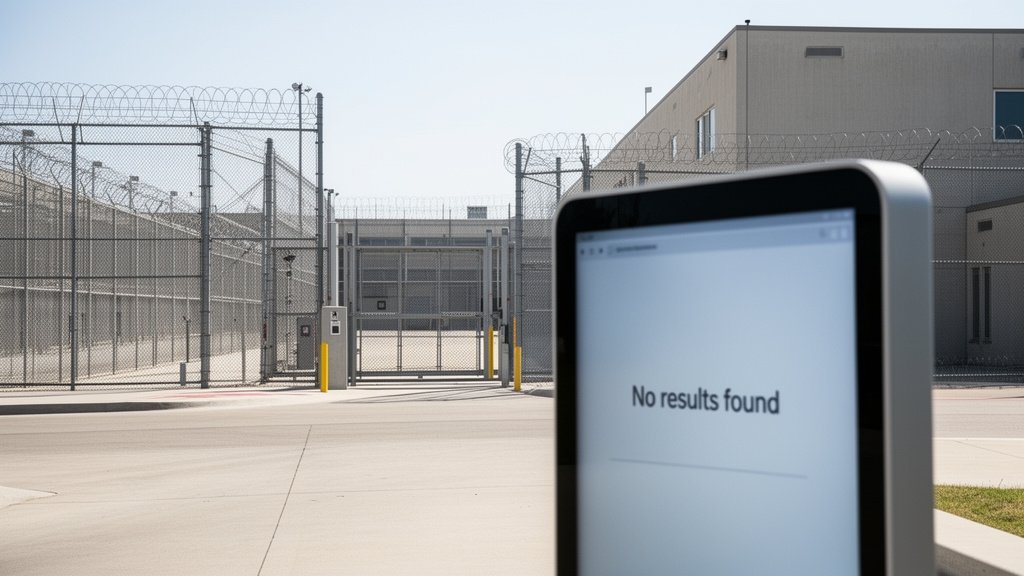
U.S. Immigration and Customs Enforcement (ICE) has initiated a sweeping, quiet removal of thousands of detainees with final deportation orders from its public-facing Online Detainee Locator System (ODLS). This move has effectively turned the agency’s search database—a critical tool for families, legal counsel, and human rights advocates—into an unreliable resource for locating individuals currently in custody. Attorneys across the country report that, alongside the database scrub, agency staff are increasingly barred from disclosing the physical location of detainees by phone, creating a ‘black hole’ for those seeking due process for their loved ones.
Key Highlights
- Digital Blackout: Thousands of detainees with final deportation orders have been purged from the ICE Online Detainee Locator System (ODLS).
- Communication Barriers: ICE facilities and field offices are reportedly restricting staff from confirming detainee locations via phone, leaving families without recourse.
- Due Process Concerns: Legal advocates warn the opacity severely hinders the right to counsel and complicates the filing of last-minute stay-of-removal requests.
- Operational Shift: The move is framed by the agency as an ‘operational security’ measure, though critics argue it is an intentional strategy to facilitate rapid deportations by preventing legal intervention.
The Digital Exclusion of Detainees
The Online Detainee Locator System (ODLS) was designed to bridge the transparency gap between the sprawling U.S. immigration detention network and the public. For years, it served as the primary nexus for families to locate kin and for attorneys to track clients facing imminent deportation. However, the recent modification—stripping records of those with final removal orders—marks a significant pivot in how the Department of Homeland Security (DHS) manages information accessibility.
By filtering out individuals with final deportation orders, ICE has created a functional vacuum. In practice, this means that the moment a detainee’s status moves to ‘final,’ they effectively vanish from public view. This change is not merely a technical update; it is a profound barrier to fundamental due process. Without the ability to track a client’s exact facility, attorneys are often forced to engage in a ‘guessing game,’ calling various regional hubs to locate a detainee who may be moved across state lines within hours.
The Human and Legal Cost
The removal of this data has immediate, often devastating consequences. In immigration law, time is the scarcest currency. Attorneys often have a matter of hours to file emergency stays of removal or habeas corpus petitions when new evidence emerges. If counsel cannot confirm a client’s location, they cannot secure the necessary signatures or communicate with the detainee regarding their legal strategy.
Advocacy organizations, including the American Civil Liberties Union (ACLU) and various regional immigrant rights legal centers, have characterized this as a form of ‘administrative obstruction.’ When staff at detention centers refuse to confirm a detainee’s presence, the legal system becomes opaque. This opacity creates a climate of fear and uncertainty for families who are left without information, potentially driving some to rely on predatory ‘notario’ schemes or, conversely, leaving them in despair as they wonder whether their family member is still in custody or has already been deported.
Institutional Rationales: Security vs. Transparency
ICE officials have historically cited operational security as the justification for limiting information. In the context of the ODLS, the agency argues that publicizing the whereabouts of detainees with final orders could lead to potential disruptions at facilities or jeopardize the transportation logistics required for removal. However, transparency advocates argue that this is a disproportionate response.
The reality is that transparency in government detention is a requirement of a functioning democracy, not a luxury. By digitizing the ‘disappearance’ of detainees, the agency is leveraging technology to bypass the accountability mechanisms that keep the immigration system somewhat tethered to legal standards. There is a secondary concern among legal scholars: if the government can unilaterally turn off the searchlight on its own detention population, what other data points might be next on the chopping block?
Future Implications and The ‘Vanishing’ Trend
This shift fits into a broader, ongoing trend of increasing digitalization within the immigration enforcement apparatus, often at the expense of human access. As ICE moves toward more automated, ‘black-box’ systems for case management, the human element—the ability to speak to an officer, to see a status update, to find a person—is being systematically dismantled.
Looking ahead, this digital barrier may accelerate the pace of deportations. If legal counsel is consistently delayed in their efforts to locate clients, the ‘final’ in ‘final deportation order’ becomes a self-fulfilling prophecy. The administrative backlog, combined with the lack of transparency, suggests that the U.S. immigration system is moving toward a model where ‘administrative efficiency’—defined as the rapid removal of individuals—takes precedence over the complexities of individual legal rights. For families, the implication is stark: the system is no longer built to be found; it is built to move.
FAQ: People Also Ask
1. Why would ICE remove records of detainees from the public search?
ICE maintains that these changes are driven by operational security and privacy protections. However, critics argue the change is designed to limit the ability of attorneys and families to intervene in the deportation process.
2. If a family member disappears from the ODLS, what should they do?
Legal experts recommend contacting the ICE Field Office covering the state where the individual was last known to be held. If staff remain uncooperative, filing a formal inquiry through a congressional representative’s office is often the only remaining path to forcing a response.
3. Is this change permanent?
As of now, the removal of these records appears to be a systemic policy update rather than a temporary glitch. Unless there is significant legal intervention or a change in Department of Homeland Security policy, it is likely to remain in effect.
4. Does this affect all detainees or only those with final deportation orders?
Currently, reports indicate the filter is specifically targeting detainees with final deportation orders, which effectively encompasses those at the most vulnerable stage of the deportation process.