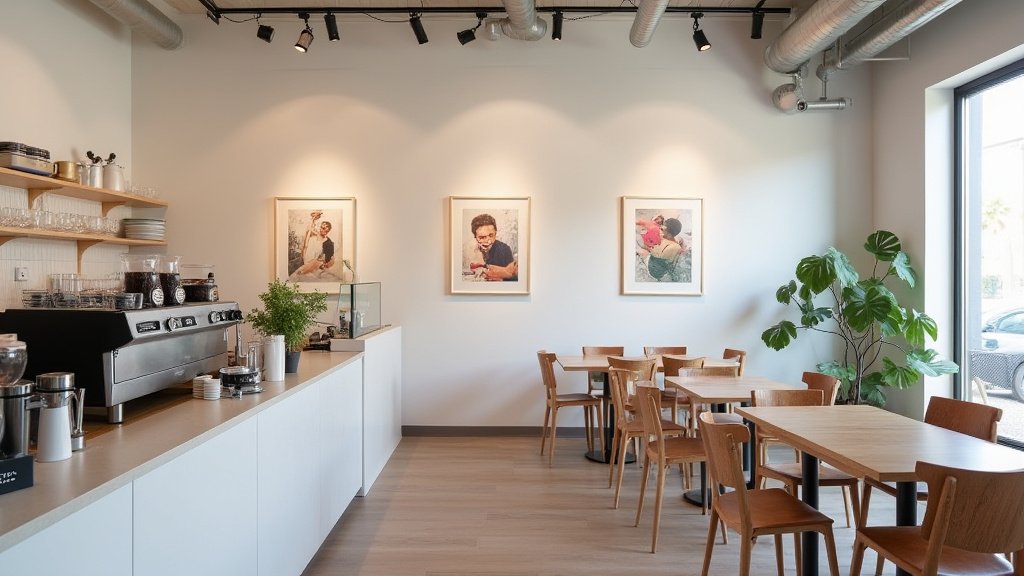
Kafe has officially opened its doors on Melrose Avenue in West Hollywood, signaling a significant shift in the neighborhood’s retail landscape by merging high-end specialty coffee service with a multi-purpose cultural and art-focused environment. The launch represents the brand’s first physical location, aiming to move beyond the traditional transactional coffee model to establish a venue where community programming and aesthetic experience carry as much weight as the quality of the extraction.
Key Highlights
- Prime Location: Strategically situated on the vibrant Melrose Avenue corridor in West Hollywood, a key destination for fashion, art, and retail foot traffic.
- Multi-Disciplinary Model: The space is designed not just as a coffee bar, but as a cultural hub, integrating rotating art installations with professional-grade coffee service.
- Community Integration: A core pillar of the business model is active community programming, positioning the shop as a “third space” for local creatives and residents.
- Specialty Focus: The coffee program adheres to high-standards of the Third Wave movement, emphasizing precision brewing and carefully curated bean sourcing.
The Architecture of Connection: Redefining the Los Angeles Café
The opening of Kafe on Melrose Avenue is a notable development in the evolution of Los Angeles hospitality. For years, the “Build-Outs of Coffee” phenomenon—popularized by publications like Sprudge—has chronicled the meticulous design and operational logic required to survive in the competitive LA market. Kafe enters this arena not merely as a purveyor of caffeine, but as a curator of atmosphere. By anchoring its identity in both art and coffee, the brand is tapping into a consumer desire for experiences that feel integrated rather than fragmented.
The Shift Toward Cultural Hubs
In the post-pandemic era, the role of the coffee shop has undergone a radical transformation. It is no longer sufficient to provide excellent espresso; the modern specialty café must function as a venue. Kafe’s design, characterized by minimalist lines and intentional negative space, allows the rotating art exhibitions to dictate the “vibe” of the room. This modular approach to interior design ensures that the space remains dynamic, preventing the stale monotony that often plagues long-standing neighborhood shops. By aligning with local artists, Kafe lowers its barrier to entry for the local creative community, transforming from a commercial entity into a neighborhood staple.
The Melrose Retail Metamorphosis
Melrose Avenue has long been a barometer for LA’s retail health. The street has weathered the rise of e-commerce and the decline of traditional brick-and-mortar by pivoting toward high-concept, “experience-first” establishments. Kafe fits squarely into this narrative. As rent prices in West Hollywood remain among the highest in the country, the viability of a café depends on its ability to drive consistent traffic throughout the day. By extending their offering into community programming—likely to include evening workshops, gallery openings, or intimate gatherings—Kafe maximizes the utility of its square footage, a crucial strategy for financial sustainability in this real estate climate.
Analytical Perspective: The Impact of ‘Build-Outs’
When analyzing this project through the lens of industry trends, the “Build-Out” format is revealing. The focus here is on the technical specifications of the bar layout, the choice of machinery, and the flow of the barista workspace. These elements are not just functional; they are the “product” that validates the shop’s legitimacy to the Specialty Coffee Association (SCA) standard. Kafe has clearly invested in a workflow that prioritizes speed without sacrificing the intimacy of the guest interaction. This balance is difficult to achieve: it requires a floor plan that keeps the barista engaged with the patron while maintaining the efficiency required to handle the morning rush typical of West Hollywood.
Future Predictions and Sustainability
Looking ahead, the success of Kafe will likely hinge on its ability to maintain the delicate balance between “cool factor” and accessibility. Many new coffee concepts in Los Angeles suffer from an exclusionary atmosphere that alienates the average morning commuter. Kafe must navigate the tension between serving the “coffee geek” demographic—those interested in origin notes and pour-over ratios—and the local resident who simply wants a reliable cup of coffee and a seat. If they can successfully merge these two populations, they may establish a blueprint for future expansion. The brand’s commitment to community programming is its strongest defense against commoditization; as long as the space remains relevant to the local culture, it will retain its value regardless of fluctuations in the specialty coffee market.
FAQ: People Also Ask
Where is Kafe located specifically?
Kafe is located on Melrose Avenue in West Hollywood, CA, placing it within one of Los Angeles’ most prominent retail and design districts.
What makes this coffee shop different from others in LA?
Unlike many traditional “grab-and-go” or purely laptop-centric cafes, Kafe integrates active community programming and curated art installations into its daily operations, positioning itself as a cultural space rather than just a coffee shop.
Is Kafe suitable for remote workers?
While the venue is designed as a cultural hub, its aesthetic and layout suggest an environment intended for social engagement and community interaction, contrasting with the typical “quiet zone” co-working cafe model.