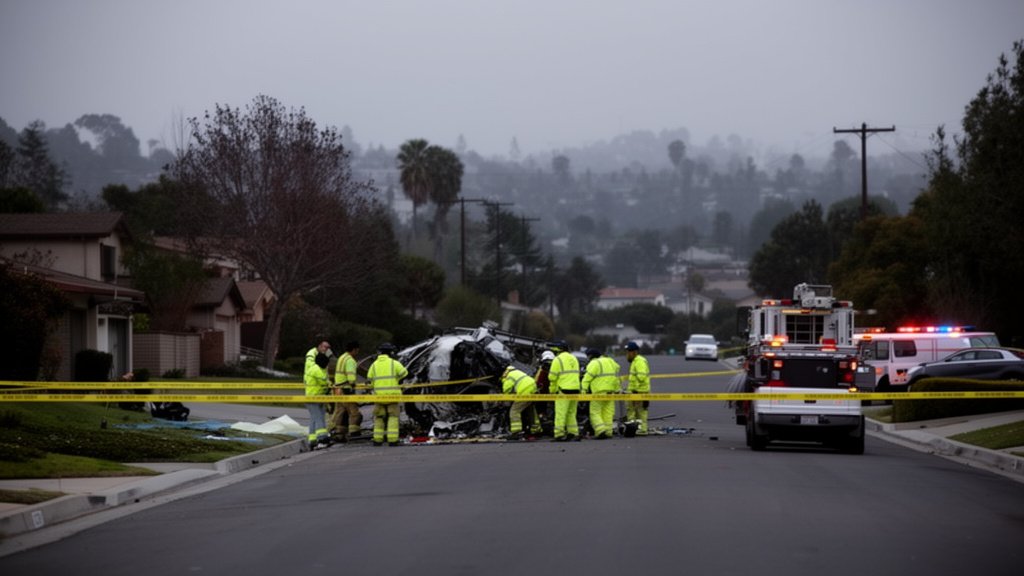
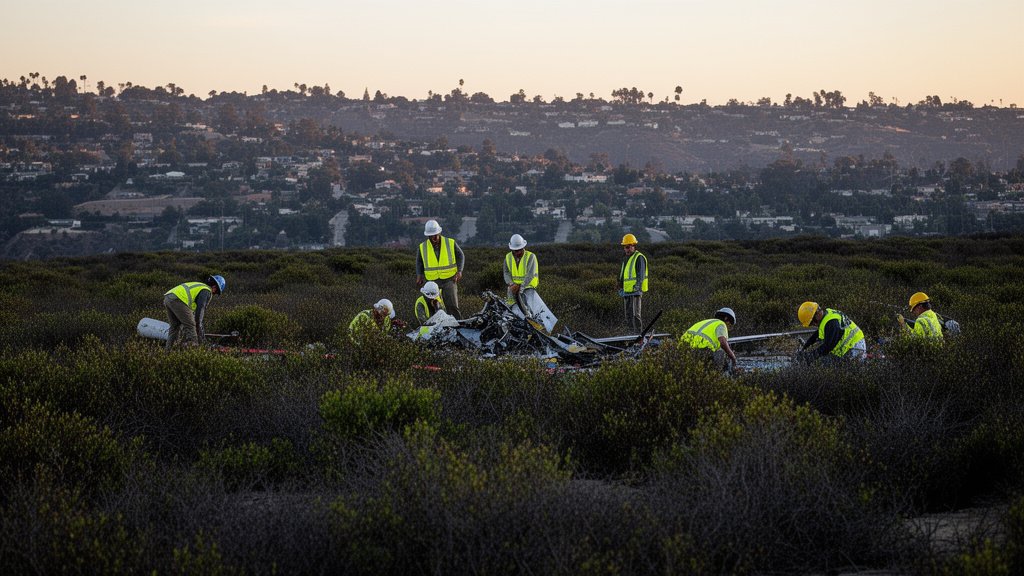
Los Angeles is grappling with a profound sense of loss today after a news helicopter, providing aerial coverage for NBC4 and Telemundo 52, crashed in the Chatsworth neighborhood on Tuesday evening. The tragic incident, which occurred while the crew was reporting on a separate bus collision, has resulted in the confirmed deaths of the journalist, the pilot, and a pedestrian who was on the ground at the time of the impact. The event has sent shockwaves through the Southern California media landscape, prompting an outpouring of grief from colleagues, viewers, and city officials alike. As authorities commence a rigorous investigation into the cause of the disaster, the community is left to process the sudden void left by professionals who were simply doing their jobs to keep the public informed.
Key Highlights
- A news helicopter serving NBC4 and Telemundo 52 went down in the Chatsworth neighborhood of Los Angeles on Tuesday evening.
- The crash resulted in three fatalities: the pilot, the journalist on board, and a pedestrian at the crash site.
- The crew was engaged in routine aerial reporting on a separate local bus collision when the disaster occurred.
- The incident has sparked a local and national conversation regarding the safety protocols and inherent risks associated with aerial news gathering.
The Anatomy of a Tragedy: Investigating the Chatsworth Crash
The silence that followed the crash in Chatsworth serves as a stark reminder of the risks taken daily by members of the press. For viewers in Los Angeles, the news helicopter is a ubiquitous presence—an eye in the sky that provides traffic updates, tracks breaking news, and offers perspective on major regional events. When that eye goes dark, the impact is felt not just by the families of the victims, but by the public who relies on these professionals for real-time information.
The Operational Context: Journalism from the Sky
News organizations like NBC4 and Telemundo 52 rely heavily on aerial assets to provide context that ground-level reporting cannot capture. These missions are often high-pressure and time-sensitive. Pilots and journalists must constantly balance the need for dramatic, clear footage with the strict safety regulations dictated by the Federal Aviation Administration (FAA). In this instance, the crew was tasked with monitoring a bus collision, a standard news assignment that quickly spiraled into an unimaginable crisis.
The Human Element: Loss of Community Staples
Journalists and pilots in the local news industry often become familiar fixtures in the homes of viewers. They are the voices that narrate the city’s unfolding stories. The loss of a journalist and a pilot is, in many ways, the loss of a public servant. The aviation and journalism communities are tight-knit, and the news of the crash has prompted a massive wave of solidarity. Tributes have poured in from competing stations and independent reporters, highlighting the shared danger that all aerial news crews face whenever they lift off from the tarmac.
The Investigation: NTSB and FAA Protocols
The National Transportation Safety Board (NTSB) has taken the lead in the investigation, with support from the FAA. These organizations are tasked with reconstructing the final moments of the flight. Investigators will be looking at a vast array of variables, including mechanical maintenance logs, weather conditions over the Chatsworth area on that Tuesday evening, communication logs between the pilot and air traffic control, and potential ground-level obstructions. While speculation is natural in the wake of such a tragedy, the NTSB’s mandate is to find facts, not fault, to ensure that similar accidents can be prevented in the future.
The Secondary Tragedy: The Pedestrian
The inclusion of a pedestrian in the casualty list underscores the unpredictability of aviation accidents. While news crews are well-trained in flight safety and emergency procedures, the individuals on the ground are entirely vulnerable. This aspect of the tragedy has added an extra layer of complexity to the incident, as local authorities look into the specific circumstances of the crash site and whether any ground-based factors played a role in the catastrophic outcome.
Future Implications for Aerial Reporting
This event is likely to trigger a review of aerial news operations across the country. Major networks often outsource helicopter services to third-party vendors, creating a complex web of liability and safety oversight. Following this incident, it is expected that news stations will re-evaluate their flight protocols. We may see increased demand for enhanced flight monitoring technology, more rigorous pre-flight inspection requirements, and perhaps a wider reliance on drone technology—which, while limited in range and capacity compared to full-sized helicopters, eliminates the risk to human pilots and journalists on board.
FAQ: People Also Ask
1. What organizations are investigating the helicopter crash?
The National Transportation Safety Board (NTSB) is leading the investigation, supported by the Federal Aviation Administration (FAA), as they examine all physical and electronic evidence surrounding the crash site.
2. Was the helicopter a station-owned aircraft?
Most news organizations contract helicopter services through specialized aviation vendors. The investigation will involve reviewing contracts and maintenance agreements between the media outlets and the flight providers to determine the chain of responsibility.
3. How does this affect local news coverage?
While the immediate impact is a period of mourning and operational pause, it is likely that stations will implement stricter safety audits. Viewers may see fewer aerial live shots in the short term as the industry processes this loss.
4. Is there any danger to the public when news helicopters fly low?
News helicopters operate under strict FAA regulations that dictate minimum altitudes and flight paths. While incidents are extremely rare, the Chatsworth crash serves as a grim reminder that aviation carries inherent, non-zero risks regardless of safety regulations.