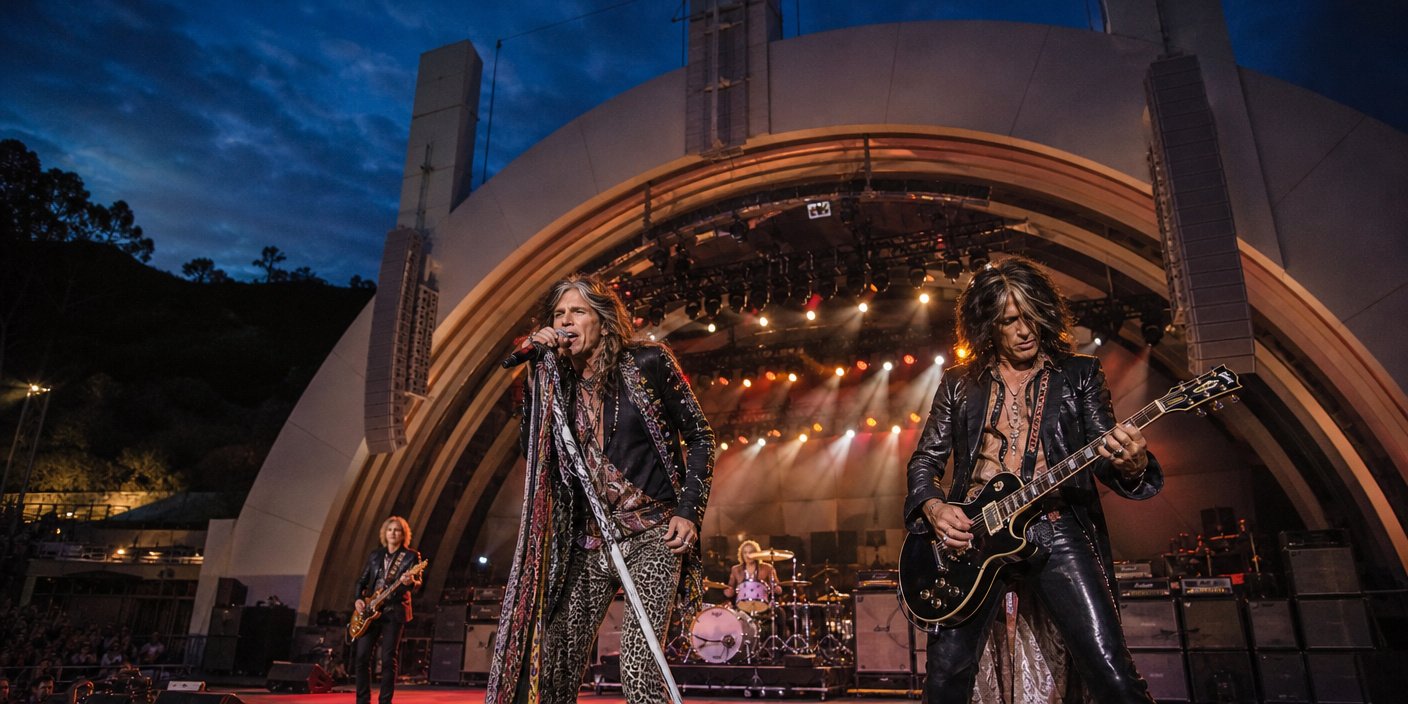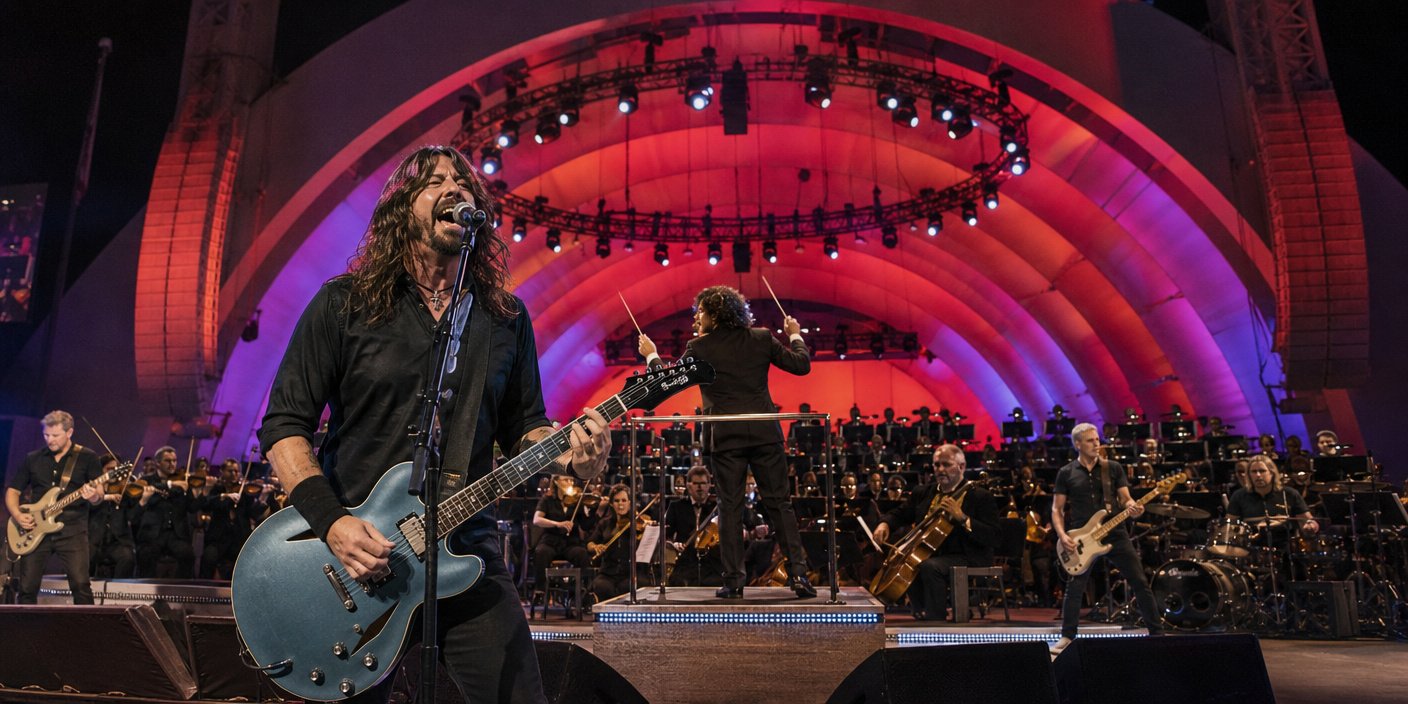
The iconic acoustic shell of the Hollywood Bowl served as the backdrop for a collision of musical worlds on August 22, as the Foo Fighters took the stage for their long-awaited debut at the historic Los Angeles venue. In a move that transcended typical stadium rock, the band collaborated with the Los Angeles Philharmonic, led by the renowned conductor Gustavo Dudamel. The performance was not merely a concert but a significant cultural milestone, marking one of the final appearances for Dudamel as music director before his impending transition to the New York Philharmonic. The evening blended the raw, high-octane energy of Dave Grohl and his band with the nuanced, sweeping arrangements of one of the world’s most prestigious orchestras.
Key Highlights
- Historic Debut: August 22 marked the Foo Fighters’ first-ever headlining performance at the legendary Hollywood Bowl, a venue that has hosted everyone from The Beatles to Jimi Hendrix.
- Orchestral Fusion: The collaboration featured the Los Angeles Philharmonic, seamlessly weaving orchestral arrangements into the Foo Fighters’ catalog, conducted by the globally acclaimed Gustavo Dudamel.
- Dudamel’s Finale: This performance served as a penultimate highlight in Gustavo Dudamel’s tenure as music director of the LA Phil, underscoring his commitment to bridging the gap between classical music and contemporary culture.
- Acoustic Spectacle: The night utilized the Hollywood Bowl’s unique natural acoustics, enhanced by the Philharmonic’s presence, to provide a sonic experience distinct from the band’s usual stadium tours.
The Symphony of Stadium Rock: A New Paradigm
The marriage of a rock band and a symphony orchestra is a concept that has been attempted many times throughout music history, often with varying degrees of success. However, the performance on August 22 at the Hollywood Bowl set a new standard for this genre of crossover production. By inviting Gustavo Dudamel to conduct, the Foo Fighters were not merely adding a string section for dramatic effect; they were engaging in a high-level dialogue between two distinct musical languages.
For the Foo Fighters, a band whose identity is forged in the grit of post-grunge and stadium rock, this was a departure from their usual modus operandi. Dave Grohl, known for his relentless energy, found a different kind of rhythm in the precision of the LA Phil. The arrangements allowed the band’s anthemic choruses to soar with a cinematic quality that typically remains buried under layers of distortion and amplified feedback. It proved that rock music, at its core, possesses a structural complexity that stands up remarkably well to orchestral interpretation, provided the collaborator is of Dudamel’s caliber.
Dudamel’s Orchestration of Modern Culture
Gustavo Dudamel has long been an outlier in the world of classical music, largely due to his relentless pursuit of bringing orchestral music into the public consciousness. His time with the Los Angeles Philharmonic has been defined by a philosophy of inclusion and accessibility. This collaboration with the Foo Fighters was not an outlier but a logical progression of his mission.
As Dudamel prepares to depart from his post in Los Angeles, this concert felt like a capstone to his tenure. It was a clear statement that the role of a modern conductor is not to guard the walls of high culture, but to break them down. By placing his baton in the service of rock music, Dudamel demonstrated that the line between ‘high art’ and ‘pop culture’ is increasingly porous. For the thousands of attendees at the Hollywood Bowl, the evening served as a reminder of the conductor’s impact on the Southern California cultural landscape—an impact that has made the LA Phil one of the most visible and relevant orchestras on the planet.
The Technical Challenge: Acoustics at the Bowl
The Hollywood Bowl presents a unique challenge for any performer. Its open-air nature and iconic shell design make it a difficult space to master, particularly when balancing the delicate dynamic range of an orchestra with the high-decibel output of a rock band.
Production teams for the show utilized state-of-the-art audio engineering to ensure that the Philharmonic was not drowned out by the band’s wall of sound. The setup required a delicate mix of close-miking for the string sections and balanced stage monitors that allowed Grohl and his bandmates to react to the orchestral swells in real-time. This technical achievement was vital to the event’s success, ensuring that the audience in the nosebleed sections experienced the same clarity as those in the box seats. It was a masterclass in live production, proving that even the most disparate musical entities can achieve harmony when the technical infrastructure is handled with professional precision.
Looking Ahead: The Cultural Aftermath
The success of the August 22 performance invites questions about the future of rock and orchestral collaborations. Will this spark a trend of more bands seeking out symphonic partnerships for their residency shows? Given the positive critical and fan reception, it is highly likely that other major acts will look to the Hollywood Bowl as the template for future high-concept performances.
Furthermore, this event leaves a lingering question regarding the future of the Los Angeles Philharmonic. As the search for Dudamel’s successor continues, the standard he has set for versatility will be a difficult benchmark to meet. The orchestra is no longer just a classical institution; it is a cultural powerhouse capable of pivoting between Mahler and the Foo Fighters with equal dexterity.
FAQ: People Also Ask
Q: Was this the first time the Foo Fighters have performed with an orchestra?
A: While the Foo Fighters have occasionally featured string arrangements on albums or specific radio sessions, the August 22 performance at the Hollywood Bowl represented their most comprehensive and direct collaboration with a full symphony orchestra on such a massive, professional stage.
Q: How does this fit into Gustavo Dudamel’s departure from the LA Phil?
A: Gustavo Dudamel’s tenure as music director is concluding as he prepares to transition to the New York Philharmonic. This Hollywood Bowl performance was one of the major artistic highlights of his final period in Los Angeles, cementing his legacy of bridging the gap between classical and popular music.
Q: What made the Hollywood Bowl venue choice significant for this collaboration?
A: The Hollywood Bowl’s historical significance combined with its unique shell acoustics provided a perfect environment for this type of crossover event. It allowed for the necessary acoustic volume for the orchestra to be heard alongside a stadium-rock band without losing the intimacy of the performance.