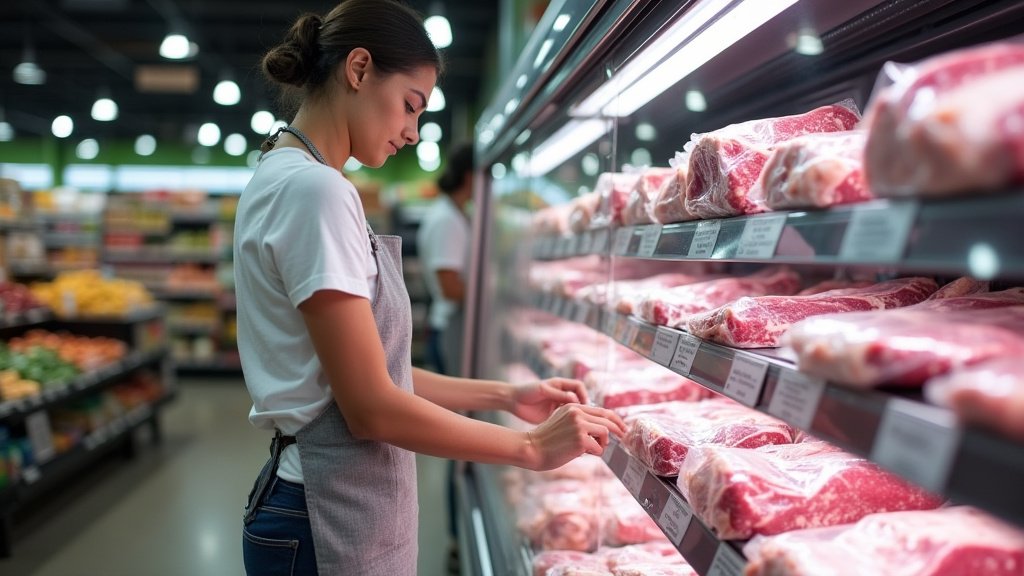
A public health alert has been issued following a widespread Salmonella outbreak that has sickened hundreds of consumers across 27 states. The contamination, identified in various meat and poultry products sold at major grocery and convenience stores, has triggered a massive, multi-agency federal response as officials work to track the source and remove dangerous inventory from the supply chain.
Key Highlights
- Widespread Impact: Confirmed Salmonella cases have been reported across 27 states, signaling a significant multi-state health emergency.
- Product Exposure: The alert encompasses a range of meat and poultry products commonly found in major retail and convenience chains.
- Immediate Action Required: Federal health agencies are urging consumers to cross-reference their current refrigerator and freezer stock with recall lists.
- Regulatory Scrutiny: The USDA’s Food Safety and Inspection Service (FSIS) is conducting deep-dive investigations into manufacturing facilities to halt further distribution.
Navigating the Nationwide Salmonella Crisis
The current Salmonella outbreak represents a critical intersection of public health risk and modern supply chain vulnerabilities. As hundreds of individuals report symptoms ranging from fever and diarrhea to severe abdominal cramping, federal authorities are prioritizing the containment of potentially contaminated meat and poultry. This situation underscores the fragile nature of food safety protocols in an era of rapid distribution and complex processing networks.
The Anatomy of the Outbreak
Salmonella, a bacterium that serves as a leading cause of foodborne illness, typically infects the intestinal tract. In this specific outbreak, the contamination appears to be linked to processing practices that may have allowed the bacteria to proliferate during the packaging or distribution phases. The sheer scale—spanning 27 states—suggests that the contamination point is likely upstream, potentially affecting a large-scale distributor or processing facility that supplies major retail chains.
Health agencies, including the Centers for Disease Control and Prevention (CDC) and the USDA, are utilizing advanced molecular testing to confirm that the bacterial strains found in patients match those isolated from product samples. This genomic epidemiology is the gold standard for identifying the exact source of an outbreak, allowing officials to issue targeted alerts rather than broad, damaging recalls. However, until the specific production lots are identified, the public health alert serves as a necessary, if broad, defensive measure.
Challenges in Modern Food Distribution
One of the most significant challenges in managing this outbreak is the complexity of modern retail logistics. Meat and poultry products move through intricate networks of suppliers, secondary processors, and wholesale distributors before reaching the end-consumer. When an outbreak occurs, the ability to rapidly trace a specific package back to the “kill step”—the point in the process where pathogens are supposed to be eliminated—is hampered by the volume of goods and the speed of inventory turnover.
Retailers are currently facing immense pressure to clear shelves and alert customers. Many major chains are utilizing loyalty program data to contact consumers who purchased the affected products directly, a strategy that has become increasingly essential in high-stakes recalls. Nevertheless, the reliance on consumer vigilance—checking labels, “sell-by” dates, and establishment numbers—remains a core component of the public safety strategy.
Understanding Regulatory Oversight
The USDA FSIS plays a central role in this response, holding the mandate to ensure that meat, poultry, and processed egg products are safe, wholesome, and properly labeled. In the event of a public health alert, the FSIS often collaborates with local health departments to perform environmental assessments of processing plants. These assessments involve rigorous testing of food-contact surfaces, water supplies, and even the air ventilation systems within production facilities to ensure they are not acting as reservoirs for Salmonella.
For the consumer, the regulatory process can seem slow and opaque. However, the rigor required to legally substantiate a recall—and the associated liability that comes with it—often mandates a meticulous verification process. As the investigation progresses, additional details regarding the specific brands and production dates are expected to be released, providing a clearer roadmap for disposal or return.
The Long-Term Economic and Safety Implications
Beyond the immediate medical and retail impact, outbreaks like this frequently reignite the conversation surrounding food safety technology. Industry experts are increasingly advocating for the implementation of blockchain-based tracking, which would allow for real-time visibility into the movement of food products from “farm to fork.” Such transparency would drastically reduce the time needed to identify contaminated batches, potentially saving millions in losses and protecting consumer health.
Furthermore, this outbreak is likely to result in increased oversight and potential policy changes regarding pathogen reduction performance standards. If the investigation reveals systemic failures in the current protocols, the industry may face more stringent requirements for pre-harvest and post-harvest testing, potentially altering the economic landscape for meat and poultry producers across the country.
FAQ: People Also Ask
1. What are the common symptoms of Salmonella infection?
Most individuals infected with Salmonella experience diarrhea, fever, and stomach cramps. Symptoms typically begin six hours to six days after infection and last four to seven days. In severe cases, particularly among the elderly, infants, or those with weakened immune systems, the infection can spread to the bloodstream and become life-threatening.
2. Should I throw away all my meat and poultry?
No. Only products that have been explicitly identified in the public health alert or recall notice should be discarded. Check the official USDA website for the specific establishment numbers, brand names, and “use by” dates associated with the contaminated products. When in doubt, it is safer to discard the item or return it to the place of purchase.
3. How can I safely prepare meat to kill Salmonella?
Cooking meat and poultry to the correct internal temperature is the most effective way to eliminate Salmonella. Using a food thermometer is essential; poultry should be cooked to an internal temperature of 165°F (74°C). Ground meat should reach 160°F (71°C). Avoid cross-contamination by keeping raw meat separate from other foods and washing hands, utensils, and surfaces thoroughly after contact.
4. Why are 27 states involved in a single outbreak?
Large-scale outbreaks often span many states because modern food distribution networks are highly centralized. A single processing facility can distribute products to hundreds of retail outlets across the country within days. Once a contaminated product enters these massive supply chains, it can reach consumers in disparate geographical locations very quickly.