Los Angeles Metro officials have reported a significant 57% reduction in homelessness across the transit system, a statistical milestone marking a stark reversal of trends observed just two years ago. According to the 2026 Homeless Count, the number of unhoused individuals residing on Metro trains and buses has plummeted from a high of 1,041–1,092 in 2024 to a range of 395–517 in 2026. This decline, achieved through a pivot toward an integrated public safety model, serves as a crucial case study for urban planners and transit agencies grappling with the dual crises of public transport utility and homelessness.
Key Highlights
- Significant Decline: Transit homelessness decreased by 57%, moving from a baseline of 1,041-1,092 individuals in 2024 to 395-517 in 2026.
- Integrated Public Safety Model: The shift relies on pairing traditional law enforcement with dedicated, compassionate outreach teams rather than relying on punitive measures alone.
- Strategic Shift: The agency transitioned from reactive policing to proactive social service engagement, prioritizing early intervention and consistent resource connectivity.
- Data-Driven Success: The findings are rooted in the 2026 Homeless Count, which utilized enhanced methodology to track transient populations across the expansive LA Metro rail and bus network.
Reframing Transit Safety: The Success of the Integrated Model
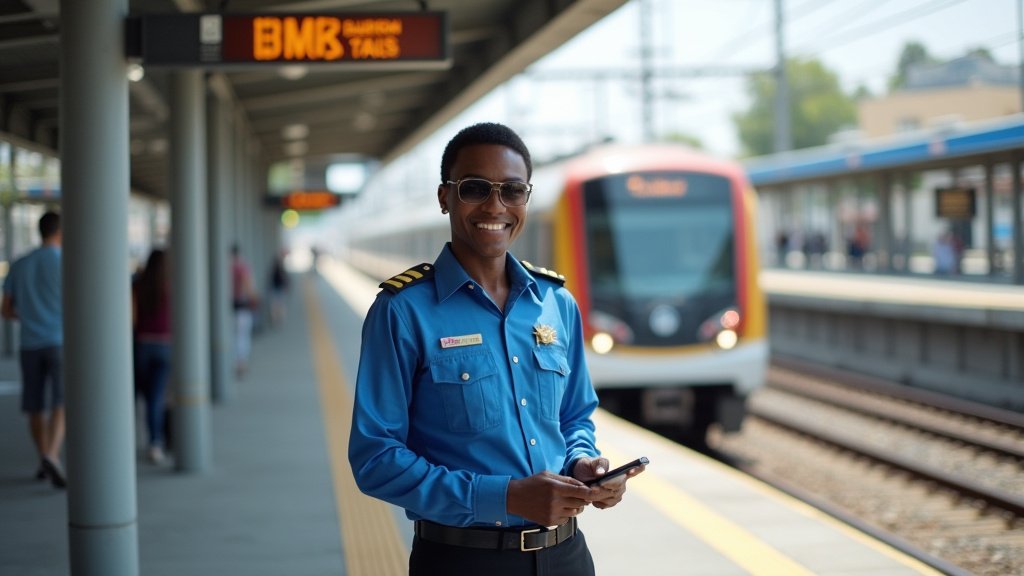
The narrative surrounding public transportation in Los Angeles has long been dominated by concerns regarding rider safety and the viability of the system for daily commuters. However, the latest figures suggest that the aggressive implementation of the ‘Integrated Public Safety Model’ is yielding tangible results. By merging the enforcement capabilities of the Los Angeles Police Department (LAPD) and the Los Angeles Sheriff’s Department (LASD) with professional social workers and outreach specialists, Metro has effectively changed the operational philosophy of the transit system.
In 2024, the presence of unhoused individuals on the system was often met with fragmented responses—either complete law enforcement intervention, which critics argued criminalized homelessness, or a lack of response, which left the system unsustainable for commuters. The new strategy, implemented incrementally over the last 24 months, prioritizes the ‘outreach-first’ approach. Under this framework, Transit Ambassadors and specialized outreach personnel are deployed to engage with vulnerable individuals long before an enforcement action becomes necessary. This de-escalation tactic has been credited by agency officials as the primary driver behind the 57% reduction.
Analyzing the 2026 Homeless Count
The reliability of these statistics rests on the 2026 Homeless Count methodology, which utilized advanced tracking techniques to ensure the numbers were not merely an artifact of shifting displacement. The raw data indicates that the population of unhoused individuals on the system dropped consistently quarter-over-quarter. By identifying hotspots—specific rail lines and bus transit centers that historically served as hubs for encampments—Metro was able to focus its outreach resources where they were most needed.
This is not to say the transit system is devoid of challenges. A population of 395–517 individuals remains a point of concern for transit advocates, who argue that any number of people forced to sleep on public transit reflects a systemic failure in regional housing infrastructure. However, the statistical trend indicates that the ‘revolving door’ of transit-based homelessness is finally slowing down, suggesting that the integration of housing navigation services directly into the transit experience is providing a genuine off-ramp for those in need.
Secondary Angle 1: The Economic Ripple Effect
There is a direct correlation between perceived transit safety and ridership volume. As Metro works to restore pre-pandemic ridership levels, the decline in visible homelessness on trains is being touted as a key performance indicator (KPI). Reliable data suggests that when riders perceive the system as safe and clean, discretionary ridership—those who have the option to drive but choose transit—increases. The 57% reduction is therefore not just a humanitarian victory; it is an essential component of the agency’s long-term fiscal solvency strategy.
Secondary Angle 2: Historical Context and Policy Failure
To understand the magnitude of this 2026 success, one must look back at the years 2022 and 2023, where Metro struggled with conflicting mandates: the need to maintain public order and the humanitarian mandate to provide shelter. For years, the agency was trapped in a cycle of ‘sweeps’—clearing stations only for individuals to return days later. The failure of that era taught officials that enforcement without a housing-first pipeline is a circular effort. The 2026 model represents a pivot to continuity, where individuals are connected to shelters, mental health services, or permanent housing, rather than simply being displaced to the next station.
Secondary Angle 3: Can Other Cities Replicate This?
As major transit authorities in cities like San Francisco, Chicago, and New York monitor the Los Angeles experiment, the question remains: is this scalable? The Los Angeles model is highly resource-intensive, requiring deep coordination between the MTA, municipal social services, and law enforcement. For other cities, the primary hurdle will likely be funding. The LA Metro effort was bolstered by significant state and federal grants specifically earmarked for transit-based homelessness solutions. Whether this model remains effective without continuous, high-level funding remains the primary concern for the fiscal years ahead.
FAQ: People Also Ask
What is the ‘Integrated Public Safety Model’ mentioned by Metro?
It is a dual-track strategy that pairs law enforcement officers with social outreach teams. The goal is to provide immediate social services (housing navigation, mental health support) to those in need, while maintaining security and order on the system.
Does this reduction mean the homeless population in LA has decreased?
Not necessarily. The report tracks homelessness specifically on the transit system. While the transit numbers are down, regional homelessness remains a separate, complex crisis in the broader Los Angeles metropolitan area.
Are the 2026 numbers final, or are they estimates?
These numbers are derived from the 2026 Homeless Count, which uses point-in-time methodology and consistent longitudinal tracking. While exact numbers in transient populations are always estimates, this range represents the most accurate data available for the transit system.
What happens to the people who are no longer on the transit system?
According to the outreach data, the majority of these individuals have been connected to temporary shelters, city-sponsored housing programs, or reunification services that assist them in moving into more stable living environments.