
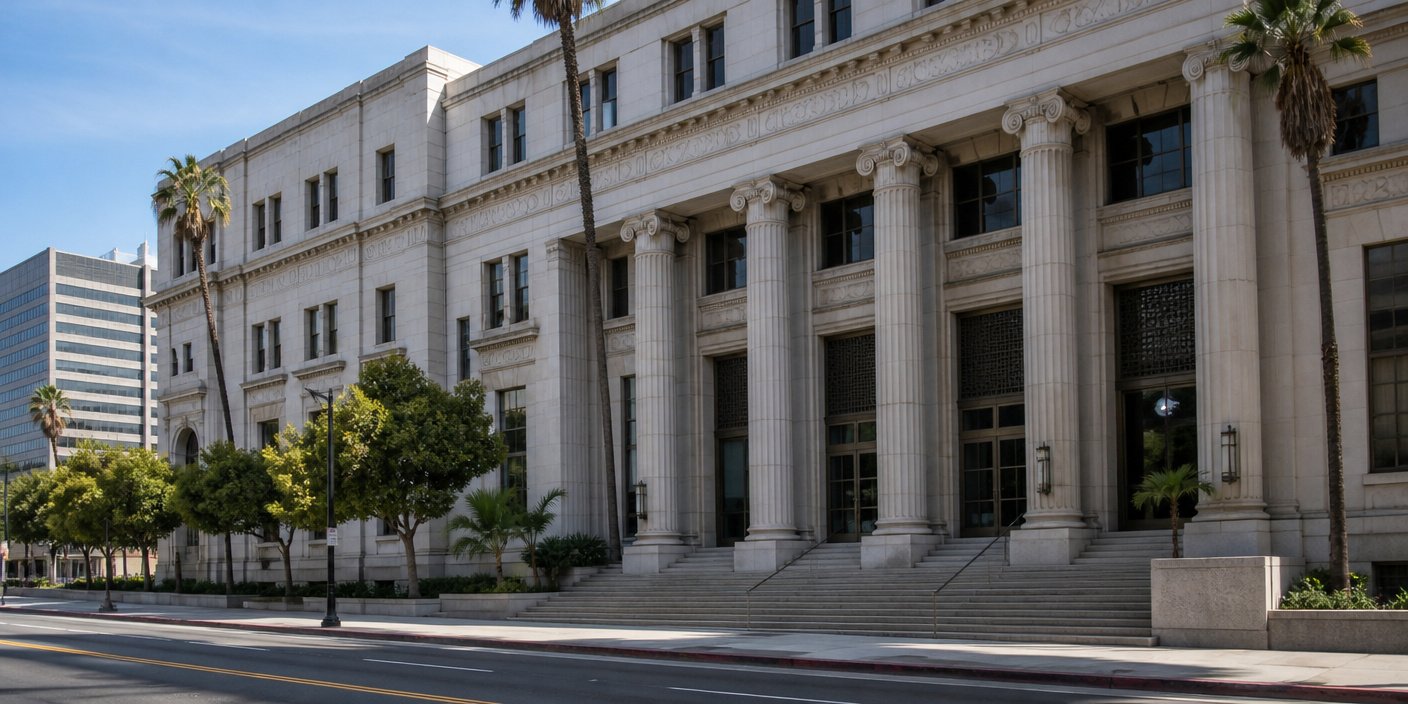
A Los Angeles Superior Court judge ruled on Monday that there is sufficient evidence for viral musical artist D4vd—legally identified in court documents as David Burke—to stand trial regarding the death of 14-year-old Celeste Rivas Hernandez. The decision, handed down following a comprehensive preliminary hearing, marks a critical pivot point in a case that has drawn significant attention due to the defendant’s rising profile in the music industry. The court found probable cause to move forward on multiple severe felony counts, including murder, continuous sexual abuse, and unlawful mutilation.
Key Highlights
- Probable Cause Established: The Los Angeles court concluded that the prosecution presented sufficient evidence during the preliminary hearing to proceed to a full jury trial.
- Severe Felony Charges: The defendant, David Burke, faces a combination of charges including murder, continuous sexual abuse, and unlawful mutilation.
- Victim Identification: The victim in this case has been identified as 14-year-old Celeste Rivas Hernandez.
- Procedural Progression: The case will now enter the pre-trial discovery phase, where the defense and prosecution will exchange evidence before a trial date is set.
A Legal Reckoning: The Case Against David Burke
The judicial system in Los Angeles has officially cleared the path for a high-stakes trial that pits the artistic persona of ‘D4vd’ against the serious criminal allegations levied against David Burke. The Monday ruling is not a verdict of guilt, but rather a judicial affirmation that the evidence presented by the district attorney’s office meets the legal standard of probable cause—meaning there is enough proof to warrant a trial by jury. For the family of Celeste Rivas Hernandez, this marks the beginning of a protracted legal struggle for justice in a case involving the most heinous of criminal accusations.
The Nature of the Charges
The charges filed against Burke are among the most serious under the California Penal Code. The inclusion of ‘unlawful mutilation’ alongside charges of murder and continuous sexual abuse paints a harrowing picture of the prosecution’s theory of the crime. Legal analysts observe that when such specific and grave charges are grouped together, the prosecution is typically relying on a comprehensive forensic case involving physical evidence, digital footprints, and expert witness testimony. The court’s decision to move forward suggests that the preliminary evidence—potentially involving toxicology reports, forensic scene analysis, and digital metadata—was compelling enough to satisfy the judge’s inquiry into the viability of the case.
Impact on the Music Industry and Digital Legacy
The juxtaposition of D4vd’s ascent to viral stardom and the chilling nature of these criminal allegations has created a volatile intersection of pop culture and the judicial process. Historically, the music industry has struggled with how to manage ‘cancel culture’ versus the due process of the legal system. In this instance, the gravity of the crimes—specifically targeting a minor—leaves little room for the usual industry ambiguity. Platforms that once championed the artist’s tracks are now faced with the ethical dilemma of association, as the public narrative shifts from song streams to courtroom transcripts. This case serves as a stark reminder of the ‘digital dissociation’ that occurs when a public figure is revealed to have a private life that stands in horrific contrast to their professional image.
The Road Ahead: Procedural Challenges
With the preliminary hearing concluded, the legal team for David Burke will pivot to a defensive strategy focused on questioning the reliability of the evidence, the chain of custody for any digital or forensic data, and the potential exclusion of specific witnesses. The discovery process—the period where each side shares information—will be intense. Given the media profile of the defendant, the defense may also petition for venue changes or stricter privacy orders to ensure an impartial jury can be selected. The prosecution, conversely, is likely to double down on the ‘continuous’ nature of the sexual abuse charges, which often requires proving a pattern of behavior rather than an isolated incident, increasing the complexity and length of the trial.
Secondary Angles of Analysis
1. The Evolution of Forensic Evidence in ‘Internet-Era’ Crimes
Modern criminal cases are increasingly built upon non-traditional evidence. From geofencing data that places a defendant at a crime scene to encrypted messaging applications that reveal intent, the ‘digital fingerprint’ is often the lynchpin of the prosecution’s case. In the trial of David Burke, the role of digital forensics will likely be the cornerstone of the proceedings, potentially revealing private communications or location data that contradict any initial claims of innocence.
2. The Intersection of Victim Advocacy and High-Profile Trials
Cases involving minors, such as the tragic death of Celeste Rivas Hernandez, inevitably trigger a intense focus on victim advocacy. The court system often faces immense pressure to expedite proceedings while simultaneously ensuring that the integrity of the trial remains untarnished by the ‘spectacle’ of celebrity. This case highlights the tension between the public’s right to know and the necessity of protecting the dignity of the victim and the impartiality of the jury.
3. The Burden of Proof and the ‘Statute of Allegation’
It is vital to distinguish between a ruling for a trial and a conviction. The burden of proof at a preliminary hearing is significantly lower than that required for a conviction (beyond a reasonable doubt). This phase serves only to ensure that the state is not prosecuting without a basis. As the trial proceeds, the defense will focus on the presumption of innocence, setting the stage for a dramatic confrontation between the prosecution’s narrative of guilt and the defense’s challenge to the veracity of the evidence.
FAQ: People Also Ask
What does it mean that the judge ruled there is ‘sufficient evidence’?
It means that during a preliminary hearing, the judge determined that there is enough probable cause to believe that a crime was committed and that the defendant likely committed it. It does not mean the defendant is guilty; it simply authorizes the case to proceed to a full jury trial.
What are the potential sentences for these charges?
While specific sentencing is determined by a judge post-conviction, charges of murder and continuous sexual abuse in California carry extremely heavy sentences, including the possibility of life imprisonment or, depending on the specific legal enhancements, potentially more severe penalties under California law.
What happens in the next stage of the legal process?
Following the preliminary hearing, the case enters the pre-trial discovery phase. Both the prosecution and the defense will share evidence, conduct depositions, and file pre-trial motions. This stage can last months or even years as both sides prepare for the final trial.
Will D4vd (David Burke) be able to post bail?
Bail decisions are made by the presiding judge based on the severity of the charges, the flight risk, and the danger to the community. In cases involving murder and sexual violence, bail is often set at a prohibitively high amount or denied entirely.
How does this affect the victim’s family?
The family of Celeste Rivas Hernandez is now entering a long, grueling legal process. They will likely be involved as witnesses or observers, and the legal system will require them to revisit the tragedy repeatedly as evidence is presented in court.