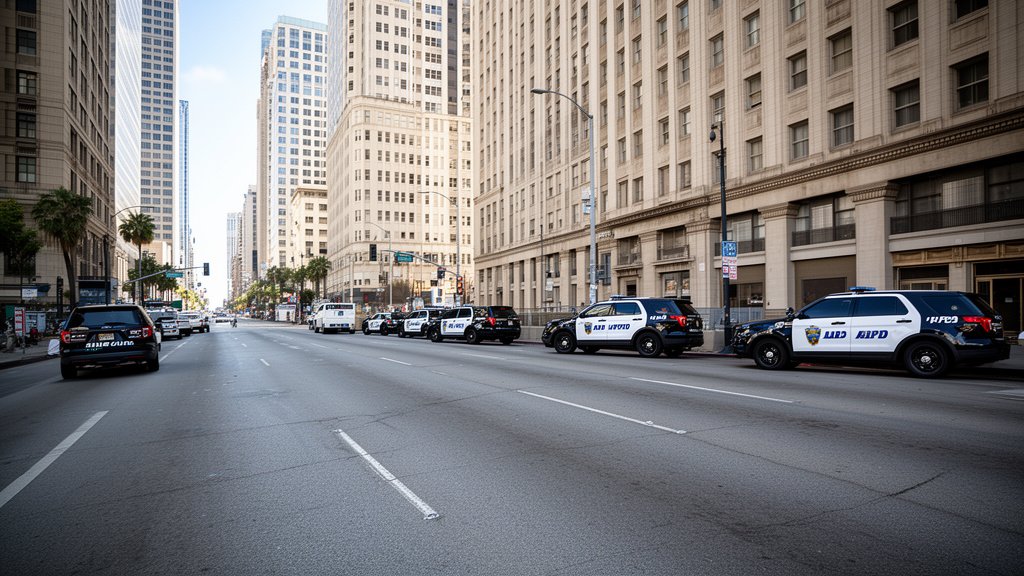
Employees at a Carl’s Jr. location in North Hollywood staged a dramatic walkout on Tuesday, April 21, 2026, to protest what they characterize as a perilous work environment defined by unchecked customer violence. Approximately 30 members of the California Fast Food Workers Union gathered outside the restaurant at 6601 Lankershim Boulevard, transforming a routine shift into a public demonstration aimed at corporate management and the Los Angeles City Council. The strike highlights a growing crisis within the fast-food industry, where workers report that they are increasingly serving on the front lines of aggressive, often violent, interactions without adequate security, training, or organizational support.
The Anatomy of the Protest
The picket line outside the Lankershim Boulevard location served as a visceral visual of the escalating tensions between fast-food staff and the operational realities of their environment. Striking workers, including long-term employees, detailed a workplace culture where they are expected to absorb verbal abuse and physical threats as a routine cost of business. The walkout was not merely a reaction to a single event, but rather a culmination of systemic failures to address recurring safety hazards. Workers cited a lack of security personnel, no structural barriers against unruly patrons, and a management culture that prioritizes transaction speed and customer appeasement over the physical well-being of the crew.
Documented Grievances and Regulatory Filings
Central to the protest is a formal complaint filed with Cal/OSHA and the California Labor Commissioner’s Office. The filing provides a harrowing account of the daily realities for employees at this specific location. According to the complaint, workers are subjected to near-daily harassment, ranging from food being thrown at them to physical assaults.
One of the most concerning incidents highlighted involved a customer entering the restaurant’s kitchen area, throwing items, and brandishing a frying pan as a weapon. The perpetrator reportedly punched a staff member in the face, causing significant injury. Perhaps even more concerning is the assertion that management pressured the injured employee to return to work before they had fully recovered. This pattern of alleged neglect—forcing workers to clock in while still suffering from physical trauma—has become a central point of the workers’ demands. They are calling for immediate safety protocols, including the presence of unarmed security guards, the installation of safety barriers, and meaningful, paid training on how to de-escalate or handle violent situations without placing themselves in harm’s way.
The Legislative Push for ‘Fast Food Fair Work’
The North Hollywood strike is inextricably linked to broader legislative efforts in Los Angeles. Protesters are using this high-profile action to lobby the Los Angeles City Council to support a proposed ‘Fast Food Fair Work’ ordinance. This proposed legislation is designed to extend existing Fair Work Week protections specifically to fast-food chains—a sector that has historically operated with a different set of, and often fewer, labor protections than other retail or hospitality industries.
Proponents of the ordinance argue that if passed, it would compel large chains to implement standardized safety training, enforce strict scheduling rules that prevent last-minute, erratic shift assignments, and guarantee access to paid sick leave. For the workers, this is not just about the immediate safety of their current shifts; it is about creating a structural framework that prevents individual franchise owners from ignoring the safety concerns of their staff. The legislation seeks to bridge the gap between corporate profitability and the human cost of operational service.
A Broader Industry Crisis
This strike reflects a wider, ongoing tension within California’s labor market. Over the past several years, fast-food workers across the state have organized, marched, and lobbied for greater voice and accountability. The movement, which gained significant momentum during the pandemic, has evolved from basic demands for higher wages to a comprehensive push for dignity and physical security. The incidents at this North Hollywood Carl’s Jr. serve as a microcosm of the challenges facing the industry: low-wage workers dealing with volatile public interactions in high-traffic environments, often with minimal oversight or protection from the corporate entities they serve.
Historically, the fast-food industry has resisted these types of regulations, citing the complexities of the franchise model, where corporate offices distance themselves from the daily operations of individual restaurants. However, activists are increasingly pointing out that corporate policy dictates store design, staffing levels, and training requirements. By holding corporations accountable through labor actions, workers are effectively forcing a dialogue about the responsibility that multibillion-dollar chains have toward the people who keep their doors open and their revenues flowing.
As the North Hollywood workers continue to press for change, their action underscores a critical question for Los Angeles and cities across the nation: At what point do the demands of service—both in speed and customer accommodation—cross the line into an infringement on worker safety? With the City Council currently reviewing the proposed ordinance, the outcome of this struggle will likely set a precedent for how fast-food chains are expected to operate in urban environments moving forward.
FAQ: People Also Ask
What are the primary demands of the Carl’s Jr. workers?
The workers are demanding immediate safety protections, including the deployment of unarmed security guards, physical store upgrades like barriers, and mandatory, paid safety training. They are also calling for an end to policies that force employees to work while sick or recovering from job-related injuries.
What is the ‘Fast Food Fair Work’ ordinance?
It is a proposed legislative measure in Los Angeles that would expand labor protections for fast-food workers. Key components include requirements for predictable scheduling, guaranteed paid sick leave, and mandatory safety and rights training for employees in the fast-food sector.
Why did workers file a complaint with Cal/OSHA?
Workers filed the complaint to document specific instances of violence—including physical assaults and harassment—and to formally allege that the employer has failed to maintain a safe working environment. They want the state to hold the franchise owner accountable for these safety failures.
Are there security guards currently at the restaurant?
According to the complaints filed by workers, the location lacks adequate security measures, such as guards or physical barriers, which they identify as a primary cause of their vulnerability to aggressive and violent customers.