California’s historic battle with drought and the urgent need for renewable energy have collided in a singular, innovative solution: Project Nexus. By installing solar panels directly over irrigation canals, the Turlock Irrigation District (TID) in California’s Central Valley has launched an infrastructure pilot that aims to solve two of the state’s most pressing challenges simultaneously—water loss through evaporation and the demand for clean, localized power. This isn’t just a conceptual design; the 1.6-megawatt installation is now fully operational, signaling a potential shift in how California manages its vast, sprawling water-delivery systems.
The Engineering of Project Nexus
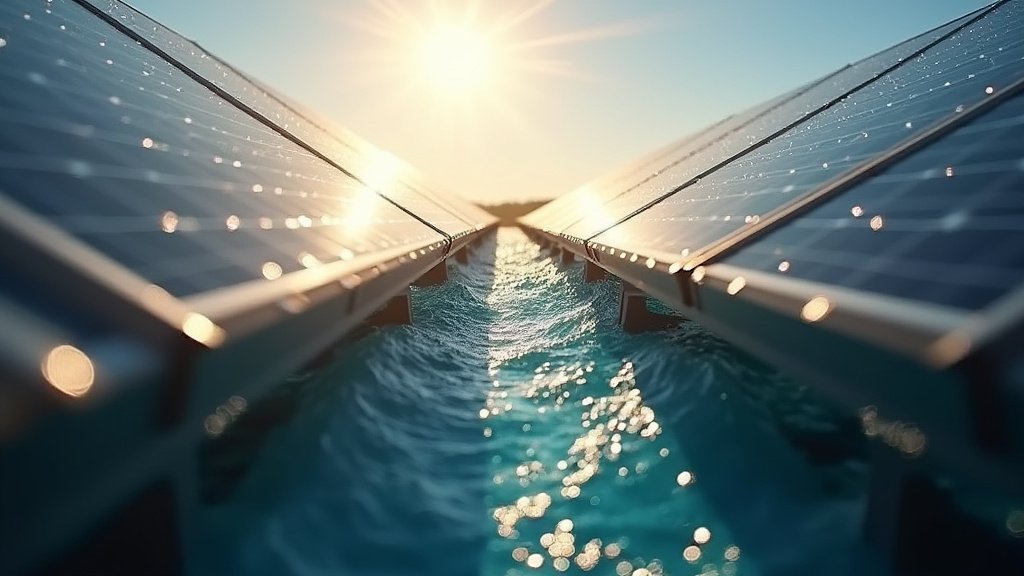
At its core, Project Nexus is an elegant exercise in spatial efficiency. Traditional utility-scale solar farms require massive swaths of land, often encroaching on agricultural space. By utilizing the existing footprints of the irrigation districts, Project Nexus bypasses the land-use conflict entirely. The engineering involves suspended structures that arch over the water, providing a dual-action benefit. Not only do the panels generate electricity that feeds into the local grid, but they also serve as a protective layer, shielding the water below from the intense Central Valley sun. This shade prevents the rapid evaporation of water that would otherwise be lost, a critical factor for a state that frequently faces severe water shortages.
The Efficiency Synergy: The Water-Energy Nexus
The term ‘nexus’ in the project title is no coincidence. It represents the inextricable link between the two resources. Beyond mere shading, the water itself acts as a natural cooling system for the solar panels. Photovoltaic cells typically lose efficiency as their temperature rises; by placing them over flowing water, the ambient air underneath the panels stays significantly cooler than it would over dry land. This cooling effect allows the panels to operate at higher efficiency rates, producing more electricity for the same amount of sunlight. Furthermore, this shade inhibits the growth of invasive aquatic weeds, which typically choke irrigation canals and force irrigation districts to spend millions on labor-intensive mechanical cleaning and chemical treatments annually.
Environmental and Economic Implications
If scaled to cover California’s entire 4,000-mile network of public water-delivery infrastructure, the potential is staggering. Research conducted by UC Merced—which was instrumental in the project’s development—suggests that such a massive deployment could save up to 63 billion gallons of water annually, enough to support millions of residents. From an energy perspective, it could generate significant gigawatts of renewable power, reducing the need to construct new, land-intensive solar facilities. While the initial pilot in Hickman, California, is a $20 million investment, proponents argue that the long-term cost savings—derived from conserved water, reduced canal maintenance, and higher energy yields—make the model not only viable but economically superior to many ground-mounted alternatives.
Challenges and the Road Ahead
Despite the clear advantages, the road to statewide implementation is complex. Engineering challenges, such as the varied widths and structural integrity of existing canals, mean that a ‘one-size-fits-all’ solar canopy is impossible. Some sections require narrow, fixed arrays, while others—like the 115-foot-wide span at the Hickman site—require specialized, wider structures. Additionally, maintenance access to the canals remains a logistical hurdle; engineers must ensure that technicians can still inspect and repair the waterways without removing massive sections of solar infrastructure. As Project Nexus transitions from a pilot phase to a proven concept, the focus will shift to streamlining these designs and lowering costs to attract private and public investment for broader deployment.
FAQ: People Also Ask
Q: How do these solar panels affect water quality in the canals?
A: By reducing sunlight exposure, the panels help curb the growth of aquatic weeds and algae, which can improve water quality. The panels are also elevated to allow for proper airflow, ensuring that the water remains oxygenated.
Q: Is this the first project of its kind?
A: While California’s Project Nexus is the most high-profile recent pilot, it is part of a global movement. Similar projects have been explored in India and elsewhere, and the Gila River Indian Community in Arizona launched a solar-canal project shortly before California’s, demonstrating the growing interest in this technology.
Q: Could this cause flooding or structural issues for the canals?
A: The structures are specifically engineered to sit above the canal banks without impeding the flow of water. Irrigation districts like TID have rigorous structural engineering standards to ensure that the solar installations do not compromise the integrity of the canal walls or the water delivery flow.
Q: Why not just put solar panels on rooftops?
A: Rooftop solar is essential, but it cannot meet the total scale of energy demand needed for the grid. Solar canals offer a unique advantage by utilizing ‘wasted’ space over critical infrastructure, providing both energy generation and the added benefit of water conservation—a synergy that rooftops cannot provide.