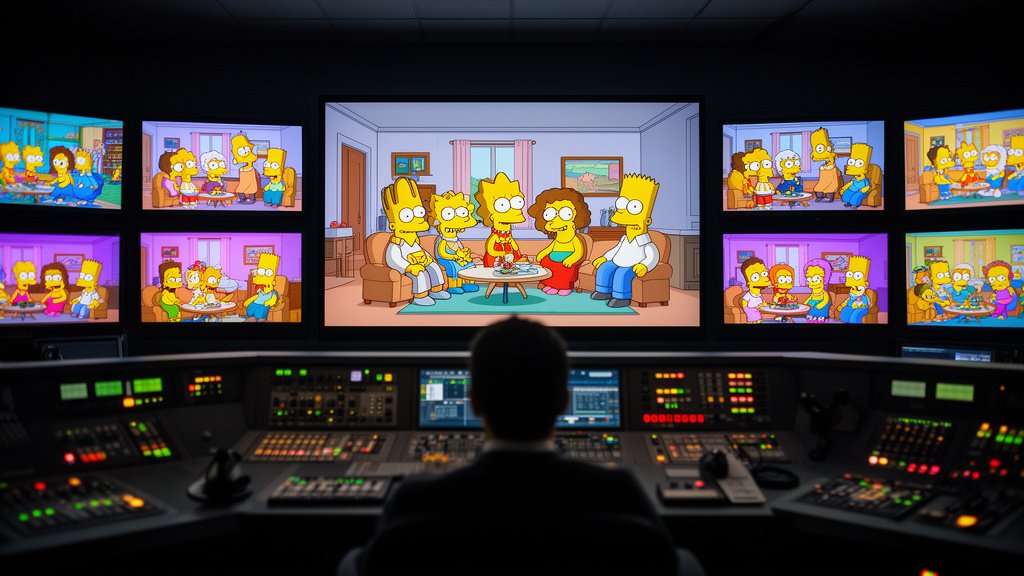
The arrival of the final week of September marks a traditional, yet increasingly critical, juncture for the television industry. As we reach September 27, 2026, the network landscape shifts into high gear, with Fox broadcasting the highly anticipated Season 38 premiere of ‘The Simpsons’. This milestone event does more than signal the return of a beloved animated institution; it serves as the linchpin for the broader 2026-27 network television strategy, illustrating how legacy broadcast networks are attempting to retain their grip on prime-time real estate in an era dominated by on-demand streaming algorithms.
The Cultural Anchor: ‘The Simpsons’ Season 38
The return of ‘The Simpsons’ is not merely a scheduling decision; it is a declaration of continuity. Entering its 38th season, the series remains one of the longest-running scripted shows in television history, representing a rare point of stability in a volatile media environment. For network executives at Fox, the premiere on September 27 is a strategic maneuver designed to leverage the show’s cross-generational appeal. By anchoring their Sunday night lineup with established intellectual property, the network aims to capture the ‘appointment viewing’ audience—those who prefer to consume content in real-time rather than adding to an already overflowing backlog of streaming queue items.
This premiere is significant because it highlights the resilience of the sitcom format. While prestige dramas often define the cultural conversation, animated staples like ‘The Simpsons’ provide the foundational traffic that supports a network’s entire weekly output. The September 27 date acts as the official starting pistol for the network’s ‘Animation Domination’ block, a cornerstone of their programming that continues to outperform many newer, high-budget streaming competitors in raw live-audience engagement.
The 2026-27 Network Landscape: Why Linear TV Still Commands Prime Time
To understand the importance of this week, one must analyze the shifting economics of the 2026-27 television season. The industry is currently witnessing a paradoxical trend: while total minutes watched on streaming platforms continue to grow, the value of live linear television—specifically sports, live events, and major scripted premieres—has seen a resurgence in advertising revenue. Brands are finding that the ‘water cooler’ effect is hardest to replicate on SVOD (Subscription Video on Demand) platforms.
Networks are pivoting their 2026-27 strategy to emphasize ‘event television.’ The premiere of ‘The Simpsons’ is part of a broader effort to make the linear schedule feel like a curated experience rather than a random feed of content. This includes aggressive cross-promotion, integration with social media ‘second-screen’ experiences, and a renewed focus on the Sunday night time slot as the premiere destination for families. As we look at the slate for late September, the strategy is clear: use the comfort of the familiar to keep viewers tethered to the traditional broadcast grid before they migrate to their respective streaming hubs for the rest of the week.
The Sunday Night Strategy: Protecting the Fortress
Sunday night has always been the fortress of network television, but in the 2026-27 season, that fortress is under siege from every direction. The decision to stack the week of September 27 with heavy hitters suggests that networks are no longer willing to concede ground to streaming giants. Instead, they are doubling down on the ‘night out at home’ concept. By scheduling the Season 38 premiere during this specific week, Fox is banking on the fact that viewers are settling into their autumn routines.
Historical data suggests that audiences are more likely to adopt new shows if they are premiered on the back of a proven hit. By pairing new or returning series with a juggernaut like ‘The Simpsons,’ the network creates a ‘halo effect,’ where the massive lead-in audience is statistically more likely to sample the subsequent programming. This tactic, known in the industry as ‘audience flow,’ remains the most effective tool in the network arsenal, and it is being utilized with surgical precision this season.
Future-Proofing Linear Television: Economic and Behavioral Shifts
The long-term viability of the network model hinges on this transition period. Economists monitoring the 2026-27 season have noted that while cord-cutting continues at a moderate pace, the remaining linear audience is becoming increasingly valuable to advertisers. This segment of the population consists largely of older demographics with higher disposable income and younger viewers who crave the shared cultural experience of watching a show ‘live.’
Looking toward the future, we can expect this dichotomy to widen. We will likely see more network programming adopt a hybrid model: premiering on linear channels to capture the mass-market ‘event’ feel, then transitioning to exclusive streaming platforms within 24 hours. This strategy allows networks to extract maximum value from both the traditional advertising model and the subscriber-based model. The week of September 27 is the perfect case study for this transition, as it balances the nostalgia of a 38-season titan with the modern requirements of a fragmented digital landscape. As we move further into the 2026-27 season, the success of this week’s premieres will likely dictate the programming budgets and risk-tolerance levels for the next fiscal year.