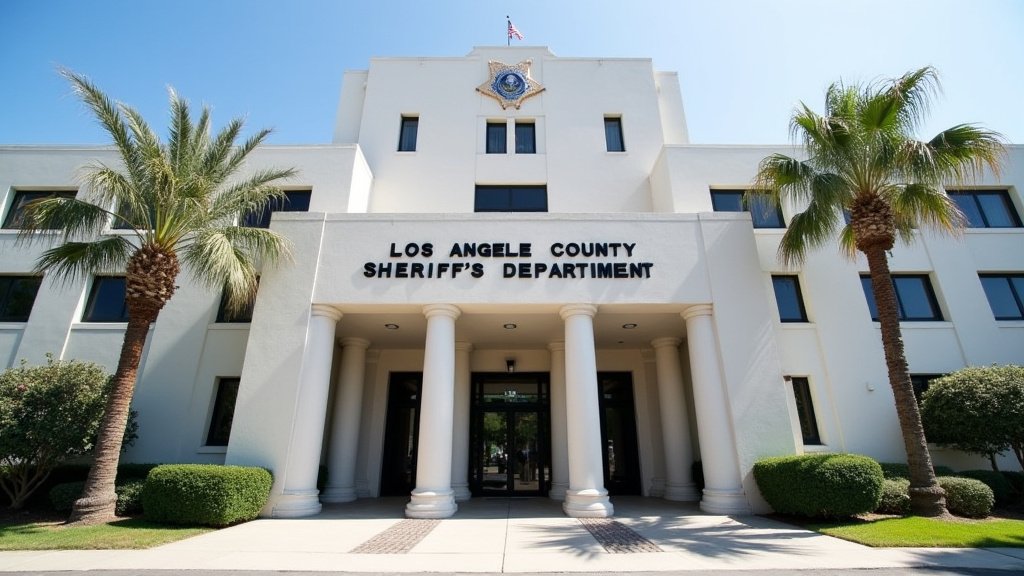
The Los Angeles County Sheriff’s Department (LASD) has officially reached a settlement with the U.S. Department of Justice (DOJ), bringing an end to a high-profile lawsuit that accused the nation’s largest sheriff’s department of creating a “deliberate pattern of unconscionable delay” in processing Concealed Carry Weapon (CCW) permit applications. The agreement marks a significant turning point in the administrative management of firearm rights in the state of California, forcing a systemic overhaul of how the department handles permit requests.
The Anatomy of the Litigation
The Department of Justice’s Civil Rights Division initiated the legal challenge following a sustained period of criticism regarding the LASD’s CCW permit unit. The lawsuit alleged that the department failed to process applications in a timely manner, effectively depriving residents of their rights under the Second Amendment. Central to the government’s argument was the assertion that the sheer backlog and the lack of bureaucratic urgency amounted to a de facto denial of constitutional rights. For years, applicants reported waiting periods extending well beyond reasonable administrative timeframes, with some instances of silence lasting for months or even years without clear justification. This settlement is a direct resolution to those allegations, mandating that the LASD modernize its internal tracking, establish rigid processing timelines, and significantly increase transparency in the adjudication process.
The Post-Bruen Regulatory Landscape
To understand the magnitude of this settlement, one must look at the legal context established by the Supreme Court’s 2022 decision in New York State Rifle & Pistol Association, Inc. v. Bruen. That landmark ruling fundamentally altered the landscape for concealed carry permits, shifting many jurisdictions—including California—away from a subjective “may-issue” standard toward a more objective “shall-issue” framework. The DOJ’s intervention in Los Angeles was largely predicated on the idea that even as state laws became more favorable to applicants, local law enforcement agencies could not utilize administrative inertia to block these rights. The LASD’s settlement is effectively an acknowledgment that the administrative apparatus responsible for issuing permits was not aligned with the heightened standards of efficiency and non-arbitrary review required in a post-Bruen environment.
Core Terms of the Settlement
The agreement is comprehensive, requiring the Los Angeles County Sheriff’s Department to adhere to strict operational metrics. Under the terms of the settlement, the LASD must:
- Implement a Digital Management System: The department is required to transition away from antiquated, paper-heavy workflows to a digitized, tracked system that provides applicants with real-time status updates.
- Standardized Timelines: The settlement mandates strict “shot clocks” for processing phases, including initial background checks, psychological evaluations, and final permit approval or denial.
- Oversight and Reporting: The LASD must submit to independent monitoring to ensure compliance with these new, faster processing standards, with the results of these audits available to the DOJ.
Implications for Law Enforcement Administration
This case sets a powerful precedent for large metropolitan law enforcement agencies across the United States. It demonstrates that the Department of Justice is willing to utilize federal oversight to address administrative failures that infringe upon civil rights. By targeting the “unconscionable delay” specifically, the DOJ has signaled that bureaucratic inefficiency is no longer a viable defense for failing to execute statutory duties. Departments that historically prioritized other operational mandates over the administrative task of CCW processing are now on notice that federal civil rights litigation is a distinct possibility if backlogs persist. For the LASD, this requires a cultural shift within the Sheriff’s Department, treating the processing of CCW permits with the same operational discipline as criminal investigations or public safety patrols.
The Future of CCW Applications in Los Angeles
For the residents of Los Angeles County, the immediate impact of this settlement should be a streamlined, more predictable application experience. The ambiguity that characterized the permit process is being replaced by mandatory reporting and accountability. However, observers note that the success of this settlement rests on the department’s ability to allocate sufficient personnel and resources to the permit bureau. While technology can solve part of the bottleneck, the human element—the background investigators and clerical staff—must be scaled appropriately to match the increased volume of applicants that has followed the Bruen decision. Whether the LASD can achieve this without compromising the rigor of background checks remains the primary question for the coming year. As the department integrates these changes, the focus will shift from the legal battle to the technical execution, serving as a case study for law enforcement agencies navigating the intersection of federal oversight and constitutional rights.
FAQ: People Also Ask
1. Does this settlement guarantee that everyone will get a CCW permit?
No. The settlement ensures that the process of applying for a permit is timely, transparent, and fair. It does not lower the requirements for obtaining a permit, such as background checks, training certifications, or character references. The outcome of any individual application is still based on the applicant meeting all statutory criteria.
2. Why was the DOJ involved in a local sheriff’s department lawsuit?
The Department of Justice’s Civil Rights Division has the authority to intervene when they believe that local government agencies are violating the constitutional rights of citizens. In this case, the DOJ argued that the systemic administrative delays effectively infringed upon the Second Amendment rights of Los Angeles residents.
3. How long will the implementation of these new permit procedures take?
The settlement includes a phased timeline for implementation. The Los Angeles County Sheriff’s Department is required to roll out the new digital infrastructure and reporting protocols on a schedule overseen by the federal government to ensure that the transition is sustainable and effective.
4. Will this settlement affect permit renewals?
Yes. The settlement covers the entire lifecycle of the CCW permit process, which includes initial applications, renewals, and modifications. The mandate for timely processing applies to renewals to ensure that lawful carriers are not left with expired permits due to administrative backlogs.