The Los Angeles Police Department (LAPD) has officially confirmed that the targeted law enforcement initiative launched in MacArthur Park this past May has yielded substantial results, driving a downward trend in both narcotics-related incidents and localized gang activity. This shift represents a significant tactical pivot for the department, which has prioritized the restoration of public safety in one of the city’s most historically volatile municipal locations. By concentrating resources and increasing patrol density, the LAPD aims to reclaim the park as a functional public space for the surrounding Westlake community.
Key Highlights
- Targeted Operations: Since May, the LAPD has executed a focused strategy on high-frequency crime zones within MacArthur Park.
- Measurable Decline: Official reports indicate a notable decrease in drug trafficking, narcotics use, and violent gang-related confrontations.
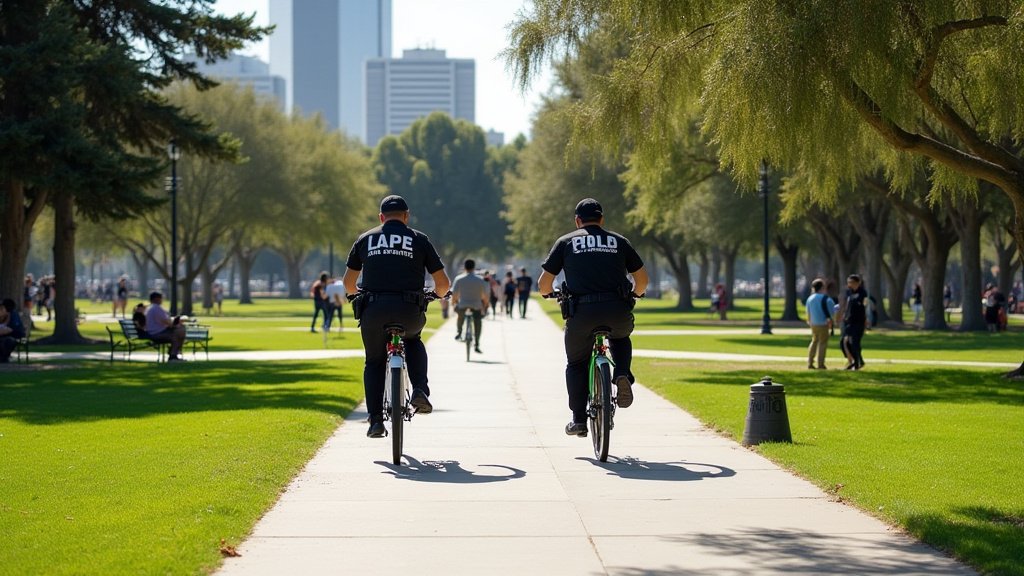
- Strategic Visibility: The deployment of increased bicycle and foot patrols has significantly bolstered the department’s response time and deterrent presence.
- Community Feedback: Early assessments show that local business owners and residents are reporting a greater sense of security in the park’s immediate vicinity.
- Sustained Effort: The LAPD has committed to maintaining these enforcement levels to prevent criminal activity from returning to previous baselines.
The Stabilization of MacArthur Park
Strategic Enforcement Shifts
The recent improvements in MacArthur Park did not occur in a vacuum. Since May, the LAPD, in coordination with city officials, implemented a more rigorous operational model that prioritized consistent, high-visibility policing. Unlike historical “sweep” tactics that often provided only temporary relief, this current iteration focuses on sustained presence. Officers from the Rampart Division have been tasked with maintaining clear communication channels with community stakeholders, ensuring that enforcement is not merely reactive but preventative. This strategy addresses the “broken windows” theory of policing, which suggests that visible order discourages more serious criminal behavior. By addressing minor infractions and drug-related loitering, law enforcement has been able to establish a foothold that discourages larger-scale gang operations.
Analyzing the Statistical Turnaround
The raw data emerging from the May-to-present window is telling. While specific granular breakdowns vary by week, the aggregate figures show a marked reduction in public drug consumption and the visible “open-air” market atmosphere that plagued the park for years. Law enforcement officials have noted that the decrease in gang activity is directly correlated with the suppression of illegal narcotics trade, which serves as a primary revenue stream for localized criminal organizations. This operational success serves as a critical case study for the department; it demonstrates that when municipal resources—including LAPD personnel and city sanitation services—are aligned with a clear, persistent objective, the environment of a public space can be fundamentally altered within a matter of months.
Secondary Angle: The Socio-Economic Impact on Westlake
Beyond the immediate statistics of arrests and citations, the stabilization of MacArthur Park carries profound economic implications for the Westlake district. The park acts as a focal point for the surrounding commercial corridor. For months, local vendors and shop owners struggled with foot traffic declines caused by security concerns. The current enforcement surge has provided an “economic breathing room,” allowing the area to move toward a more conventional public-use model. Analysts predict that if this security trend continues, the area may see an increase in small business investment and increased utilization of the park by families—a demographic that had largely avoided the space during the height of the recent volatility.
Secondary Angle: Balancing Policing and Public Perception
A major challenge in this ongoing effort is maintaining the delicate balance between rigorous law enforcement and community trust. The LAPD’s strategy involves not just the removal of criminal elements, but the integration of social services. Recognizing that addiction is a driver of park crime, the department has increasingly looked toward connecting individuals with city outreach services. This dual-pronged approach—enforcement for criminal conduct and referral for social crisis—is designed to prevent the cycle of homelessness and addiction-related crime from simply migrating to adjacent neighborhoods rather than being resolved.
Secondary Angle: The Future of Public Space Utility
Looking toward the future, the LAPD is treating MacArthur Park as a litmus test for urban safety protocols. The question remains: can this success be sustained without perpetual high-intensity deployment? The long-term goal is to transition from “enforcement mode” to “maintenance mode,” where the environment is self-regulating due to higher usage rates by legitimate park patrons. If the current trend holds, the city may look to adopt this “MacArthur Model” for other public spaces facing similar challenges. The department is monitoring the longevity of these results, as historical precedents often show a “rubber band effect” where crime returns once enforcement levels recede.
FAQ: People Also Ask
Q: What specific types of crime have decreased in MacArthur Park?
A: The primary reductions have been in public narcotics use, drug-related loitering, and visible gang activity. These activities have been identified as the core drivers of the park’s previous security issues.
Q: Is the LAPD currently conducting “sweeps” in the park?
A: The department describes its actions as “targeted enforcement” and “consistent visibility,” focusing on maintaining order and public safety rather than sporadic, large-scale sweeps that only provide temporary solutions.
Q: How has the local community responded to the increased police presence?
A: Initial feedback from local residents and business owners in the Westlake district has been largely positive, citing a newfound ability to utilize the park and a reduction in the atmosphere of intimidation that previously discouraged visitors.
Q: How does the LAPD plan to sustain these improvements long-term?
A: The strategy involves a combination of persistent patrol presence and collaboration with city social services to address the root causes of the criminal activity, aiming to transition the park into a self-sustaining, safe public space.