A new wildfire was reported in Los Angeles County on July 15, 2026, at 6:14 a.m. The wildfire is burning on private land, and its containment status and cause are currently undetermined. The report was based on information from the National Interagency Fire Center.
Key Highlights:
- New Wildfire: A wildfire has broken out in Los Angeles County.
- Date and Time: The incident was reported on July 15, 2026, at 6:14 a.m.
- Location: The fire is situated on private land within Los Angeles County.
- Status: Containment status and the cause of the fire are currently unknown.
- Source: Information was provided by the National Interagency Fire Center.
Uncontained Blaze Ignites in Los Angeles County
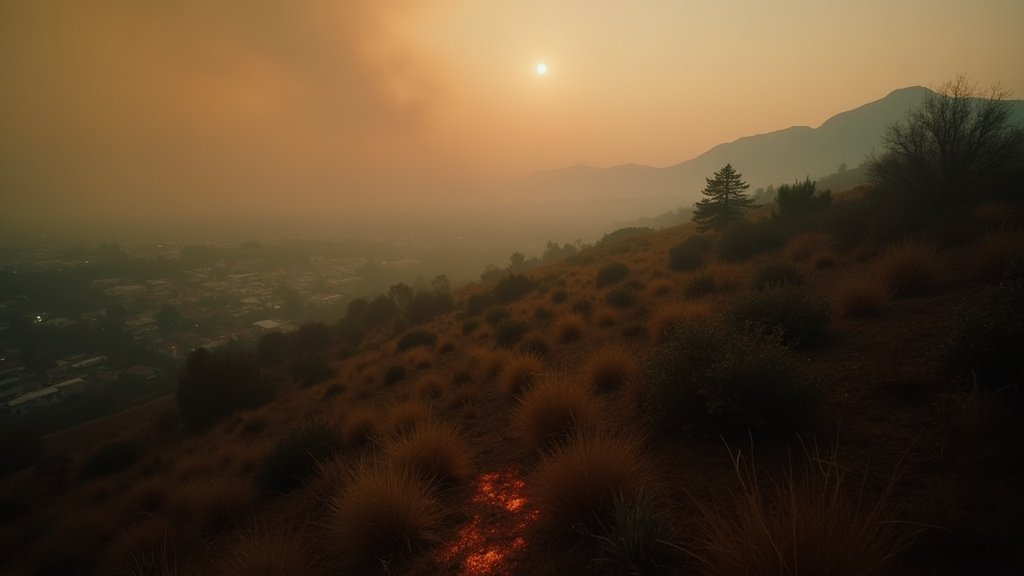
On the morning of July 15, 2026, at precisely 6:14 a.m., a new wildfire was reported, sending smoke signals across Los Angeles County. The blaze has taken hold on private land, prompting an immediate response from emergency services. As of the latest reports, the exact cause of the fire remains under investigation, and crucially, its containment status is undetermined. This situation highlights the ongoing challenges faced by California in managing wildfire risks, especially during periods of dry conditions.
The National Interagency Fire Center (NIFC) is among the agencies providing initial data on this developing situation. The NIFC, a national coordination center, plays a critical role in supporting wildland fire operations across the United States, gathering and disseminating information from various federal and state land management agencies. Its involvement underscores the seriousness of the incident.
Initial Response and Unknowns
First responders are actively working to assess the scale of the wildfire and to establish containment lines. The fact that the fire is on private land may introduce complexities regarding access and immediate firefighting efforts, although the priority remains public safety and property protection. Firefighting agencies are mobilizing resources, including ground crews and potentially aerial support, to combat the spread. The lack of immediate information regarding the cause means that investigators will likely be looking into all possibilities, from accidental ignitions to arson, once the immediate threat is managed.
Predictive Factors and Future Concerns
While specific details about the current fire’s behavior are limited, the broader context of Southern California’s fire season is concerning. Los Angeles County is particularly vulnerable due to its vast wildland-urban interface, where homes and communities are nestled close to flammable vegetation. Factors such as wind conditions, humidity levels, and the type of fuel present (grass, brush, chaparral) will significantly influence the fire’s progression. Weather forecasts for the coming days will be closely monitored by fire officials and residents alike.
Historically, Southern California has experienced devastating wildfires, often exacerbated by Santa Ana winds during the fall and winter months. However, fires can occur year-round, and the increasing frequency and intensity of wildfires have been linked by many experts to climate change and land management practices. This new ignition serves as a stark reminder of the persistent threat.
Community Impact and Preparedness
Residents in areas surrounding the fire are being advised to stay informed through official channels and to be prepared to take action if evacuation orders are issued. Emergency alert systems and local news outlets will provide critical updates. The proximity to populated areas, even if on private land, means that air quality could be affected, and precautionary measures might be recommended for vulnerable populations. Preparedness is key, with officials often urging residents to have ‘go-bags’ ready and to understand their local evacuation zones.
FAQ: People Also Ask
What is the National Interagency Fire Center (NIFC)?
The National Interagency Fire Center (NIFC) is located in Boise, Idaho, and serves as the nation’s support center for wildland firefighting. It coordinates national resources and provides support to federal and state wildland fire management agencies. NIFC also collects, analyzes, and disseminates wildland fire data.
What are the typical causes of wildfires in Southern California?
Wildfires in Southern California can be caused by a variety of factors, including lightning strikes, accidental ignitions (such as from faulty power lines, campfires, or discarded cigarettes), and arson. Human activity is responsible for the vast majority of wildfire ignitions.
How is wildfire containment measured?
Wildfire containment refers to the percentage of the fire’s perimeter that has been controlled by firefighters. A 100% contained fire means that the fire is not expected to spread any further. This is achieved by creating control lines, such as firebreaks, and extinguishing hot spots along the perimeter.
What should residents do if a wildfire is reported nearby?
Residents near a wildfire should stay informed by monitoring official news sources and emergency alerts. If evacuation orders are issued, they should leave immediately, following designated evacuation routes. It is also advisable to have an emergency preparedness kit ready and to secure their homes as much as possible before leaving, if time permits.
What is the Wildland-Urban Interface (WUI)?
The Wildland-Urban Interface (WUI) is an area where human development meets or intermingles with wildland or vegetative fuels. These areas are at a higher risk of wildfire because structures are in close proximity to flammable vegetation, increasing the potential for fire spread and damage.