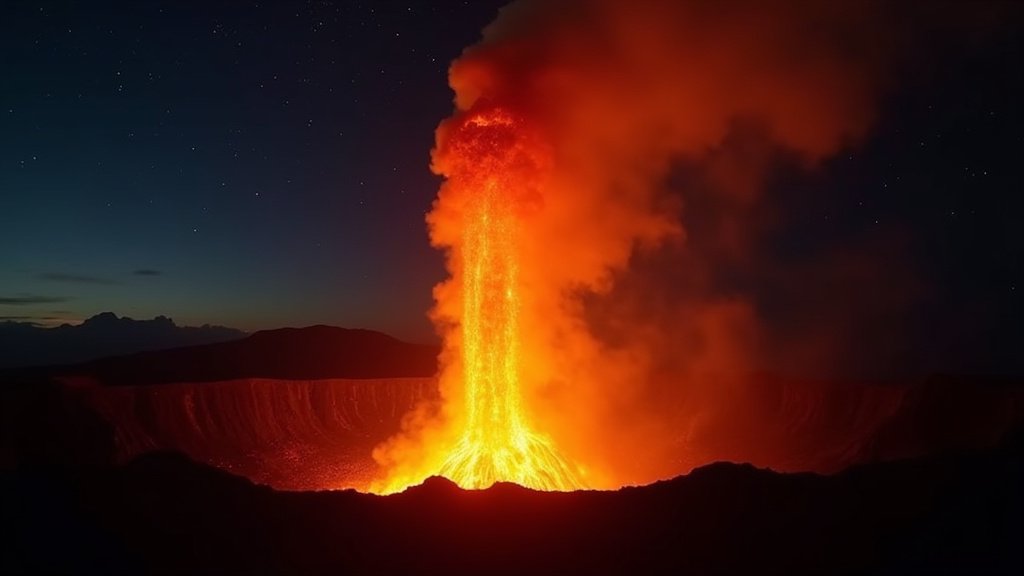
Hawaii’s Kilauea volcano is once again captivating observers with its current spectacular lava display, a powerful reminder of the ongoing Kilauea Eruption. This event continues its reputation as one of Earth’s most active volcanoes. The latest Kilauea Eruption began on December 23, 2024. It has been erupting episodically ever since, showcasing the dynamic nature of this Kilauea Eruption.
Volcanologists from the U.S. Geological Survey (USGS) reported dramatic activity during the recent Kilauea Eruption. Incandescent lava is being hurled high into the air. In some recent episodes, Hawaii lava fountains reached over 1,500 feet. Plumes of smoke and gas also rise dramatically from the Kilauea Eruption, reaching up to 20,000 feet. The eruptions are often short-lived, typically lasting around one day, but the Kilauea Eruption remains a significant event.
Kilauea’s Persistent Kilauea Eruption Activity
Kilauea is Hawaii’s youngest and most active volcano. It is located on Hawaii Island, also known as the Big Island. The volcano has been highly active since 1983. It has covered about 90% of its surface in lava flows within the last 1,000 years. This persistent activity makes it one of the busiest volcanoes globally. It is one of six active volcanoes Hawaii boasts, with the Kilauea Eruption being a prime example.
Scientific Observations and Emissions During the Kilauea Eruption
USGS volcano monitoring scientists constantly track Kilauea’s activity. They monitor lava flows, gas emissions, and seismic tremors associated with the Kilauea Eruption. These eruptions can vent significant amounts of sulfur dioxide (SO2). Emissions can reach 50,000 to 100,000 tons per day during an episode of the Kilauea Eruption. This gas reacts in the atmosphere, forming a visible haze known as vog, or volcanic smog. Vog can cause respiratory problems and irritation, a common byproduct of a Kilauea Eruption.
Tiny strands of volcanic glass, called “Pele’s hair,” are also ejected during the Kilauea Eruption. These are named after the Hawaiian goddess of volcanoes. Pele’s hair can be sharp and may irritate skin and eyes, another hazard linked to the Kilauea Eruption.
Safety and Access During the Kilauea Eruption
These spectacular eruptions pose no immediate danger to human settlements. The caldera, the large volcanic crater, has been closed to the public for decades due to the hazardous nature of the Kilauea Eruption. It has been off-limits since late 2007. Visitors are advised to check with park rangers for current conditions and safety regulations. Hawaii Volcanoes National Park remains open, offering views of the ongoing geological processes, including the current Kilauea Eruption.
Context and Latest Volcano Activity
The current eruption series began on December 23, 2024. This ongoing activity has featured multiple episodes of lava fountaining, a hallmark of a significant Kilauea Eruption. Episode 40, for instance, began on January 12, 2026. The events are a focal point for scientific study and offer a dramatic natural spectacle. News reports often spotlight these events. For example, news out of Los Angeles has covered Kilauea’s displays, highlighting the widespread interest in the latest volcano activity surrounding the Kilauea Eruption.
Conclusion of the Kilauea Eruption
Kilauea’s consistent activity underscores its role as a dynamic force in shaping Hawaii’s landscape. The recent spectacular lava displays are a testament to its power during the current Kilauea Eruption. Scientists continue to monitor this active volcano, a prime example of active volcanoes Hawaii is known for. It offers a continuous reminder of Earth’s geological processes. The current Kilauea Eruption continues to draw attention, providing ongoing scientific data and breathtaking sights of the Kilauea Eruption.