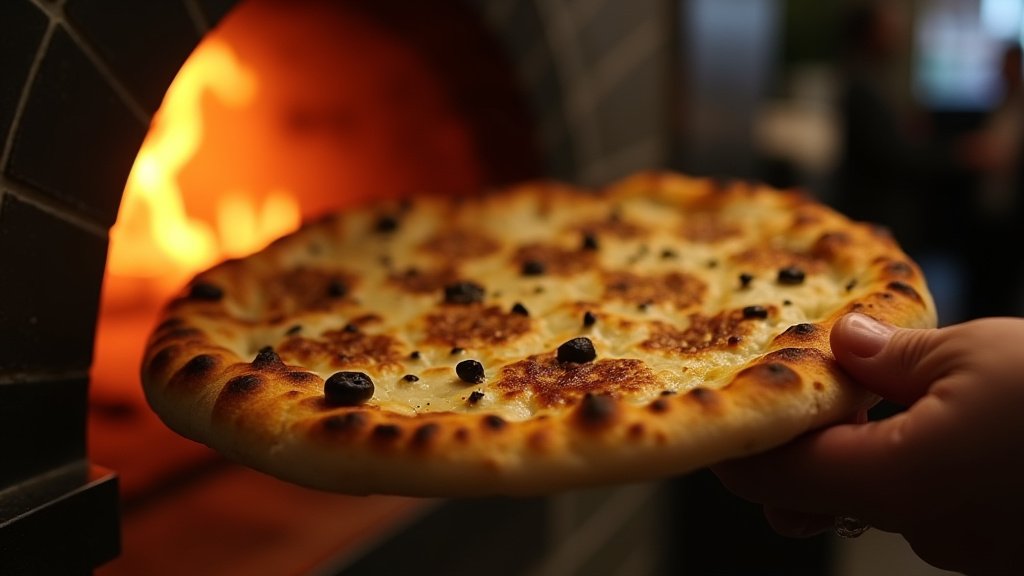
The landscape of Los Angeles dining has shifted dramatically with the arrival of Maydan Market, a 10,000-square-foot former factory in West Adams that defies the sterile categorization of a typical food hall. At its heart lies Maydan L.A., a flagship sit-down restaurant that stands as a legitimate culinary revelation. By prioritizing live-fire cooking and a communal, cross-cultural spirit, restaurateur Rose Previte has not only opened a business but has constructed a vibrant, bustling ecosystem that effectively captures the melting pot of L.A. culture. This is not just a place to eat; it is a masterclass in modern hospitality and urban revitalisation.
Key Highlights
- The Collective Model: Maydan Market moves away from the ‘food court’ aesthetic, opting for a ‘collective’ structure that blends a dedicated sit-down restaurant (Maydan L.A.) with seven distinct, curator-driven counters.
- Live-Fire Focus: The entire operation is anchored by the primal, essential element of live-fire cooking, drawing from the cuisines of Southwest Asia, North Africa, and the Caucasus.
- West Adams Revitalization: The 10,000-square-foot factory conversion signifies a growing trend in the decentralization of L.A.’s fine dining scene, moving away from traditional hubs like Downtown and West Hollywood.
- Seamless Integration: By utilizing a sophisticated QR-code system, guests can navigate a menu that spans multiple vendors while maintaining the continuity of a single dining experience.
The Anatomy of the West Adams Collective
The term “food hall” has, in recent years, become synonymous with lackluster options and overpriced, mass-produced fast food. Maydan Market is a direct, calculated rejection of that paradigm. By utilizing a 10,000-square-foot former factory, Rose Previte has managed to capture the elusive “communal spirit” that often escapes modern hospitality ventures. The space feels industrial yet warm, a testament to thoughtful design that respects the history of the building while inviting a new, culinary-focused future. The success of Maydan L.A., the primary sit-down restaurant within this collective, proves that high-concept cuisine does not have to be tethered to traditional, white-tablecloth environments.
Beyond the Food Hall: The ‘Collective’ Distinction
What distinguishes Maydan Market is the deliberate cohesion between its disparate parts. While food halls are often collections of silos competing for traffic, this collective acts as a unified organism. When a guest sits at a table in the central court, they are not limited to one cuisine. Through a seamless QR-code interface, the menu becomes fluid, allowing diners to sample from Lugya’h, Maléna, or Golden Mountain Chicken while anchored by the high-end output of the main kitchen. It is an operational marvel that solves the classic “party of four, four different cravings” dilemma, providing a elevated experience that feels democratic rather than chaotic.
The Fire and the Flame: Previte’s Culinary Vision
The soul of Maydan L.A. is undoubtedly its embrace of live-fire cooking. It is a sensory experience; the scent of burning wood and spices hits patrons before they even process the visual layout of the room. By focusing on the intersection of Southwest Asia, North Africa, and the Caucasus, the kitchen is doing more than serving food; it is mapping a culinary geography that is often underrepresented in Los Angeles. The use of fire is transformative, turning simple ingredients—lamb, root vegetables, flatbreads—into complex, layered dishes that feel both ancient and entirely new. It challenges the palate, pushing guests to engage with flavors that are bright, smoky, and deeply rooted in tradition.
Why Maydan L.A. Is the Catalyst for a Neighborhood
West Adams has long been a neighborhood in transition, and the arrival of an anchor like Maydan Market provides a much-needed cultural and economic gravitational pull. By creating a space that is both accessible (the counter model) and refined (the sit-down restaurant), Previte has ensured the location serves both the local community and destination diners. This is a critical factor in the longevity of such projects. When a venue serves the neighborhood first, it builds a loyal base that provides resilience against the ebb and flow of food trends. The ripple effect is already visible; as Maydan Market attracts foot traffic, neighboring small businesses are seeing a renewed interest, solidifying West Adams as a viable, bustling culinary district.
Operational Brilliance: The QR-Code Hybrid Model
There is a subtle genius in the execution of the ordering system. In many high-end food halls, the digital barrier creates a transactional, impersonal vibe. At Maydan Market, the technology acts as a bridge. Because the staff is trained to facilitate the experience—guiding guests through the multi-vendor menu rather than just dropping plates—the service feels curated. It is a hybrid model that effectively mitigates the labor challenges facing the modern restaurant industry while refusing to sacrifice the ‘hospitality’ element that makes dining out special.
Looking Ahead: Is the ‘Collective’ the Future?
If Maydan L.A. is a revelation, the structure of the collective itself is the potential future of the industry. The economics of high-end dining are increasingly difficult, with rising rent and labor costs making massive, single-concept restaurants a risky proposition. By diversifying the revenue stream—having a primary kitchen supported by smaller, specialized counters—the business model becomes inherently more stable. It allows for experimentation (like the ‘Club 104’ pop-up space, which tests new talent without the startup cost of a brick-and-mortar) and provides a safety net for the overall enterprise. If this experiment continues to thrive, expect to see developers and chefs across the country attempting to replicate the “Maydan” blueprint. It is not just about the food; it is about building a scalable system for the future of urban social interaction.
FAQ: People Also Ask
1. What is the difference between Maydan Market and a standard food hall?
Maydan Market is defined as a “collective” rather than a food hall. While it shares the open-seating concept, it is curated by a single vision (Rose Previte) and features a high-end sit-down restaurant at its core, creating a cohesive culinary environment rather than a collection of unrelated vendors.
2. How does the ordering system work at the collective?
Guests use a centralized QR-code system that allows them to mix and match dishes from the various counters and the main sit-down restaurant, Maydan L.A., all within a single transaction, providing a seamless dining experience.
3. What kind of food is served at Maydan L.A.?
Maydan L.A. specializes in live-fire cooking, focusing on the historical and culinary traditions of Southwest Asia, North Africa, and the Caucasus regions.
4. Where is Maydan Market located?
It is located in the West Adams neighborhood of Los Angeles, housed within a 10,000-square-foot converted industrial factory space.