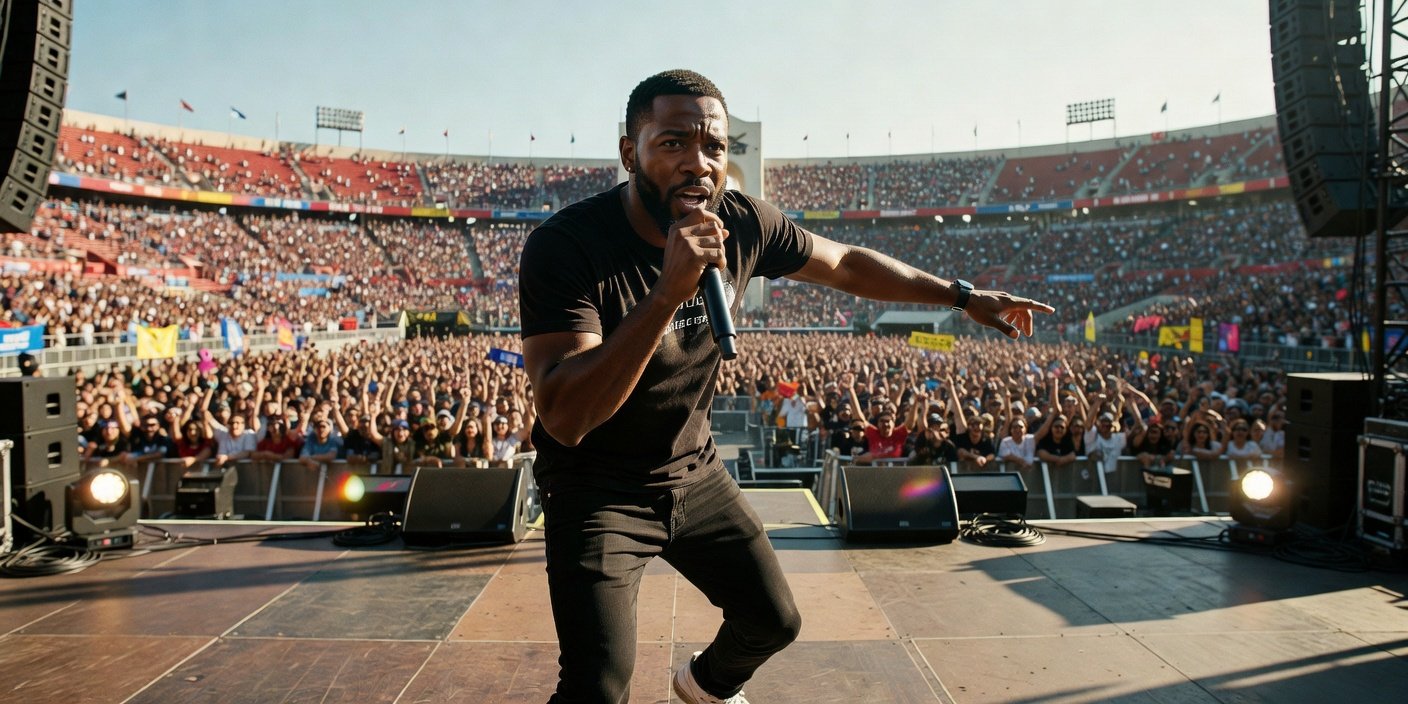
Today, the historic Los Angeles Memorial Coliseum transforms into a beacon of unity as thousands gather for Hope Fest LA, a landmark event marking the culmination of the 40 Days of Hope movement. The festival, which draws together a diverse crowd from across the Southern California region, serves as both a musical celebration and a significant social gathering, focusing on themes of revival, mental health awareness, and community outreach.
Key Highlights
- Historic Venue: The Los Angeles Memorial Coliseum hosts a massive gathering of faith, music, and community action, reclaiming the iconic space for a modern-day movement of hope.
- Star-Studded Worship: The stage features headline performances from Grammy-winning artist Lecrae, Kim Walker-Smith, and Miel San Marcos, bridging genres from hip-hop to contemporary worship.
- Climax of a Movement: The event serves as the official finale for the ’40 Days of Hope’ and ‘Mission 1 Million’ initiatives, which have mobilized thousands of volunteers for prayer, fasting, and neighborhood evangelism since March 1st.
- Holistic Outreach: Beyond music, the festival integrates mental health resources, addiction recovery support, and partnerships with local charities, reflecting a shift toward intersectional community support.
The Convergence of Hope: A New Era for the Coliseum
The Los Angeles Memorial Coliseum, long known for its role in hosting the Olympic Games and USC Trojan football, has frequently served as a neutral ground for the city’s largest cultural moments. Today’s event, Hope Fest LA, represents a distinct pivot in the venue’s utility. By centering the dialogue on ‘revival, repentance, and reformation,’ organizers—led by groups like Sons of Thunder—are utilizing the expansive infrastructure of the Coliseum to foster a sense of collective belonging that transcends the traditional boundaries of neighborhood and denomination.
This event is not merely a concert; it is a meticulously planned logistical operation designed to unify a fractured city. The sheer scale of the event—gates opening at noon and programming running until 9:00 PM—demonstrates the logistical evolution of modern faith-based gatherings. The integration of baptismal tanks, prayer hubs, and information kiosks for local nonprofits suggests that the organizers view the stadium not just as a performance space, but as a temporary city of refuge and resources.
Analyzing the ’40 Days of Hope’ Movement
To understand the significance of today’s gathering, one must look at the ’40 Days of Hope’ (March 1 – April 9) and the accompanying ‘Mission 1 Million.’ This initiative acted as a systematic engine of community engagement. Thousands of volunteers across Los Angeles County spent weeks participating in prayer hubs, neighborhood outreach, and social service projects.
Sociologically, this movement reflects a growing trend where large-scale faith organizations are moving away from top-down evangelism and toward grassroots, neighborhood-centric service. By encouraging believers to pray for and share resources with ten individuals each, the organizers have effectively gamified and structured their outreach efforts. This has created a groundswell of anticipation that makes the Coliseum event feel less like an ‘arrival’ and more like a ‘homecoming’ for the thousands who have been active in the movement for weeks.
The Sonic Landscape of Modern Faith: Lecrae and Beyond
Music remains the primary cultural currency of the festival, and the lineup chosen for Hope Fest LA is strategically curated to appeal to a broad demographic. The inclusion of Lecrae, a hip-hop pioneer who has consistently bridged the gap between secular and sacred music markets, provides a cultural anchor for the event. His presence signals that this gathering is designed to be accessible, contemporary, and relevant to urban audiences.
Kim Walker-Smith and Miel San Marcos represent the powerhouse of contemporary worship, which has historically been the emotional catalyst for these stadium-sized gatherings. The ‘worship’ genre has seen a massive evolution, utilizing high-production lighting, immersive soundscapes, and cinematic visuals that rival any pop concert. When thousands of voices join in unison within the acoustics of the Coliseum, the psychological impact is profound. It fosters a ‘collective effervescence’—a sociological term coined by Émile Durkheim—where the shared emotional experience dissolves social barriers, even if only for an afternoon.
Beyond the Stage: The Social Fabric of Outreach
Perhaps the most vital component of Hope Fest LA is the infrastructure of support services located throughout the venue. In an era where cities are grappling with homelessness, addiction, and mental health crises, the organizers have positioned Hope Fest LA as a clearinghouse for assistance.
By partnering with local mental health organizations and recovery groups, the event provides a bridge between those in crisis and those offering help. This is a deliberate strategy to combat the stigma surrounding seeking assistance. For attendees, the venue becomes a safe space to access resources they might otherwise be hesitant to pursue in a clinical or government setting. The ‘Sons of Thunder’ leadership, including Samuel Tejada, has been vocal about the need for this kind of tangible, on-the-ground support, drawing from personal histories of overcoming addiction to shape the event’s mission.
Historical Echoes and Future Predictions
Los Angeles has a storied history of large-scale religious gatherings, from the legacy of the Azusa Street Revival to the massive crusades held by Billy Graham at the Coliseum in the mid-20th century. Hope Fest LA occupies this same historical timeline, yet it carries the distinct fingerprint of the 2020s.
Looking forward, the success of this event—measured in both attendance and subsequent community engagement—will likely serve as a blueprint for other urban centers. As traditional ‘brick and mortar’ institutions see shifting attendance patterns, the ‘stadium model’ of faith events provides a way to maintain institutional relevance while pivoting toward active service. If today proves successful, expect to see an increase in ‘festival-style’ religious engagement, where the barrier to entry is lowered, and the focus is shifted toward experience, community, and social utility.
FAQ: People Also Ask
1. What is the primary goal of Hope Fest LA?
The event serves as the finale for the 40 Days of Hope movement, aiming to foster unity, offer mental health and recovery resources, and provide a platform for worship and evangelism.
2. Is Hope Fest LA free to attend?
Yes, the event is free and open to the public, though organizers encourage registration to help with logistical planning for the crowd size.
3. Who is headlining the musical performances?
The festival features major artists in the Christian and worship music scenes, including Lecrae, Kim Walker-Smith, and Miel San Marcos.
4. What does ‘Mission 1 Million’ mean?
It is a core initiative of the 40 Days of Hope where participants are encouraged to pray for 10 people each, with the goal of collectively reaching one million individuals with the message of hope and the Gospel through acts of service and connection.