
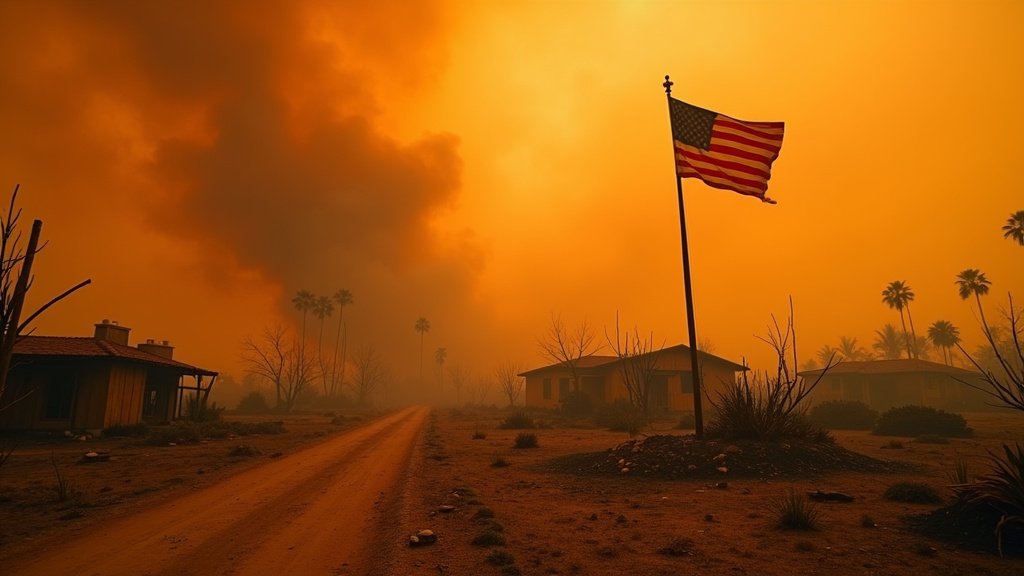
Los Angeles, CA – The year 2025 was dominated by the devastating **California Wildfire Crisis**. Devastating wildfires raged across California, consuming headlines and sparking a severe insurance crisis that highlighted the rising cost of climate disaster losses. The current situation demanded urgent attention, with this news trending nationwide.
The Fury of January’s Fires and the California Wildfire Crisis
January 2025 saw intense wildfires in Southern California. A series of blazes struck the Los Angeles and San Diego areas. Hurricane-force Santa Ana winds fueled the fires, creating dire conditions. Drought and low humidity made the landscape tinder-dry, exacerbating the **California Wildfire Crisis**.
The Palisades Fire was a major event in the **California Wildfire Crisis**. It started January 7th near Pacific Palisades, and fierce winds propelled its rapid spread, necessitating mandatory evacuations. Many homes were destroyed as the fire burned 23,448 acres. The Eaton Fire also caused immense damage, burning 14,021 acres near Altadena. Together, these fires rank among California’s most destructive, underscoring the severity of the **California Wildfire Crisis**.
Unprecedented Economic Devastation from the California Wildfire Crisis
These January 2025 wildfires, a stark manifestation of the **California Wildfire Crisis**, inflicted immense economic damage. They became the year’s costliest climate-linked disaster globally, with estimated losses exceeding $60 billion. One study projected total property and capital losses between $95 billion and $164 billion. Economic output losses were expected to reach $5.2 billion to $10.1 billion through 2029. These figures underscore the catastrophe’s scale and the profound impact of insurance market instability, a direct consequence of the **California Wildfire Crisis**.
A Deepening Insurance Crisis Amidst the California Wildfire Crisis
The surge in claims payments strained insurance companies, intensifying the **California Wildfire Crisis**. Major carriers began withdrawing from California, stopping new homeowners policies. This created a significant insurance crisis, making finding new coverage a challenge for many Californians grappling with the **California Wildfire Crisis**.
Insurers faced accusations of collusion, with lawsuits alleging they worked together to limit coverage. This reportedly pushed homeowners toward the California FAIR Plan, the state’s insurer of last resort. While offering basic coverage, it often came with higher premiums. Many homeowners found their policies insufficient, facing massive uncovered losses due to the ongoing **California Wildfire Crisis**.
Regulatory and Legal Ramifications of the California Wildfire Crisis
California’s insurance regulator responded to the **California Wildfire Crisis**. Commissioner Ricardo Lara announced new laws aimed at reducing wildfire risk and increasing insurance access. Reforms were introduced for faster financial relief, and new regulations mandate insurers maintain coverage in fire-prone areas if they use reviewed catastrophe models, a direct response to the **California Wildfire Crisis**.
Legal challenges also emerged, with lawsuits targeting insurance carriers for payouts that allegedly did not cover actual losses. The FAIR Plan also faced scrutiny over its claim handling capacity, further highlighting the complexities of the **California Wildfire Crisis**.
The FAIR Plan Under Scrutiny Amidst the California Wildfire Crisis
The FAIR Plan bore a heavy burden during the **California Wildfire Crisis**. It reported paying over $914 million in claims for the Palisades Fire and other blazes. To manage this financial strain, the FAIR Plan requested a $1 billion assessment from member insurers, marking the first assessment in 30 years. This highlighted the FAIR Plan’s vital role and financial vulnerability, with estimates of its total loss from the Palisades and Eaton fires at roughly $4 billion, a significant consequence of the **California Wildfire Crisis**.
Looking Ahead: Resilience and Uncertainty in the Face of the California Wildfire Crisis
The 2025 wildfires served as a critical wake-up call, starkly illustrating the growing threat of climate disaster losses and the escalating **California Wildfire Crisis**. The economic and social consequences were profound, and the insurance market instability caused widespread anxiety. The wildfire insurance crisis is a direct outcome of the **California Wildfire Crisis**.
Efforts are underway to rebuild and foster resilience, but the path forward remains challenging. California continues to confront these complex issues related to the **California Wildfire Crisis**. The ongoing news from Los Angeles and surrounding areas highlights this trend, emphasizing the urgent need for effective wildfire mitigation strategies and innovative solutions to address both climate risks and insurance access. The current news reflects this ongoing struggle with the **California Wildfire Crisis**.