
California faces a tough economic future, grappling with a significant **California Job Slump** that is expected to persist well into early 2026. This concerning trend has led to persistently high unemployment rates, projected to hover around 5.5 percent, a figure notably higher than the national average which is forecast near 4.5 percent. Despite California’s colossal economy, the largest in the U.S. with a GDP of $4.1 trillion, over one million residents are currently unemployed, highlighting the severity of the **California Job Slump**.
Economists are characterizing this period as an “employment recession,” a paradoxical situation occurring even as the state sees substantial investment in AI and its advanced technologies boom. However, the positive trajectory in some sectors, like the AI sector growth, is overshadowed by severe struggles in others, including construction, manufacturing, and leisure. Hospitality and government services are also confronting significant labor market challenges due to this widespread **California Job Slump**.
The California Job Slump: Unemployment Forecast
The state’s unemployment rate has been stubbornly high, remaining above 5% for many months. Projections indicate it may peak near 5.9% in early 2026, a development more severe than many anticipated. This **California Job Slump** is a significant concern, and it’s a key piece of current news for the state.
Tariffs Create Economic Headwinds, Worsening the California Job Slump
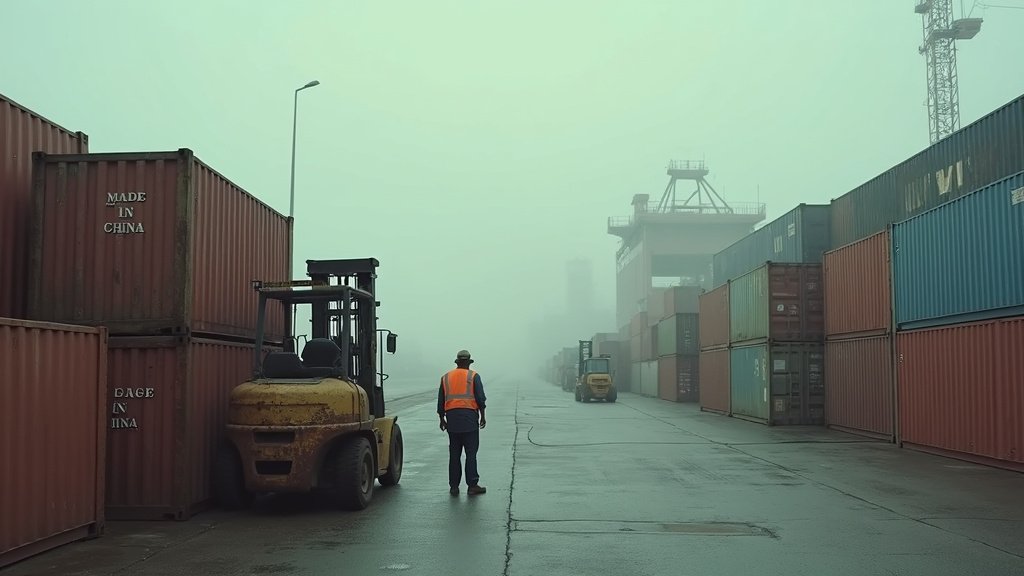
Federal tariffs are a substantial contributing factor to the ongoing economic difficulties, exacerbating the **California Job Slump**. These trade restrictions disrupt supply chains, inevitably increasing prices for both goods and consumers. Ports like Los Angeles and Long Beach, critical hubs for U.S. imports, are feeling the strain. Tariffs also drive up costs for essential building materials, putting immense pressure on small businesses and consumers alike and generating widespread uncertainty that hinders investment, contributing to the overall **California Job Slump**.
Immigration Policies and their Effects on the California Job Slump
Stricter immigration policies and increased enforcement are also directly impacting the workforce and contributing to the **California Job Slump**. Deportations and raids disrupt industries heavily reliant on immigrant labor, particularly agriculture and construction. Hospitality sectors are also experiencing workforce shortages. These policies not only increase unemployment for affected individuals but also reduce overall household spending, negatively impacting complementary occupations and deepening the **California Job Slump**.
Sectors Feeling the Squeeze Amidst the California Job Slump
Labor-intensive industries are bearing the brunt of the economic downturn, intensifying the **California Job Slump**. Manufacturing jobs are on a noticeable decline, particularly in durable goods. The entertainment sectors are also contracting, and leisure and hospitality continue to struggle. Even government-funded services are facing headwinds, alongside the food processing and agricultural sectors, all contributing to the extensive **California Job Slump**.
A Tale of Two Economies: Growth vs. the California Job Slump
California’s economy presents a stark contrast. While high-productivity sectors like AI and aerospace continue to expand, fueled by venture capital in regions like Los Angeles and the Bay Area, other parts of the state are battling significant challenges. These difficulties are directly linked to the effects of tariffs and immigration policies, further highlighting the uneven impact of the **California Job Slump**.
The Path Forward: Addressing the California Job Slump
The economic outlook for California remains uncertain, with job losses through August 2025 marking the first sustained decline since the pandemic. The employment recession, driven by the **California Job Slump**, is expected to continue into early 2026, with a potential recovery beginning later in the year. While gradual improvement is forecast for late 2026, it’s clear that current policies are creating a significant drag on the state’s economic performance. This situation underscores the critical need for policies that can alleviate the **California Job Slump** and foster broader economic stability.